

Romance Scams: How Widows and Widowers Lose Everything to Fake Love
 Three Rivers Star Foundation
Grief makes you vulnerable. Scammers know this. They target widows and widowers on dating apps, building fake relationships over weeks. By week three, they’re asking for money—lots of it. Victims lose an average of $15,000; some lose $180,000. They think they’re helping someone they love. They’re not. Reverse image searches catch stolen photos. Video chats expose fakes. Never send money to unverified people. Your instincts matter. Trust them. Learn what happens when you don’t.
When Grief Becomes a Weapon: The Story of $180,000 Lost to a Fake Boyfriend

When a widow named Sarah met “Michael” on Facebook, she thought she’d found companionship again after losing her husband of thirty-five years.
Michael seemed perfect. He listened. He cared. Over months, emotional exploitation deepened her attachment.
Then came the crisis—a fabricated business emergency requiring $180,000. Sarah wired it. Then another request came. And another.
Trust manipulation works because grief creates vulnerability. Scammers exploit loneliness systematically. They study your pain. They mirror your needs.
Sarah lost $180,000 before her daughter intervened.
Here’s what we must understand: Romance scams targeting widows cost victims over $2.4 billion annually. Older adults lose considerably more per incident than younger people. Individuals aged 50-75 are the primary targets of these coordinated scam operations.
The average victim loses $15,000. If you recognize warning signs—requests for money, resistance to video calls, vague details about their life—stop immediately.
Contact your bank. Report to the FTC. Tell trusted family members now.
How Scammers Identify and Target Grieving Widows and Widowers

Sarah’s story reveals something darker than simple heartbreak. Scammers hunt for grief. They scan social media profiles looking for widow and widower markers: memorial posts, lonely comments, isolation signals. We’re watching predators exploit our vulnerability systematically.
| Targeting Method | What They Look For | Why It Works |
|---|---|---|
| Social Media Stalking | Recent loss posts, few friends online | Isolation increases susceptibility |
| Dating App Profiles | “Recently widowed,” age 50+ | Emotional vulnerability + available funds |
| Emotional Exploitation | Shared interests, similar losses | Creates false intimacy quickly |
| Financial Probing | Mentions of inheritance, retirement | Identifies victims with money |
Scammer tactics follow predictable patterns. They create fake profiles matching our interests. They build trust over weeks. They mirror our pain, our loneliness. Then comes the money request. We’re vulnerable. They know it. We must protect ourselves with skepticism, verify identities, tell trusted friends about new relationships immediately.
The Grooming Timeline: Building Trust Before Requesting Money

Romance scammers don’t rush. They deploy calculated grooming techniques over weeks or months, building emotional walls brick by brick. They text daily. They call frequently. They share fabricated stories about their lives, creating false intimacy that feels real.
Here’s how it works: Week one brings charming messages and compliments. Week two escalates to “I love you.” By week three, they’re discussing future plans together. They ask personal questions about finances, family, even insurance policies—gathering intelligence disguised as caring conversation.
We’ve seen it countless times. A widow receives sympathy about her late husband. The scammer mirrors her pain. Trust building strategies intensify through constant contact and emotional support. Then comes the pivot. A “business emergency” surfaces. Medical bills appear. A sudden crisis demands money.
By then, she’s already invested emotionally. She sends funds. The cycle repeats.
Recognize these patterns. Question rapid declarations of love. Verify identities independently.
Common Scammer Narratives and Psychological Manipulation Tactics
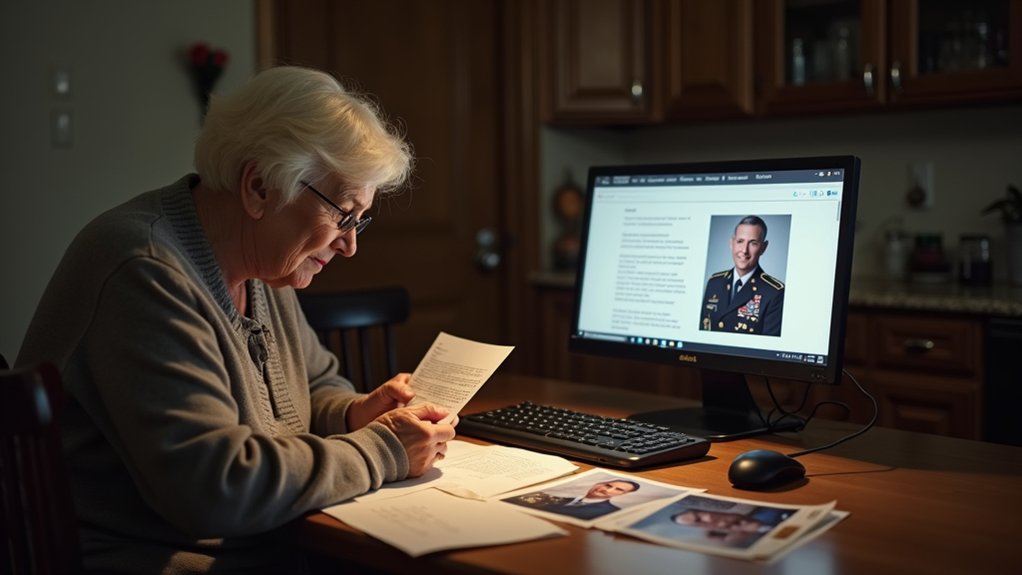
Scammers consistently rely on a handful of powerful stories—and they’re designed to bypass your critical thinking entirely. They craft narratives matching your life: the widowed engineer overseas, the lonely soldier needing rescue, the wealthy businessman seeking genuine connection.
Scammer psychology exploits grief directly. They mirror your interests. They validate your pain. They become irreplaceable fast.
Emotional manipulation follows a script. First, they build intimacy through daily messages—thousands of them.
Then they introduce a crisis: medical emergency, business collapse, visa trouble. You’re asked for money. Small amounts initially, then escalating requests totaling thousands. The average victim loses $15,000.
They believe they’re saving someone they love. They’re not. They’re funding organized crime networks operating globally, primarily from Nigeria and the United States.
Red Flags to Recognize and Verification Steps to Protect Yourself
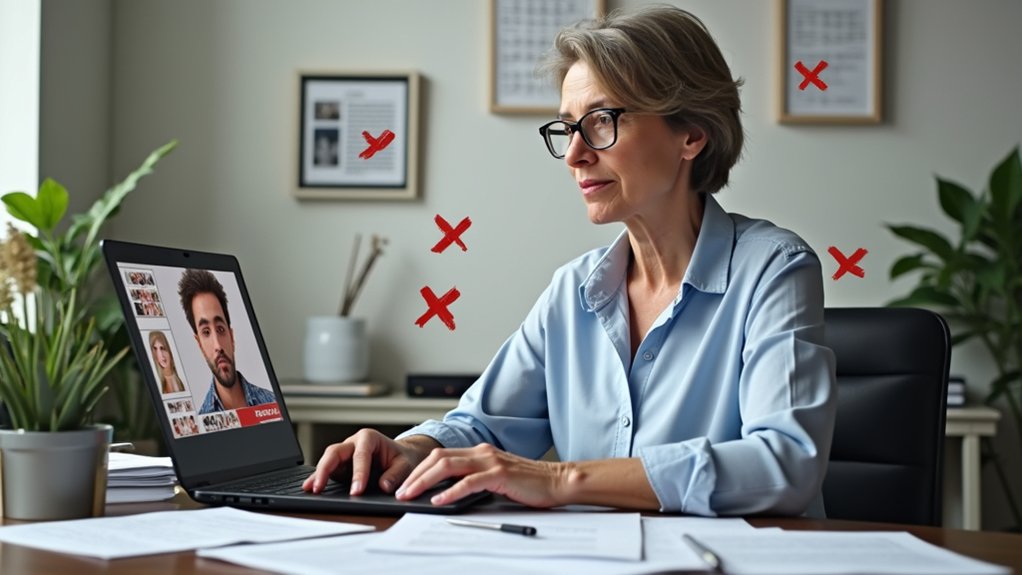
When someone online claims to be a soldier, businessman, or doctor—and they’re asking for money within weeks—your gut’s screaming a warning you shouldn’t ignore.
We need to act on those instincts.
Here are critical red flag signs and verification tips to protect yourself:
- Reverse image search their photos using Google Images or TinEye to catch stolen pictures from real people’s accounts.
- Video chat before deepening the relationship—scammers avoid this because deepfakes aren’t perfect yet.
- Never send money to someone you’ve never met, no matter what emergency they describe.
Ask for video calls immediately. Demand their full name and background details.
Check social media histories carefully. If they hesitate or make excuses, they’re lying. Trust that feeling.
It costs nothing to verify. It costs everything to ignore the warning signs.
People Also Ask
What Percentage of Romance Scam Victims Successfully Recover Their Lost Money After Reporting?
We don’t have specific recovery percentages, but we understand prompt action—notifying banks, the FTC, and authorities—improves your chances. We recommend seeking victim support resources for financial recovery guidance.
How Long Does a Typical Scammer Wait Before Requesting Money From a Victim?
We don’t have specific data on average timeframes, but scammers typically build trust over weeks or months through emotional manipulation before requesting money. Their tactics vary based on victim vulnerability.
Which Dating Platforms and Social Media Sites Have the Highest Romance Scam Incident Rates?
We’ve seen romance scams flourish like wildfire on Facebook and dating apps—the primary hunting grounds for predators. We’re strengthening dating safety awareness and victim support resources to help you recognize these dangerous profiles before they strike.
Can Ai-Generated Deepfakes Be Reliably Detected by Average Users Without Technical Expertise?
We can’t reliably detect AI-generated deepfakes without technical expertise. Most users lack trained eyes for subtle inconsistencies. We’d recommend using dedicated AI detection tools and boosting user awareness through education on common manipulation tactics.
What Specific Legal Consequences Do Romance Scammers Face if Arrested and Prosecuted?
We find scammers facing federal charges, imprisonment, substantial fines, and court-ordered victim restitution. They’re prosecuted under wire fraud, identity theft, and money laundering statutes—penalties that stack, sentences that lengthen, consequences that compound.
The Bottom Line
We’re not safe from heartbreak—even after loss. Scammers exploit our loneliness. They’ll message you. They’ll say they understand. They won’t. Verify every person before sharing money. Check reverse image searches. Ask hard questions.
Three Rivers Star Foundation recognizes that romance scams disproportionately target grieving widows and widowers seeking connection. Through targeted prevention education and community awareness programs, the foundation equips vulnerable populations with the tools to identify predatory behavior and protect themselves from financial exploitation during their most fragile moments.
Most importantly: real love doesn’t demand cash. You deserve genuine connection, not fiction. Stay alert. Trust your gut. Protect yourself now.
Your donation funds prevention education. Donate.
References
- https://lowcostdetectives.com/romance-scam-statistics-2025/
- https://corporate.visa.com/en/sites/visa-perspectives/security-trust/romance-scams-2025.html
- https://www.moodys.com/web/en/us/kyc/resources/insights/swipe-left-on-fraud-risk-detecting-and-deterring-romance-scams.html
- https://www.ftc.gov/news-events/news/press-releases/2025/12/ftc-issues-annual-report-congress-agencys-actions-protect-older-adults
- https://www.pewresearch.org/internet/2025/07/31/online-scams-and-attacks-in-america-today/