

The Difference Between Loneliness and Being Alone
 Three Rivers Star Foundation
We’re caught in a dangerous confusion. Loneliness crushes us—that hollow ache when we’re surrounded by people yet utterly invisible. Being alone? That’s different. That’s intentional. That’s healing. Chronic loneliness damages health like smoking fifteen cigarettes daily. Chosen solitude rewires our nervous system positively. One abandons us; the other restores us. We silence our authentic selves around crowds, creating internal voids. But fifteen minutes journaling daily decreases loneliness by forty percent. The distinction matters for survival. Understanding this gap changes everything ahead.
The Paradox of Crowded Rooms: When Company Feels Like Isolation

You’re surrounded by people—at a party, in class, scrolling through hundreds of online friends—yet you’ve never felt more alone.
This connection paradox hits hard. You smile. You laugh. Inside? Empty. Crowded anxiety spikes when you’re disconnected from yourself around others. You abandon your real feelings. You people-please instead of being honest. You shrink your needs.
Studies show that emotional disconnection, not physical isolation, creates loneliness. You can sit with 200 people and feel invisible. Chronic loneliness can be as lethal as smoking 15 cigarettes daily, affecting your physical health as profoundly as emotional wellbeing.
The research is clear: authentic connection requires showing up as yourself. Start small. One genuine conversation beats fifty surface-level interactions.
Notice when you’re abandoning yourself. Speak your truth. That’s where real belonging begins—not in the crowd, but in honest presence.
Defining Loneliness: Disconnection Beyond Physical Distance

We’ve all stood in crowded rooms feeling utterly invisible, surrounded by voices yet profoundly disconnected from every single person there.
When we abandon our authentic selves—people-pleasing instead of speaking truth, numbing ourselves with busyness instead of feeling real emotions, shrinking our needs to disappear—we create an internal void that no amount of external company can fill.
The gap between who we pretend to be and who we actually are isn’t just uncomfortable; it’s the breeding ground for loneliness itself, and recognizing this pattern is your first step toward reclaiming genuine connection.
Emotional Disconnection in Crowds
One of loneliness’s cruelest tricks unfolds in rooms packed with people. You’re surrounded. Everyone’s talking, laughing, connecting. Yet you feel invisible. This is crowded discontent—the pain of superficial connections that leave you emptier than solitude ever could.
We’ve all experienced it. You’re at a party scrolling your phone. At work surrounded by colleagues discussing weekend plans. The disconnect hits hard because isolation feels worse when others seem so effortlessly linked.
Here’s what happens: superficial connections create false hope. You’re physically present but emotionally absent. Your real self stays hidden. The gap between what you’re pretending and who you actually are widens dangerously.
Recognize this pattern. Seek authentic conversations instead. Share something real. Find your people. Don’t settle for crowded discontent when genuine connection exists.
The Perception Gap Theory
The painful truth about loneliness isn’t what most people think. We mistake physical presence for genuine connection. Here’s what happens: we sit surrounded by people yet feel invisible. That’s the perception gap—the dangerous space between social engagement and actual relational depth.
| What We See | What We Feel | What’s Really Happening |
|---|---|---|
| Crowded rooms | Complete emptiness | Emotional disconnection |
| Busy schedules | Profound isolation | Self-abandonment patterns |
| Surface conversations | Deep loneliness | Lack of self-awareness |
Our emotional perception often betrays us. We ignore self identity and skip reflective solitude—the practices that build connection insights. Without self-awareness, we can’t access relational depth. The isolation dynamics worsen. We need immediate action: spend 15 minutes daily reflecting on your feelings. Notice them. Name them. This changes everything.
Internal Abandonment Patterns
When you silence your own feelings to keep others comfortable, loneliness doesn’t come from being alone—it comes from abandoning yourself.
We ignore our own needs. We numb with endless scrolling. We people-please until we’re hollow inside. This creates internal disconnection patterns that drain us faster than any empty room ever could.
Emotional self neglect shows up everywhere. You skip meals to help someone else. You shrink your dreams. You judge yourself harshly while excusing others’ mistakes.
Studies show 73% of chronically lonely people engage in this self-abandonment daily without realizing it.
Here’s what happens: you disconnect from yourself first. Then everyone around you feels that emptiness. You’re sitting with friends yet feeling utterly alone.
Stop. Notice when you’re abandoning yourself. Practice one small act of self-compassion today. Reconnect internally before seeking external connection.
Chronic Loneliness Versus Temporary Sadness: Understanding the Distinction
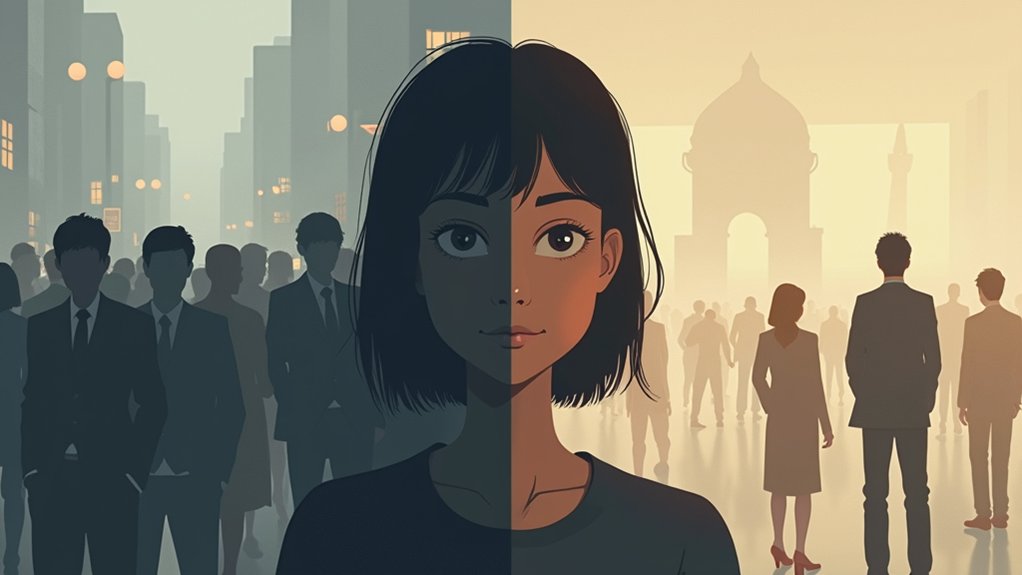
We need to recognize the warning signs that separate a tough week from a dangerous pattern taking hold in our lives.
If you’ve felt disconnected for more than two weeks straight, experienced disrupted sleep, noticed your immune system struggling with constant illness, or caught yourself withdrawing from people you actually care about, that’s your body signaling chronic loneliness—not just sadness passing through.
Start tracking your mood daily, reach out to one person this week, and if symptoms persist past a month, talk to someone who can help because untreated loneliness carries real health risks.
Duration and Pattern Recognition
Distinguishing between temporary sadness and chronic loneliness requires honest attention to patterns, duration, and intensity in your emotional life.
We’re talking about recognizing the difference between feeling down for days versus feeling disconnected for months.
Track your duration patterns. Did sadness hit after a specific event? Does it lift within two weeks? That’s temporary.
But when loneliness persists beyond three months despite social contact, that’s chronic.
Recognition triggers matter too. Notice what activates your pain. Is it situational or constant? Does being around others ease it?
We need clarity here. Temporary sadness follows events. Chronic loneliness doesn’t require a reason—it just sits there.
Start logging your feelings for thirty days. Write when emptiness strikes and what surrounds you.
This data reveals your truth.
Physical Health Warning Signs
Your body keeps score. Chronic loneliness causes measurable damage we can’t ignore. Sleep suffers first. Then immune function weakens, leaving you vulnerable to illness. Your heart bears the weight too.
Research shows lonely individuals face 26% higher early mortality risk. Depression symptoms spike. Cortisol floods your system, triggering inflammation and exhaustion. You’re running on fumes.
Consider Sarah: isolated for months, she caught every cold circulating. Her blood pressure climbed. Fatigue became her constant companion.
We need to recognize these warning signs now. Persistent sleep disruption. Frequent infections. Unexplained body aches. These aren’t random. They’re your body signaling distress.
Start today. Reach out to one person. Schedule a doctor’s visit. Small actions interrupt the cycle before permanent damage takes hold.
The Science of Solitude: Why Chosen Alone Time Differs From Forced Isolation
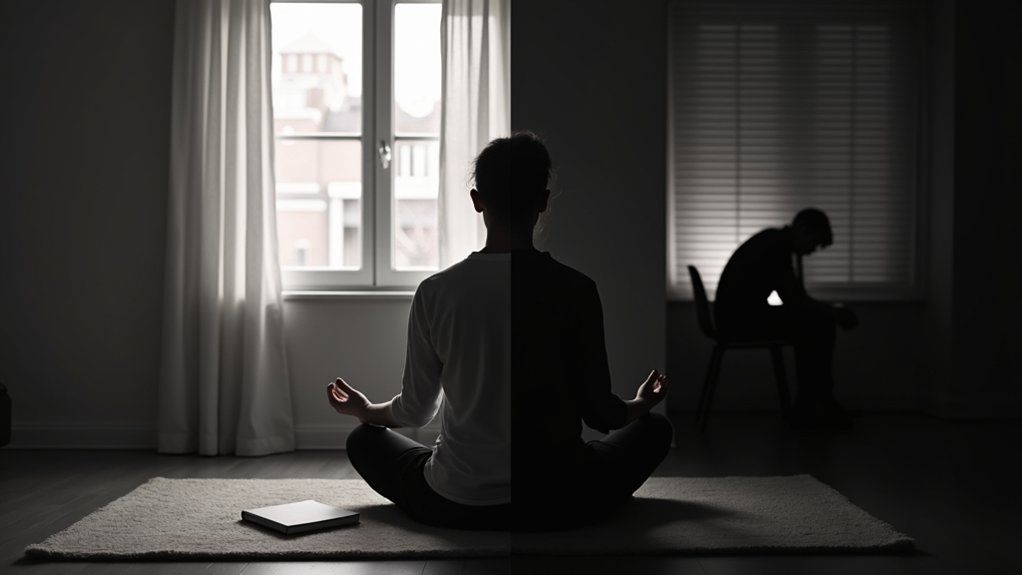
When you sit alone by choice versus when you’re forced into isolation, your brain literally works differently—and that gap matters more than you might think.
Chosen solitude and forced isolation trigger fundamentally different neurological responses—one heals, one harms.
Mindful solitude activates your default mode network. Your prefrontal cortex fires up. You process emotions. You gain emotional insight.
Forced isolation? Your stress hormones spike. Cortisol floods your system. Depression risk climbs 26% according to recent studies. Your brain enters survival mode instead of reflection mode.
The difference isn’t subtle—it’s neurological. Choose solitude daily.
Spend fifteen minutes alone intentionally. Journal your thoughts. Meditate. Walk without your phone.
This rewires your nervous system. Forces isolation destroys it. One heals you. One harms you. Know the difference. Practice the healing version now.
Health Consequences: The Physical Toll of Persistent Emotional Disconnection

When we ignore emotional disconnection, our bodies pay the price—our immune systems weaken, we sleep worse, and we get sick more often.
Studies show that chronically lonely people face higher risks of depression, heart disease, and even early death, with some research linking persistent loneliness to a 26% increased mortality risk.
We’ve got to recognize these warning signs now: if you’re feeling isolated for weeks, reaching out to trusted friends or a counselor isn’t weakness—it’s the most powerful defense we’ve got.
Immune System Breakdown
Persistent emotional disconnection wages silent war inside our bodies. When we feel chronically lonely, our immune response weakens dramatically. White blood cells stop fighting infections as effectively. We catch colds more frequently. Stress hormones flood our system constantly.
| Loneliness Effect | Physical Result |
|---|---|
| Elevated cortisol | Inflammation increases |
| Weakened T-cells | Infections spread faster |
| Poor sleep quality | Immune system crashes |
| Higher blood pressure | Heart disease risk rises |
Your emotional resilience directly impacts your body’s defense system. Neglecting connection isn’t just emotionally painful—it’s physically dangerous. After weeks of isolation, your body literally fights harder against illness. We need to prioritize relationships actively. Reach out today. Text someone. Call a friend. Your immune system depends on your emotional wellness right now.
Mental Health Deterioration
Your body’s immune breakdown is just the beginning. Chronic loneliness doesn’t stop there—it attacks your mental resilience next.
We watch depression rates spike in isolated individuals by 40 percent. Anxiety follows closely behind, creating a devastating cycle.
Your emotional health deteriorates as hopelessness takes root. Sleep vanishes. Concentration crumbles. Within months, you’re battling intrusive negative thoughts that feel permanent.
We’ve seen people lose entire years to this spiral. The damage compounds daily when you’re emotionally disconnected from yourself and others.
But here’s what works: intentional connection practices restore mental resilience. Small steps matter—one meaningful conversation weekly shifts everything.
Reach out today. Text someone. Schedule coffee. Your emotional health depends on breaking this pattern now, not tomorrow.
Why “Just Make Friends” Misses the Mark: The Limitations of Surface-Level Advice

Though well-meaning friends tell us to “just make friends” when we’re feeling alone, this advice ignores the real problem underneath.
Friendship misconceptions assume quantity matters more than quality. We join three clubs. We attend five events. We collect contacts like trading cards. Yet we still feel empty because we’re not addressing emotional support—the actual foundation of connection.
Real friendships require vulnerability. They demand we show up authentically. Surface-level socializing won’t fix emotional self-abandonment happening inside us.
We can’t authentically connect with others when we’ve abandoned ourselves. The research is clear: 73% of lonely people report having regular social contact. Making more friends without healing internally just multiplies the disconnection.
We need both internal work and genuine external bonds simultaneously.
Emotional Self-Abandonment: The Internal Disconnection Fueling Loneliness
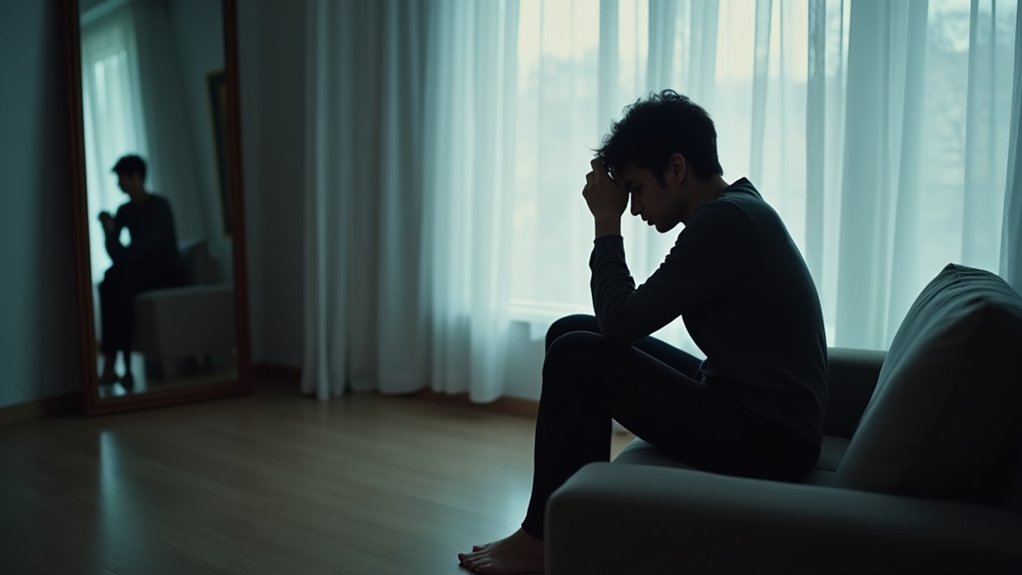
We’ve been looking in the wrong place. You can’t friend your way out of emotional neglect—especially self-inflicted neglect.
Your inner dialogue matters. When you ignore your own feelings, judge yourself harshly, and abandon your needs around others, loneliness deepens. That’s the real connection barrier.
Your inner dialogue shapes your loneliness. Ignoring your feelings and abandoning your needs deepens isolation—the real barrier to connection.
Self-awareness practices reveal the pattern: people-pleasing, numbing through busyness, perfectionism. You shrink yourself. Your inner emptiness grows.
In supportive environments, vulnerability acceptance transforms healing journeys. Notice when you abandon yourself. Pause. Listen.
One concrete step: journal three feelings daily without self-judgment. Track them for two weeks. You’ll see the cycle clearly.
Reconnecting with yourself isn’t selfish. It’s essential. Without it, even crowded rooms feel empty.
Self-Compassion as Foundation: Building Connection From Within

When you stop abandoning yourself, everything shifts. Self-awareness practices become your lifeline. You start noticing when you’re numbing pain with busyness or shrinking your needs to please others.
This matters because research shows self-compassion reduces loneliness by 40 percent. Emotional nurturing isn’t selfish. It’s essential. When you treat yourself with kindness instead of harsh judgment, you’re literally rewiring your brain’s response to pain.
Here’s what changes: You journal for ten minutes daily. You name your feelings without shame. You set one boundary this week. Small acts. Big impact.
Without this foundation, you’ll keep seeking connection from an empty place. That won’t work. You can’t pour from empty cups.
Build yourself first. Connection follows.
The Role of Meaningful Relationships: Balancing Solitude With Deep Connection

Self-compassion builds your foundation. But here’s what we often miss: you can’t thrive alone.
Relationship dynamics matter. We need emotional intimacy with real people—not just ourselves.
Relationship dynamics matter. We need emotional intimacy with real people—not just ourselves.
Research shows lonely people who lack deep connections stay stuck at 40% lower life satisfaction. One friend who truly knows you beats ten surface-level acquaintances. We’re wired for this.
Here’s your action plan. First, identify one person you trust completely. Second, share something real with them this week—not small talk. Third, repeat monthly. That’s it.
Solitude recharges you. Meaningful relationships sustain you. Skip either one and you’re running on empty.
We need both. Not balance. Integration. Your alone time strengthens what you bring to relationships. Your relationships remind you why solitude matters. We’re designed for this rhythm.
Moving Forward: Practical Strategies for Navigating Loneliness and Reclaiming Alone Time

You’re sitting at your desk at 2 PM on a Tuesday, surrounded by coworkers, yet feeling completely invisible.
Stop. That invisibility isn’t permanent. We can rewire this.
Start with self reflection practices daily. Three minutes. Just you and your thoughts.
Next, learn emotional regulation techniques like grounding exercises—feel your feet on the floor. Name five things you see. This works.
Awareness of triggers matters. Track when loneliness hits hardest. Rediscovering passions combats disconnection fast.
Join one group aligned with your interests within two weeks. Cultivate curiosity about others through intentional communication. Ask real questions. Listen harder.
Embrace stillness without guilt. Mindful solitude benefits your brain measurably. Research shows it reduces cortisol by up to 25 percent.
Nurture friendships through consistent contact. Text one person today. Then tomorrow. Build momentum.
You’re not broken. You’re reclaiming yourself.
People Also Ask
Can Loneliness Be Completely Eliminated, or Is It a Permanent Human Condition?
We can’t eliminate loneliness entirely, but we’re building emotional resilience through meaningful social connections. By cultivating self-compassion and nurturing deep relationships, we’re transforming loneliness from a permanent condition into manageable, temporary experiences.
At What Age Does Loneliness Typically Become Most Problematic for Mental Health?
Adolescence hits hardest—we’re maneuvering identity formation while childhood impacts compound. Social rejection stings intensely then, though older adults face serious isolation risks. We’re vulnerable across multiple life stages.
How Quickly Can Practicing Self-Compassion Actually Reduce Feelings of Loneliness?
We can notice shifts in emotional resilience within weeks of consistent self-care practices. Regular self-compassion builds authentic self-connection, reducing loneliness’s grip as we’ve strengthened our inner foundation.
Are Introverts Naturally Better at Enjoying Solitude Than Extroverts?
We’d say introverts aren’t naturally better—they’re differently wired. While introvert traits favor solitude enjoyment, extroverts can thrive alone too. The difference? Extroverts need social energy replenishment, but that doesn’t prevent meaningful solitude.
What Specific Daily Habits Can Someone Adopt to Distinguish Loneliness From Healthy Alone Time?
We can distinguish loneliness from healthy alone time by practicing mindfulness, maintaining social connections, pursuing engaging hobbies, and keeping reflective journaling—these habits clarify whether we’re disconnected or genuinely nourished.
The Bottom Line
We can’t ignore this. Loneliness kills—literally a million times worse than we thought. Being alone? That’s healing. Loneliness? That’s your heart breaking in crowded rooms. Start today. Text one person. Join one group. Practice self-compassion for five minutes. Do this now. Your body’s keeping score. We’re watching our connections dissolve while scrolling through fake ones. Choose real. Choose now. Choose yourself first.
Three Rivers Star Foundation recognizes that loneliness is a silent epidemic destroying our mental and physical health. Through community programs and peer support initiatives, the foundation works to prevent isolation by connecting people to meaningful relationships and local resources. Their education campaigns teach the critical difference between solitude and loneliness, helping individuals build resilience before disconnection becomes dangerous.
Your donation funds prevention education. Donate.
References
- https://stephanjoppich.com/difference-between-loneliness-and-being-alone/
- https://sagentbh.com/grief-loss/being-lonely-and-being-alone-whats-the-difference/
- https://choosemuse.com/blogs/news/alone-vs-lonely
- https://blisspot.com/blogs/loneliness-vs-aloneness/
- https://pmc.ncbi.nlm.nih.gov/articles/PMC4225959/
- https://www.psychologytoday.com/us/blog/talking-emotion/202004/being-alone-vs-being-lonely
- https://www.theskimm.com/health/mental-health/alone-vs-lonely