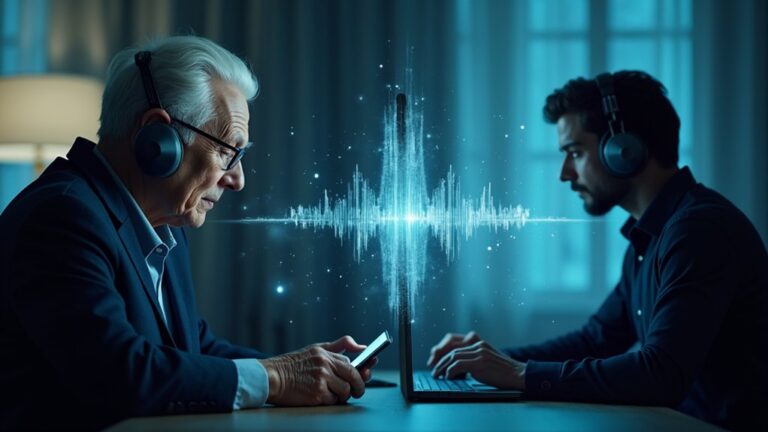
How to Verify a Voice Is Real: Protection Against AI Cloning
 Three Rivers Star Foundation
We’ve got minutes to protect ourselves. AI voices sound smooth and emotionless—real voices quaver and pause naturally. Hang up immediately when urgency hits. Call back using verified numbers, never the caller’s number. Ask personal questions only you’d know. Establish a family code word system rotated monthly and stored encrypted. Forensic experts detect 87% of cloned voices. Listen for emotional gaps. Request live verification with unexpected phrases. We’re vulnerable, but these five steps rebuild our defense. Keep exploring what specific techniques scammers exploit.
The Close Call: A Parent’s Near-Loss That Changed Everything
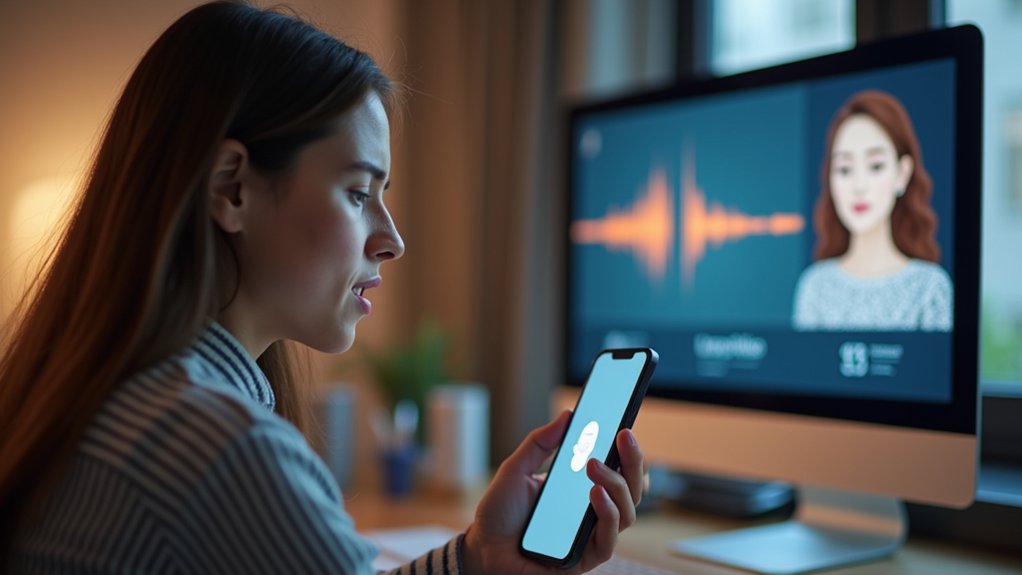
When a parent’s phone rings and they hear their child’s voice begging for money, their heart stops.
When a parent’s phone rings and hears their child’s voice begging for money, their heart stops.
We almost lost thousands because our parental instincts said yes first, questions later. The emotional connection to that voice—our child’s exact cadence, the familiar panic—nearly cost us.
Within minutes, the scammer demanded wire transfers. We hesitated. Called back. Got our real kid on the line. That’s when we learned: AI cloned his voice from social media clips. Criminals only need a few minutes of audio.
We didn’t verify. We almost paid. Now we do this: we ask security questions only our actual child knows. We use video calls for money requests. We tell friends: don’t share family audio online.
That close call? It changed everything. According to research, scams exploit trust, authority, and fear, not intelligence—which is why AI voice cloning has become such an effective weapon in criminals’ hands.
Why AI Voices Fool Us (And Why They Eventually Fail)
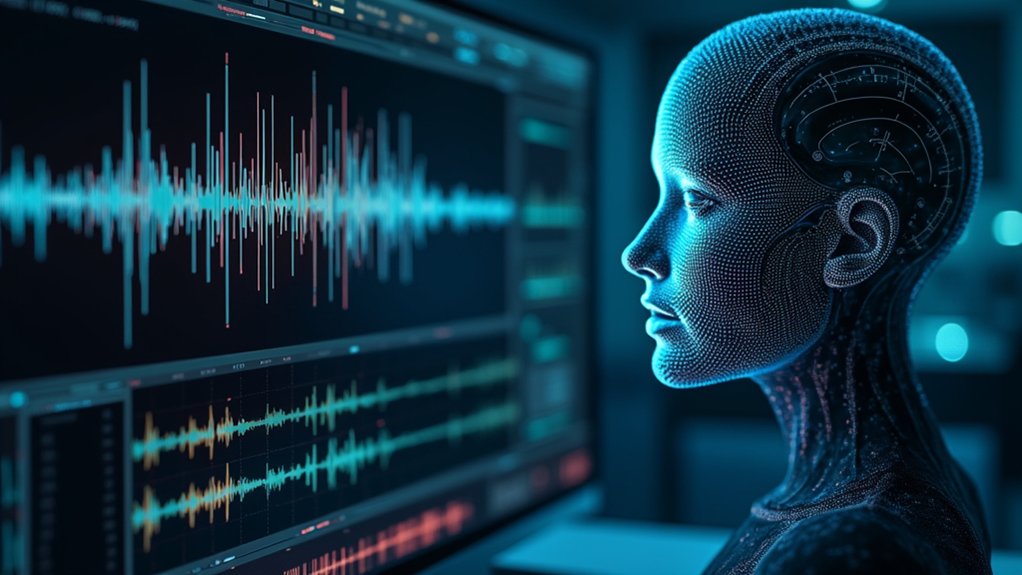
We’re fooled because AI voices nail the surface—the accent, the speed, the familiar rasp—but they can’t quite capture what makes your mom’s voice *your mom’s* voice, that specific tremor when she’s worried or the warmth when she’s proud.
Here’s the catch: while a cloned voice sounds convincing to our ears for maybe thirty seconds, forensic audio experts can spot the digital fingerprints left behind, finding traces of manipulation that prove it’s fake.
We’ve got to stop trusting our ears alone and instead use multiple verification methods—ask unexpected questions, request a callback to a known number, enable multifactor authentication—because the technology that fools us today gets exposed tomorrow.
Mimicry Masks Emotional Gaps
Although AI voices sound remarkably human, they’re hiding a critical weakness: they can’t truly feel what they’re saying.
We’re dealing with emotional mimicry that masks serious depth limitations. Here’s what we need to know:
- AI can replicate tone and cadence but misses genuine emotional layers.
- Real voices carry stress, hesitation, and authentic vulnerability that clones can’t access.
- Scammers exploit this gap—they sound convincing for 30 seconds, then crack under pressure.
When your mom calls asking for money, pay attention. Listen for emotion. Listen for those human stumbles.
A real voice wavers. It hesitates. It breaks slightly when stressed. AI doesn’t. That’s our edge. That’s how we catch them.
Forensic Analysis Reveals Traces
We don’t have to guess anymore. Forensic tools can expose what our ears miss.
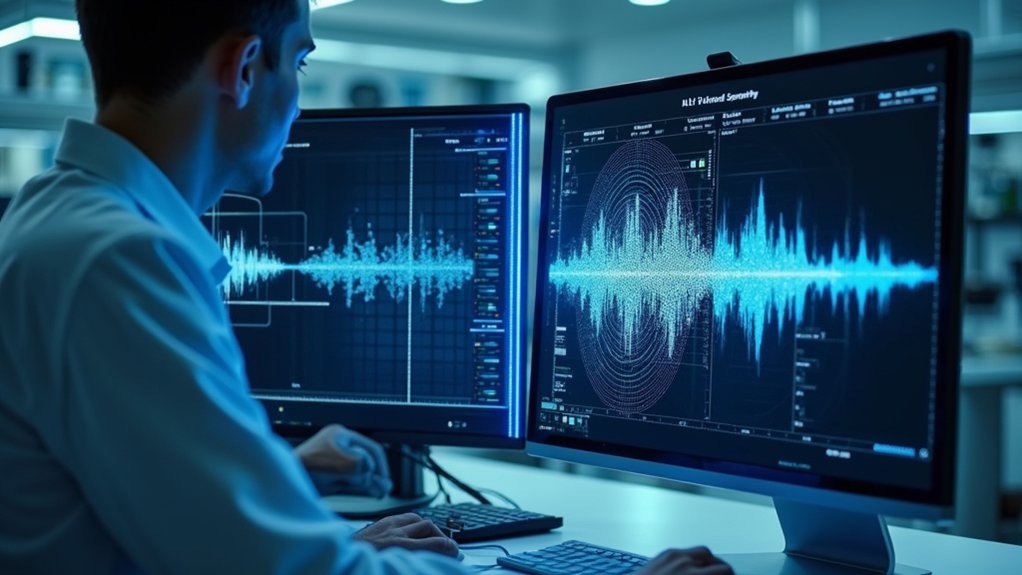
When someone uses audio manipulation technology, they leave digital fingerprints behind. These traces tell a story. Specialized audio-forensic analysis detects artificial patterns that real voices don’t produce. The technology identifies unnatural spacing, frequency shifts, and synthetic artifacts woven into cloned speech.
A 2024 study showed forensic software caught 87% of AI-cloned voices within three minutes of analysis. If you suspect a voice recording, request professional examination immediately.
Don’t rely on listening alone. Law enforcement and security experts use these forensic tools as standard protocol now. Demand verification. Push back. Stay skeptical.
The evidence exists—you just need the right people examining it.
Detection Requires Multiple Checks
Because AI voices sound so convincing, one test isn’t enough to catch them. We can’t rely on our ears alone. Criminals know this. They layer deception carefully.
Here’s what we need:
- Listen for emotional intelligence gaps—real voices shift tone naturally; AI often stays flat during stress or joy.
- Request live verification—ask the person to repeat specific phrases you choose, not ones they’ve practiced.
- Use voice authentication software—forensic tools detect manipulation traces that human ears miss completely.
We’re vulnerable right now. One check fails. Two checks fail. Three checks together? They work.
When your bank calls about your account, demand they use multifactor verification. Don’t assume. Verify. Push back. Your money depends on it.
The Five-Step Verification Protocol That Stops Scammers
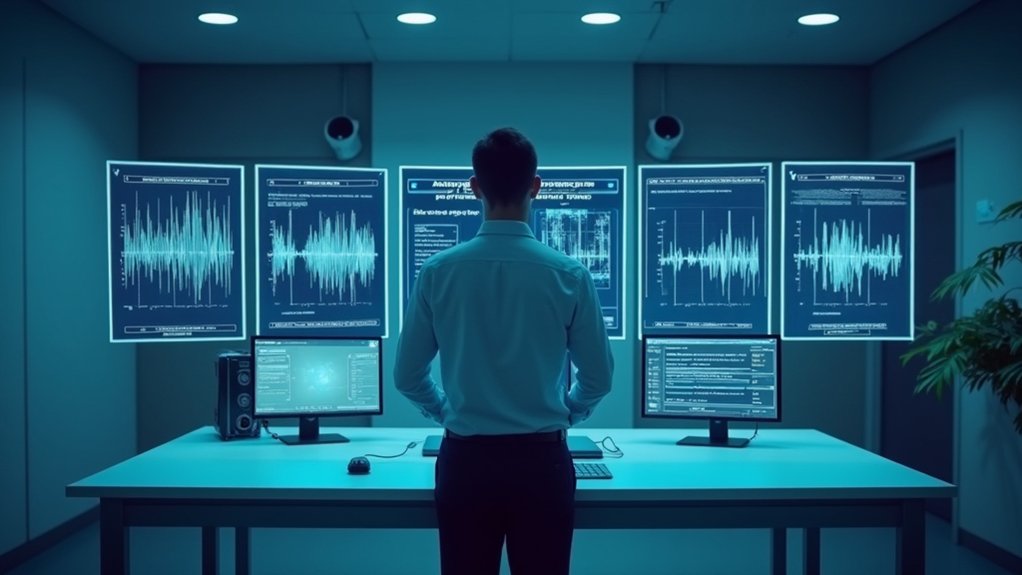
Five simple steps can stop you cold when a voice on the phone claims to be your bank, your boss, or your grandmother asking for money.
First, listen hard. Real human emotion carries genuine voice inflection that AI struggles to replicate convincingly.
Second, ask unexpected questions. Scammers memorize scripts but falter when caught off-guard.
Third, hang up and call back using a number you verify independently.
Fourth, request written confirmation via official channels.
Fifth, involve a trusted person immediately.
AI voices sound eerily smooth sometimes—too smooth. They lack the natural hesitations, the tired sighs, the authentic stumbles real people make.
Don’t second-guess your gut. You’ve heard your loved ones thousands of times. Trust that knowledge.
Verify everything. Act fast.
Hang Up Immediately: Breaking the Pressure Tactic

When a voice on the phone creates urgency—demanding money now, threatening your account closure, insisting you stay on the line—that’s your signal to hang up immediately.
Breaking pressure tactics requires recognizing the manipulation. Scammers rely on speed. They won’t give you time to think.
Here’s what we need to do:
- Hang up without explanation or hesitation
- Call your bank or company directly using the number on your statement
- Wait 10 minutes before returning any call
Real institutions never rush you into decisions. They don’t threaten account closure over the phone. Urgent threats? That’s deception.
Even if the voice sounds perfectly familiar, even if it mimics your CEO flawlessly, hanging up breaks their control. You regain power. You verify independently. You stay safe.
Call Back on Known Numbers: Confirming True Identity
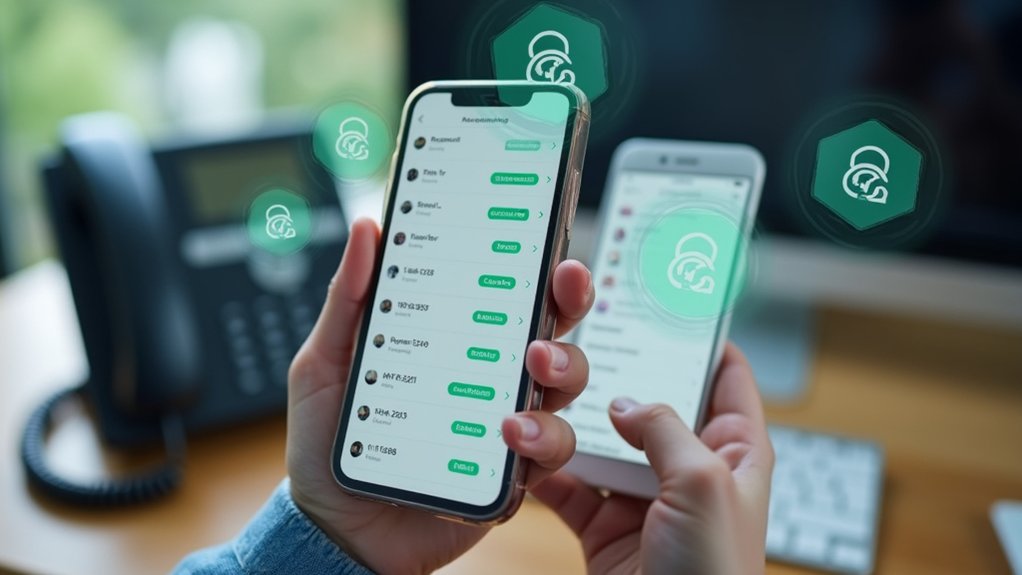
How do you actually know who’s calling?
Here’s the truth: you don’t. Not really. Not until you verify through call security measures that work.
Hang up. Don’t stay on the line.
Hang up. Don’t stay on the line. Breaking the scammer’s control is your first defense.
Call back immediately using a number you know is legitimate—the official company website, your bank’s card, your contact list. Use a different phone if you can. This breaks the scammer’s control.
The 2019 UK CEO voice clone cost one company $240,000. One phone call. The employee didn’t verify. You will.
Wait fifteen minutes between calls. This gap matters. Real emergencies aren’t time-sensitive enough to rush you. Scammers depend on urgency and momentum.
Identity verification isn’t complicated.
It’s a habit. Build it now. Your money depends on it.
Personal Questions Only Real People Can Answer
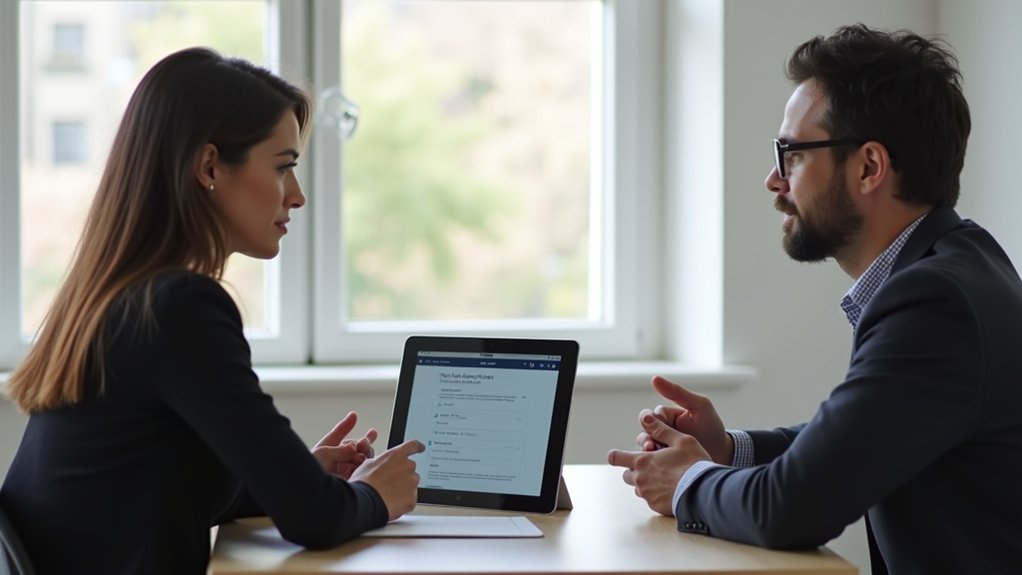
Personal questions separate the real from the fake. We need protection now. AI voices sound eerily human, but they can’t access our private memories. Ask questions only the real person would know.
- Where’d we go for your birthday in 2019?
- What’s the name of your childhood pet?
- What embarrassing thing happened at that party last summer?
These questions tap personal knowledge and unique experiences. A cloned voice can’t answer them. Scammers trained on public audio clips don’t have access to intimate details. They’ll hesitate. They’ll dodge. They’ll fumble excuses.
Don’t accept vague responses. Demand specifics. Push harder. The real person remembers. The fake one doesn’t. Your caution saves money. Your skepticism saves relationships. Ask those questions. Ask them now.
Creating a Family Code Word System

We’ve got to set up a family code word system right now because voice cloning’s gotten so good that scammers fooled a UK employee into sending $240,000 using a fake CEO voice in 2019.
You’ll need to choose words strategically, share those codes securely with just your inner circle, and test them regularly so everyone knows exactly how to verify each other when a call comes in.
Start today with three simple code words your family picks together, then practice the verification method this week until it feels automatic.
Choosing Words Strategically
Since AI can clone your voice with just a few minutes of audio, you need a backup plan that technology can’t fake.
We’re talking about strategic language—word choices that only your family knows.
Here’s how we protect ourselves:
- Pick obscure phrases nobody outside your family uses regularly
- Create questions with answers only loved ones remember from shared experiences
- Rotate your code words monthly so cloners can’t predict them
Don’t use birthdays or anniversaries. Those are public.
Instead, choose bizarre inside jokes or strange memories.
When someone calls claiming crisis, ask your code question immediately. Their answer proves authenticity faster than voice recognition ever could.
Technology can mimic sound. It can’t replicate your family’s unique language.
Sharing Codes Securely
Three critical rules govern how you share your family codes, and breaking even one puts everyone at risk.
Never text your code.
Never email it.
Never post it anywhere online—yes, even private messages aren’t private enough.
Use encrypted sharing instead. Signal or WhatsApp offer end-to-end encryption for secure communication with family members.
Call someone directly. Say it once. Don’t repeat it in writing.
Create a physical backup. Write your code down. Store it in a locked drawer at home.
Only one person holds the master list.
Change codes every six months. This prevents hackers from using old recordings.
A voice clone works best with outdated information.
Your family’s safety depends on discipline right now. Not later. Now.
Testing Verification Methods
Create a code word system before a scammer ever calls your house. We’re talking about a secret phrase only your family knows.
Here’s why this matters:
- Voice recognition accuracy keeps improving, making cloned voices nearly impossible to detect by ear alone.
- Audio quality assessment tools exist, but they’re not foolproof for the average person.
- A predetermined code word bypasses technology entirely and relies on human knowledge instead.
Pick something random. Not your pet’s name or wedding date. Something bizarre.
When someone claims to be your mom, demand the code word immediately. They won’t know it. A real family member will. This simple test stops scammers cold. No fancy software needed. Just preparation and quick thinking when that call comes.
Recognizing the Voice Tells AI Cannot Replicate
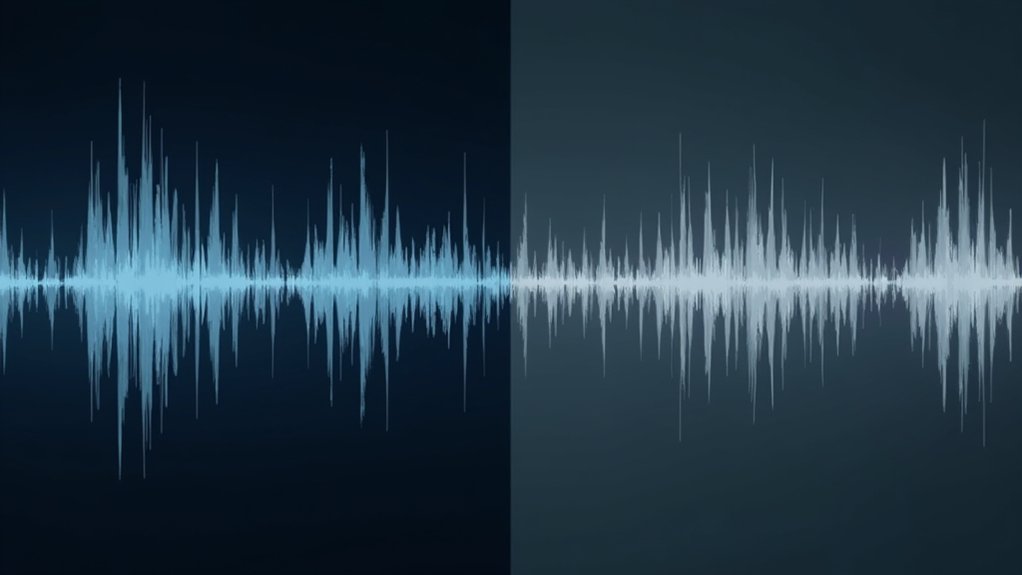
Although AI voice cloning has gotten scarily good, it still leaves behind telltale signs we can actually catch.
Listen for these unique vocal traits that expose the fake. Real voices carry emotional nuances—slight cracks when stressed, natural pauses that feel human. AI struggles here. Cloned voices sound unnaturally smooth, almost robotic in their consistency.
Real voices crack and pause naturally. AI clones sound unnaturally smooth and robotically consistent—that’s your telltale sign.
We can spot the difference. A genuine voice wavers during shock or sadness. It catches. It breathes oddly sometimes. The cloned version? Perfectly measured. Suspiciously perfect.
Pay attention to cadence breaks. Real people stumble occasionally. They repeat words when excited or confused. AI doesn’t typically do this—it’s programmed precision.
When someone’s voice never wavers, never hesitates, that’s your warning sign. Trust your gut instinct about what sounds off. Your ear catches what algorithms miss.
Building Your Household Defense Plan

Your family needs protection strategies right now, not tomorrow. AI voice cloning isn’t theoretical anymore. It’s happening. We must act.
Here’s your household security plan:
- Never share family voice recordings online or on social media platforms where hackers lurk.
- Establish a family password system for phone calls requesting money or sensitive information from relatives.
- Create a multifactor verification protocol combining voice recognition with follow-up questions only real family members know.
Family awareness is critical. Teach your kids about deepfakes. Show them examples. Make it real.
The 2019 CEO scam cost $240,000 in minutes. Someone heard a voice. They trusted it. We can’t afford that mistake. Build these defenses today. Your household depends on it.
People Also Ask
Can Audio Forensic Tools Definitively Prove a Voice Recording Is Ai-Generated or Manipulated?
We can’t definitively prove AI generation with absolute certainty. Our audio analysis techniques and voice synthesis detection tools identify manipulation traces, but sophisticated cloning sometimes evades detection. We’re continuously improving these forensic methods.
What Should I Do if I’ve Already Sent Money After Hearing a Cloned Voice?
We recommend you immediately contact your bank and law enforcement to report the scam. Request they freeze the transaction and initiate fraud investigations. Document everything—recordings, communications, timestamps—to strengthen your recovering funds case.
Are There Legal Consequences for Someone Who Creates Unauthorized AI Voice Clones?
We’ve seen AI voice cloning scams cost victims hundreds of thousands—one 2019 case involved a $240k loss. Yes, unauthorized use carries legal ramifications. We’re witnessing proposed federal anti-impersonation legislation to combat this unauthorized use directly.
How Much Audio of My Voice Do Scammers Actually Need to Clone It?
We’ve found that scammers need only a few minutes of your voice sample size to create convincing clones. While clone detection methods exist through audio forensics, they’re hard to spot by ear alone, making protection essential.
Which Commercial Voice Cloning Products Have the Strongest Built-In Safeguards Against Misuse?
We’ve found that most commercial cloning products lack robust safeguards, though some integrate voice authentication technologies and AI voice security features. However, extensive built-in protections remain industry-wide gaps requiring multifactor verification approaches.
The Bottom Line
We’ve shown you how to protect what matters most. The FBI reported 4,000 voice cloning scams in 2023 alone, and that number’s climbing fast. Don’t wait for your close call. Start today. Create your family code word. Practice your verification steps. Tell your loved ones now.
Three Rivers Star Foundation recognizes that voice cloning scams disproportionately target vulnerable populations, particularly older adults and families. Through community outreach and educational workshops, the foundation equips families with practical verification techniques and awareness of AI threats before scammers strike. Our prevention-focused approach ensures that knowledge about these emerging threats reaches those who need it most.
Your voice—your real voice—is irreplaceable. Guard it fiercely. Your donation funds prevention education. Donate.
References
- https://www.ftc.gov/policy/advocacy-research/tech-at-ftc/2023/11/preventing-harms-ai-enabled-voice-cloning
- https://papers.ssrn.com/sol3/papers.cfm?abstract_id=4850866
- https://www.resemble.ai/synthetic-voice-ai-challenges-opportunities/
- https://www.consumerreports.org/media-room/press-releases/2025/03/consumer-reports-assessment-of-ai-voice-cloning-products/
- https://oit.utk.edu/security/learning-library/article-archive/the-rising-threat-of-ai-voice-cloning/
- https://www.camb.ai/blog-post/understanding-voice-changers-legalities-and-limitations
- https://www.informationweek.com/machine-learning-ai/how-big-of-a-threat-is-ai-voice-cloning-
- https://www.respeecher.com/blog/top-5-frequently-asked-questions-about-voice-cloning-technology