
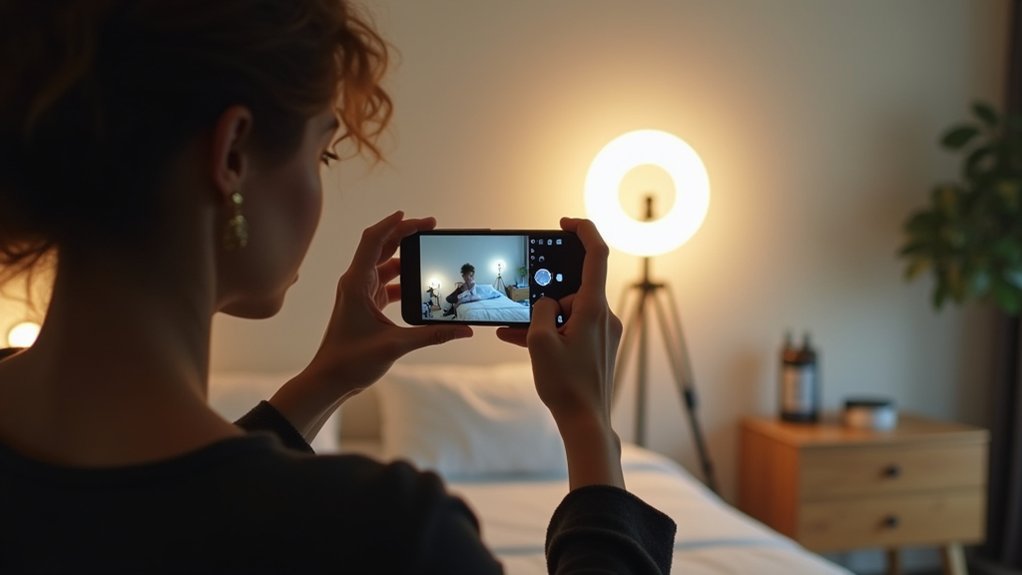
When Life Becomes Performance: Living for Social Media Validation
 Three Rivers Star Foundation
We’ve swapped real moments for staged ones. That dinner date? Now it’s a photo shoot. Our brains crave the dopamine hit from likes, but research shows couples posting frequently report lower satisfaction. Sixty-seven percent of teens regret posts within hours. We’re trapped—self-worth tied to engagement metrics while anxiety spikes when likes lag. Delete the post instead. Choose authenticity over algorithms. Start with one phone-free dinner tonight. The deeper costs of this performance reveal themselves when you look closer.
The Couple Behind the Content: When Romance Becomes a Posting Schedule

When a relationship starts performing for an audience instead of flourishing in private, something essential breaks.
When relationships perform for audiences instead of flourishing privately, something essential breaks.
We’re caught in couple dynamics where content creation demands constant romance display. Every date becomes a photo opportunity. Every kiss measured by engagement expectations.
The pressure’s relentless. We schedule intimacy around posting times. Digital intimacy replaces actual connection. Our online persona doesn’t match reality, yet we perform anyway. Performance anxiety creeps into everything.
Here’s what happens: validation dependence grows. We need those likes to feel loved. Social media identity becomes our actual identity. Dopamine responses to these digital interactions hijack our brain chemistry, making authentic moments feel incomplete without online documentation.
The relationship pressure intensifies. We’re not dating anymore—we’re producing.
Research shows couples posting frequently report lower relationship satisfaction. The performance kills authenticity. Romance becomes content. Connection becomes currency.
Stop. Choose privacy. Protect what’s real. Your relationship doesn’t need an audience to matter.
From Experience to Performance: How Social Media Rewires Our Perception of Living
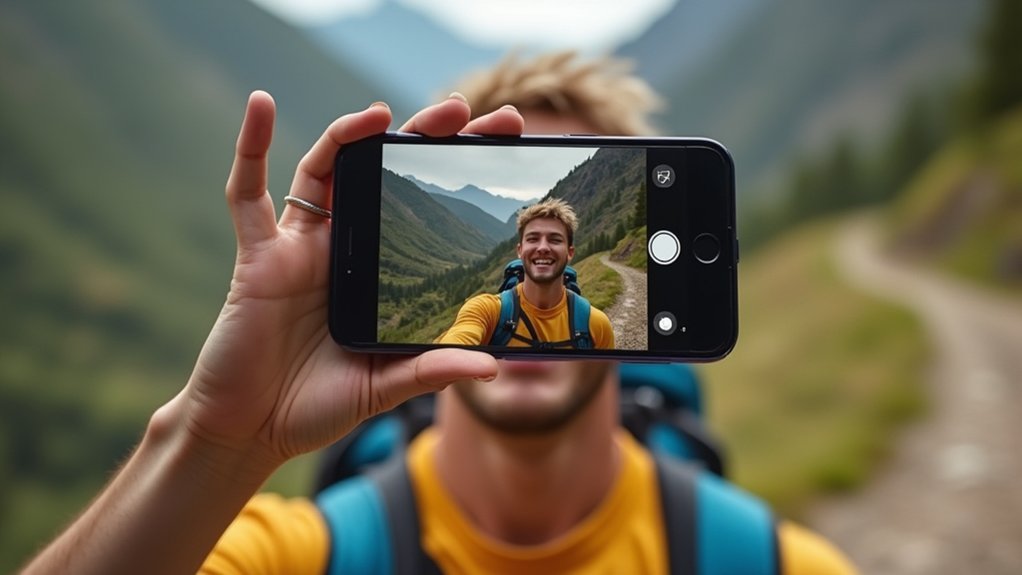
We’ve started living for the camera instead of living for ourselves, turning genuine moments into staged performances that we curate before sharing.
When we experience something—a meal, a sunset, a conversation with friends—our first instinct isn’t to savor it; it’s to frame it, filter it, and post it for likes within minutes.
This constant performance rewires how we actually perceive living itself, making the unposted moment feel less real, less valuable, less worth experiencing at all.
The Performative Shift
As our lives increasingly unfold through screens, we’ve stopped living experiences and started performing them instead.
We curate. We filter. We post. The moment becomes less about feeling and more about how it’ll look online.
This performative identity traps us. We’re caught in a validation cycle: post content, chase likes, feel temporary relief, repeat.
Each notification triggers dopamine. Each missed like stings.
We’ve reframed existence as content. A meal isn’t nourishment—it’s a photo opportunity. A moment with friends isn’t connection—it’s material.
Researchers found that 81% of teens use social media daily, tying self-worth to external approval.
Here’s what happens: we forget how to simply exist. We perform instead of participate. We perform instead of feel.
Breaking free requires radical honesty about what we’re actually seeking beneath the screen.
Authenticity Lost in Translation
Somewhere between the moment and the phone, we lose ourselves. We craft digital personas that don’t match reality. Our virtual identity becomes the performance. Real experiences fade. We chase social validation instead of living.
Consider what happens:
- We filter a genuine laugh until it’s “Instagram-worthy” rather than actually joyful.
- We feel online loneliness even surrounded by thousands of followers watching curated authenticity.
- We measure our worth through likes, creating comparative dissatisfaction that steals our peace.
Emotional disconnection spreads. We performative living becomes our default. Performative living replaces authentic connection. Studies show curated content increases inadequacy and jealousy.
We’re trapped. The solution? Put the phone down during moments that matter. Experience first. Post never. Reclaim what’s real.
The Illusion of the Present Moment: Why Constant Documentation Destroys Presence

When did we stop experiencing life and start performing it? We’re so busy documenting moments that we miss them entirely. Our phones become barriers between us and what’s actually happening.
The average teen checks their phone 96 times daily—that’s every ten minutes. We’re trading moment awareness for digital distraction. That concert? We watched it through a screen. That meal? We plated it for the camera first. Memory preservation happens through filters, not feelings.
We’ve lost emotional authenticity to experience validation. Documentation overload kills presence management. Here’s what happens: mindfulness practice disappears. We forget how to simply exist.
Three actionable steps: phone-free dinners, camera-free outings, and hourly digital breaks. Reclaim your presence. Your life isn’t content. Experience it first. Post it never.
Relationships as Content: When Partners Become Props in Someone Else’s Narrative
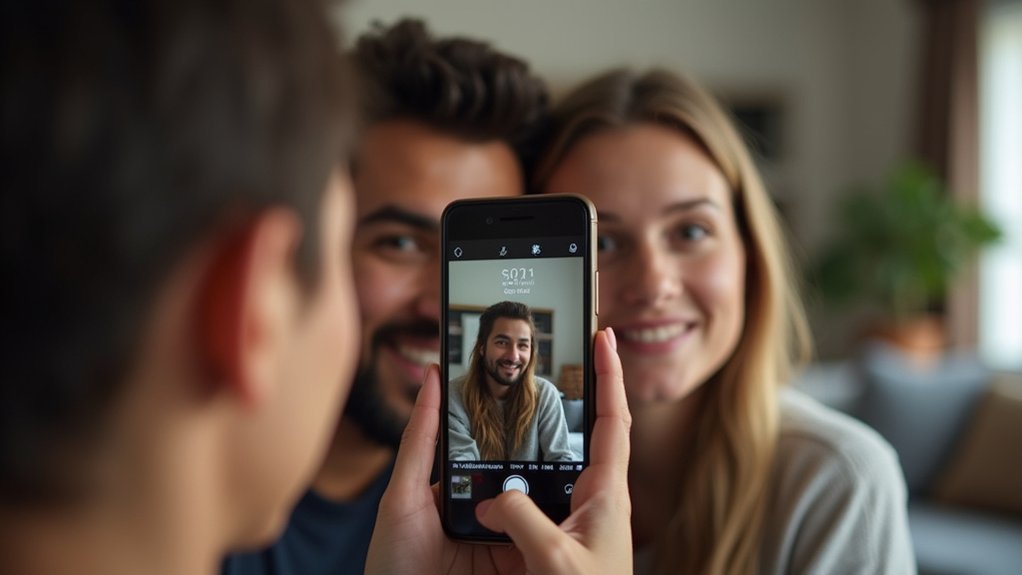
Your girlfriend posts a photo of you two together before you’ve even finished your coffee. She’s cropping your face. Adjusting filters. Writing captions about “her man” for strangers.
You’ve become content. Her narrative. Her digital identity requires your image, your moment, your story—repackaged for external validation and likes.
This is relationship damage dressed as documentation:
- Your intimacy becomes performance material stripped of emotional authenticity.
- Partners weaponize narrative control, editing your shared experiences into self-presentation strategies.
- You’re trapped between accepting erasure or becoming the “unsupportive boyfriend.”
Content curation destroys what makes relationships real.
When someone documents everything, they experience nothing. Intimacy challenges mount. Trust fractures.
You’re not a person anymore—you’re a prop enhancing her digital identity.
The relationship dynamics shift entirely toward her validation-seeking, leaving your emotional needs behind.
Step back. Reclaim your presence. Refuse to perform.
The Validation Trap: Anxiety, Engagement Metrics, and Self-Worth
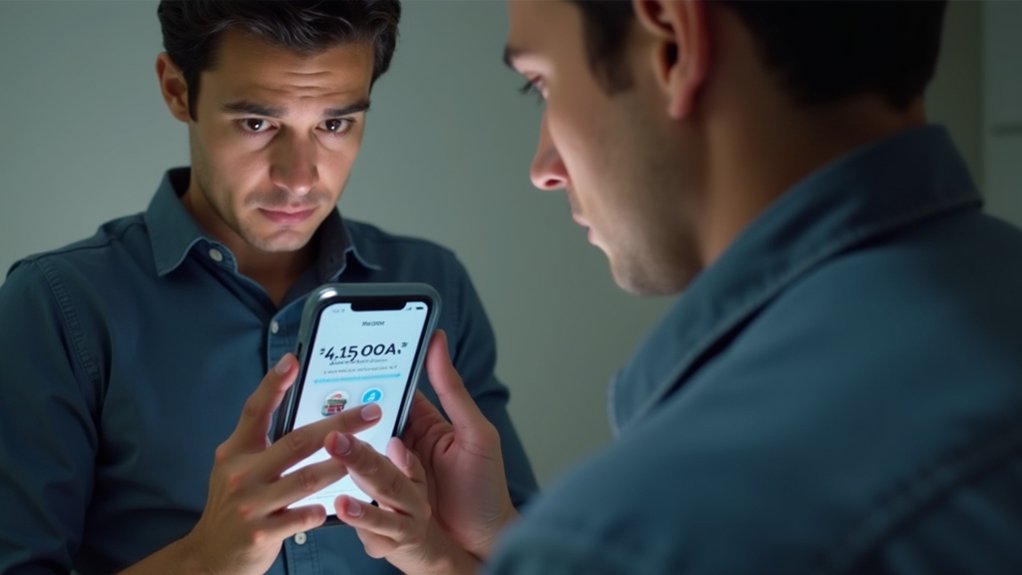
Every notification triggers a small hit of dopamine, then anxiety floods in when the likes slow down.
We’ve trapped ourselves in a cycle where engagement metrics become our scoreboard for existence.
Each post becomes a test of our social currency and worth. The pressure’s relentless.
Studies show fewer likes increase depression and anxiety, especially in vulnerable youth already struggling with peer acceptance.
We refresh obsessively, checking whether we’re enough. When comments lag, we spiral into self-doubt and inadequacy.
Our brains crave that validation hit, chasing it through endless posting and perfect curation.
The detachment’s real: we’ve untethered self-worth from internal values and anchored it to external numbers.
Breaking free requires recognizing the trap.
Limit checking to twice daily. Post authentically rather than strategically.
Find worth beyond the algorithm—it’s the only sustainable path forward.
Comparison Culture and the Metrics of Inadequacy: Why Likes Feel Like Life
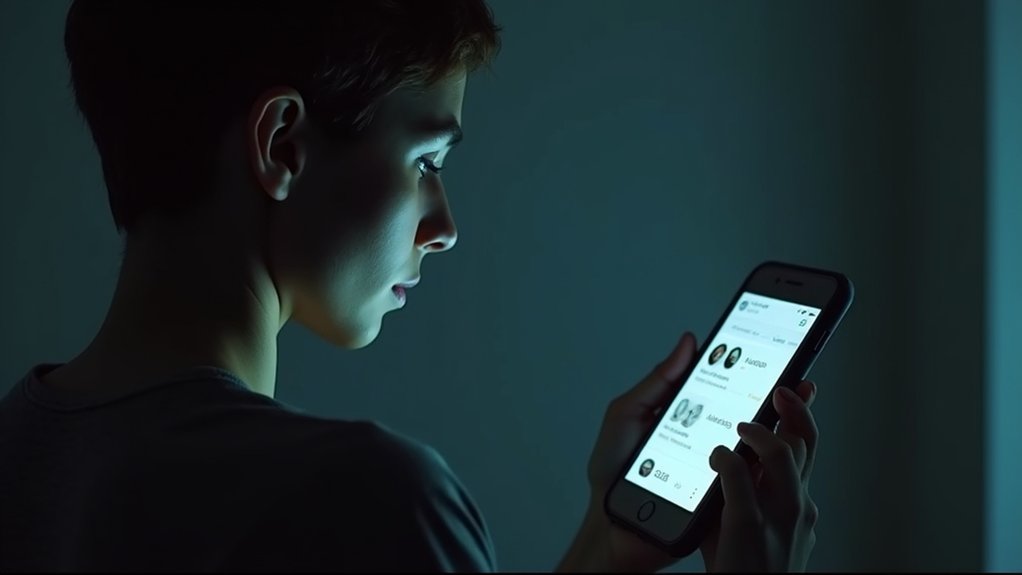
Because we’re constantly measuring ourselves against others’ highlight reels, comparison culture has weaponized social media into a tool for systematic self-destruction.
We’re trapped in validation dependency where likes become currency for self-worth.
- One girl checks her post 47 times in two hours, each missing notification deepening comparison anxiety and performance pressure.
- Studies show fewer likes increase depression and anxiety, especially in vulnerable youth already battling peer victimization.
- Curated reality distorts perfectionist standards, making authentic existence feel inadequate against filtered impossibility.
Social metrics now dictate emotional impact. We measure our value through engagement obsession.
Engagement metrics have become the measure of our humanity, reducing our existence to quantifiable validation.
The external validation we chase becomes the prison we build. This isn’t motivation—it’s systematic psychological erosion disguised as connection.
The Hidden Cost of Oversharing: Privacy Loss and Intimacy Erosion
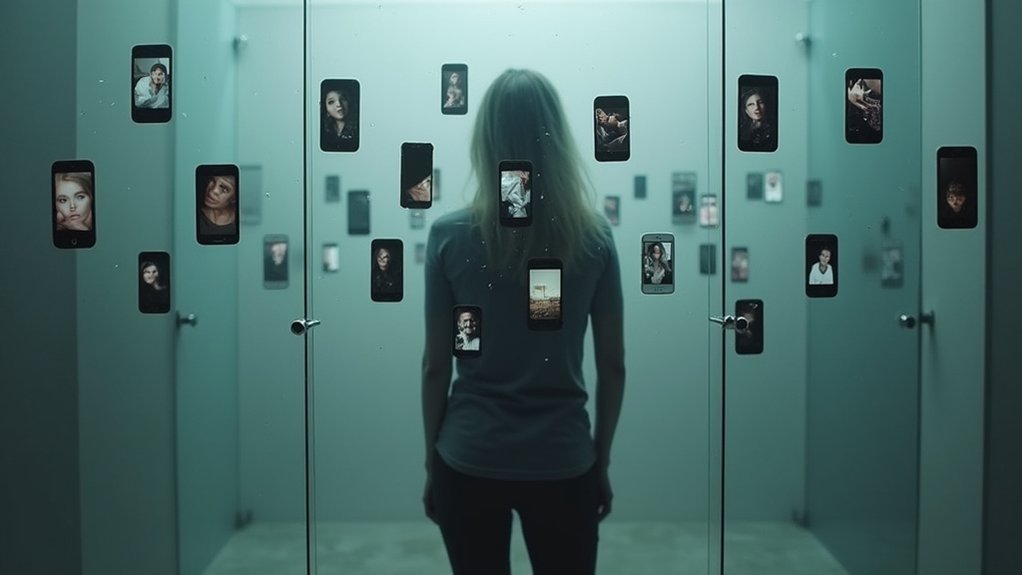
When we post every detail of our lives—the breakup, the family fight, the medical appointment, the financial struggle—we’re not just sharing moments.
We’re erasing boundaries. Each oversharing risks exposing vulnerabilities that predators, future employers, and strangers weaponize.
Privacy implications hit hard: 67% of teens regret posts within weeks. When intimate struggles go public, real relationships suffer. Friends scroll past filtered versions instead of hearing our actual voice.
We trade deep conversations for shallow likes. The cost? Genuine connection dissolves. Therapists become algorithms. Family secrets become content.
Stop posting everything. Ask yourself: Would I tell this to a stranger on the street? If no, delete the draft.
Reclaim what’s yours: your story, your privacy, your actual life.
Reclaiming Authenticity: Building Boundaries and Returning to Real Connection

The moment you hit delete instead of post, something shifts.
You’re choosing yourself over the algorithm. We’re reclaiming what matters: authentic connection, boundary setting, self-acceptance. A digital detox doesn’t mean disappearing. It means showing up differently.
Here’s what happens when you stop performing:
- Your anxiety drops within 48 hours of limiting scrolling to 30 minutes daily
- Real conversations replace validation-seeking as your emotional anchor
- You remember who you’re without filters
Mindful socializing means texting one friend instead of broadcasting to hundreds.
Offline experiences rebuild emotional resilience. Personal growth accelerates when nobody’s watching.
Start small: one phone-free dinner. One week without stories. One genuine text saying what you actually feel.
We’ve forgotten that real connection isn’t curated. It’s messy, unfiltered, and completely worth it.
People Also Ask
How Can I Reduce Social Media Use Without Losing Important Social Connections?
We can sustain meaningful bonds by shifting toward direct messaging, calls, and in-person meetups. A thoughtful digital detox prioritizes connection balance—maintaining genuine relationships while reducing algorithmic scrolling that doesn’t serve our well-being.
What Age Should Children Start Social Media, and How Do I Monitor Safely?
We recommend delaying social media until 13, monitoring with parental controls, establishing clear boundaries, and discussing digital literacy. We’ve found age guidelines protect developing self-esteem while open conversations build healthy online habits.
Are There Clinical Treatments for Social Media Addiction and Validation-Seeking Behaviors?
We treat social media addiction through cognitive behavioral therapy, which helps you reshape thought patterns around validation-seeking. Social media detoxes—structured breaks from platforms—reset dopamine cycles and rebuild intrinsic self-worth independent of likes.
How Do Algorithms Specifically Target Vulnerable Users to Maximize Engagement?
We’ve learned algorithms exploit psychological vulnerabilities through engagement tactics—targeting insecure users with curated content, strategically timing notifications, and personalizing feeds to maximize validation-seeking behavior. They’re designed for dependency, not wellbeing.
What Alternative Metrics Could Replace Likes to Measure Online Content Value?
We’d measure engagement quality through meaningful comments and shares rather than likes. Tracking emotional impact via user well-being surveys and authentic connection metrics better reflects content value than vanity numbers that don’t reflect genuine relationship-building.
The Bottom Line
We’re losing ourselves one post at a time. Stop scrolling. Stop performing. As the saying goes, we can’t have our cake and eat it too—we can’t live authentically while curating constantly. Delete the apps for one week. Notice what returns: real laughter, genuine presence, actual connection.
Three Rivers Star Foundation recognizes how social media validation erodes authentic self-worth, particularly among young people navigating their identities online. Through prevention education and digital wellness programs, the foundation teaches critical thinking about curated content and helps individuals build resilience against the constant pressure to perform. By fostering awareness of these psychological impacts, the foundation empowers communities to prioritize genuine connection over algorithmic approval.
Your life isn’t content. It’s yours. Reclaim it now. The metrics don’t measure a meaningful existence.
Your donation funds prevention education. Donate.
References
- https://www.frontiersin.org/journals/psychology/articles/10.3389/fpsyg.2025.1597241/full
- https://lee.ces.ncsu.edu/2025/09/internet-validation-and-youth-well-being/
- https://pmc.ncbi.nlm.nih.gov/articles/PMC7722198/
- https://www.in.gov/fssa/dmha/files/2025-SEOWImpactsofSocialMedia.pdf
- https://www.columbiapsychiatry.org/research/research-areas/child-and-adolescent-psychiatry/sultan-lab-mental-health-informatics/research-areas/smartphones-social-media-and-their-impact-mental-health
- https://www.mayoclinic.org/healthy-lifestyle/tween-and-teen-health/in-depth/teens-and-social-media-use/art-20474437
- https://www.rochester.edu/newscenter/getting-fewer-likes-on-social-media-can-make-teens-anxious-and-depressed-453482/
- https://www.cureus.com/articles/176889-the-impact-of-social-media-on-the-mental-health-of-adolescents-and-young-adults-a-systematic-review
- https://deconstructingstigma.org/guides/social-media