

Romance Scam Recovery: Rebuilding Your Life After Losing Everything
 Three Rivers Star Foundation
Romance scams steal $1.1 billion yearly. You’ve lost money. You’ve lost trust in yourself. That’s the real damage. Victims aged 50-75 report losing $50,000 to $200,000. Act now. Contact your bank. Report to the FBI and FTC. Document everything. Yes, recovery’s possible—early action matters. But financial healing takes months. Emotional healing takes longer. You’ll need therapy, support groups, and self-compassion. You’re not stupid. You’re human. Shame thrives in silence, but your story—and your comeback—belongs in the light.
Understanding the Dual Loss: Financial Devastation and Emotional Betrayal
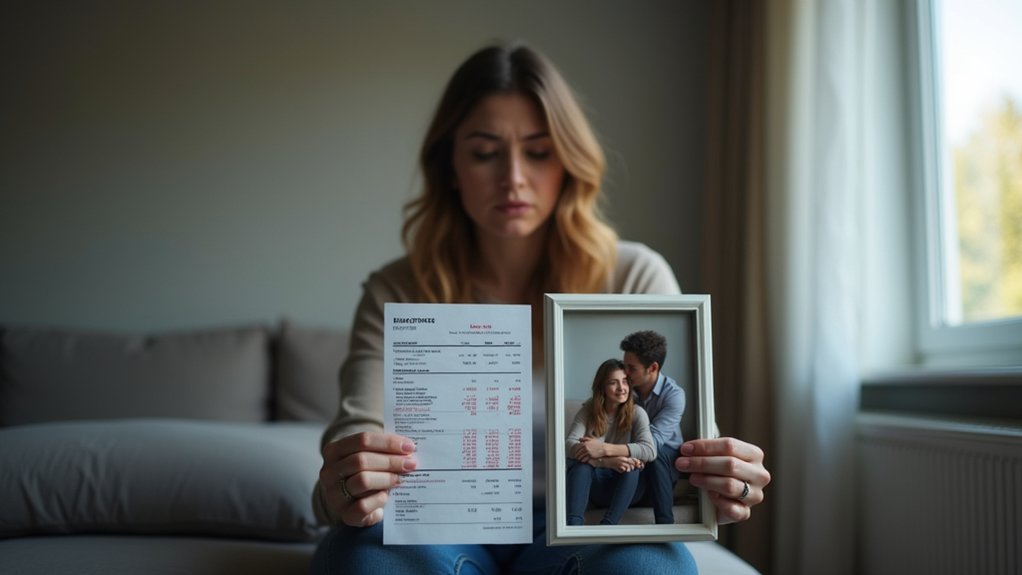
When romance scammers strike, they don’t just take your money—they shatter something far more fragile.
We’re hit twice. First comes the financial blow. The median loss? Two thousand dollars. But ten percent of us lose ten thousand or more. We’ve refinanced homes. We’ve emptied retirement accounts. We’ve maxed out credit cards chasing recovery.
Then comes the emotional wreckage. Shame floods in. Betrayal stings. We question our judgment. We isolate ourselves. Forty percent tell nobody.
Emotional exploitation targets grieving individuals during their most vulnerable moments, making the psychological impact even more devastating than the financial losses alone.
Here’s what we need: financial counseling to rebuild, emotional resilience to move forward. Professional therapy addresses vulnerabilities scammers exploited. Support groups connect us with others who understand.
We must act fast—both financially and emotionally. Swift action increases recovery chances. Early intervention changes everything.
We’re not weak. We’re targeted. We’re recoverable.
Why Romance Scam Recovery Is More Complex Than Other Financial Crimes

We’re dealing with something far more dangerous than a stolen credit card or hacked bank account.
Romance scammers don’t just take your money—they systematically dismantle your ability to trust yourself, exploit vulnerabilities you didn’t know you had, and leave you battling both financial ruin and psychological trauma simultaneously.
The median loss of $2,000 pales against the reality that 26% of victims engage with scammers for over two weeks, that 5% maintain fake relationships for a year or longer, and that 40% suffer in silence, telling absolutely no one what happened.
Individuals aged 50-75 represent the primary targets for these sophisticated operations, with average losses reaching between $50,000 to $200,000 that often include life insurance payouts and homes.
Emotional Manipulation & Trust Betrayal
Unlike stealing your wallet, a romance scam steals something far harder to replace: your belief in your own judgment. The scammer didn’t just take money. They dismantled your emotional resilience by exploiting vulnerability recognition and trust dynamics. You believed them. Your gut failed you—or so you think. That’s the real injury.
We know 26% of victims engage with scammers for over two weeks. Many spend months building fake relationship bonds. The betrayal compounds financial loss because the emotional connection felt authentic. Your empathy development became a weapon against you. Research shows that chronic loneliness can intensify susceptibility to manipulation, as isolated individuals may have fewer trusted relationships to reality-check their connections.
Recovery demands more than contacting your bank. You need support networks. Professional coping strategies matter. Self-acceptance matters most.
Rebuilding relationship healing requires understanding you weren’t stupid—you were targeted by professionals who exploit human connection itself.
Layered Psychological & Financial Trauma
A romance scam isn’t a robbery—it’s demolition.
You’ve lost money. You’ve lost time. You’ve lost yourself. Unlike typical fraud, romance scams attack your emotional resilience while destroying financial stability. They weaponize trust. They exploit vulnerability assessment failures. The damage layers: psychological trauma stacks atop financial ruin.
| Impact | Timeline | Recovery Need |
|---|---|---|
| Emotional betrayal | Immediate | Mental health support |
| Financial loss | Weeks | Coping strategies |
| Trust destruction | Months | Relationship healing |
| Identity confusion | Years | Self-forgiveness work |
Seventy-five percent of victims experience PTSD symptoms. Ninety-four percent never recover funds. You’re grieving someone who never existed. Support systems matter. Professional trauma recovery works. Scam recognition prevents re-victimization.
We rebuild by acknowledging both wounds simultaneously. Financial recovery requires legal action. Emotional recovery demands vulnerability assessment and sustained mental health engagement.
Immediate Steps: Reporting and Documenting Your Scam

When you realize you’ve been scammed, you’ve got hours—not days—to act and recover your money.
Contact your bank or credit card company immediately to dispute charges, report unauthorized withdrawals, and request chargebacks while simultaneously filing reports with the FTC, FBI, and local police departments.
Document everything: screenshots of messages, transaction records, dating profiles, and payment confirmations because banks and law enforcement need this evidence to freeze accounts and potentially return your funds before scammers disappear with $1.1 billion annually from 64,000 victims.
Contact Your Financial Institutions
The moment you realize you’ve been scammed is the moment your financial clock starts ticking. Speed matters. Contact your bank immediately—today, not tomorrow.
Report unauthorized withdrawals. Request chargebacks on every fraudulent transaction. Your bank’s fraud department exists for scam detection and financial safety. Don’t delay. Every hour counts toward fund recovery.
Call your credit card issuer next. Dispute charges. Document everything: dates, amounts, payment methods, screenshots. This documentation becomes your legal armor.
Report to the FTC, local police, and the platform where you met the scammer. These steps build relational boundaries between you and further financial loss.
Yes, embarrassment makes calling hard. Call anyway. Your emotional resilience strengthens through action, not avoidance. Support systems activate when you report. Victim advocacy begins with your voice.
Report to Law Enforcement
While you’re still shaking from realizing you’ve been deceived, law enforcement needs your report now. Time matters. Every hour counts when scammers vanish with your money.
Contact the FBI’s Internet Crime Complaint Center immediately. File a report with your local police department too. Document everything. Save all messages, photos, payment records, and conversation screenshots.
The FTC received over 64,000 romance scam reports in 2023 alone, totaling $1.1 billion in losses. Your report joins critical data patterns that help authorities track criminals across multiple victims.
Don’t delay. Don’t minimize what happened. Provide law enforcement specific details: scammer names, accounts used, payment methods, dates of transactions.
Clear documentation strengthens investigations and supports your potential financial recovery efforts through asset recovery proceedings.
Preserve All Evidence Documentation
Before the scammer deletes their accounts or moves money overseas, you’ve got to lock down every piece of evidence. Screenshot everything.
Messages, photos, payment confirmations—grab them now. Our evidence preservation strategy requires documentation of every interaction, every promise, every transaction detail.
Save emails. Download chat logs. Capture wallet addresses if cryptocurrency involved. Banks need this documentation to fight for your money back. Law enforcement needs it to prosecute.
Without solid evidence, you’re fighting blind. Create backups on external drives. Store copies in cloud accounts. Date everything.
Write down exact amounts and dates scammers requested funds. This isn’t paranoia—it’s survival. Your documentation strategies directly determine whether authorities can recover funds and prevent future victims.
Pursuing Financial Recovery: What’s Realistically Possible

Once you’ve realized you’re caught in a romance scam, getting your money back feels like your only lifeline.
Here’s what we need to tell you: recovery is possible but brutal and complicated.
Act fast. The window closes quickly:
- Contact your bank immediately – dispute charges within days, not weeks
- Report to the FTC and FBI – document everything you’ve sent
- Notify the payment platform – freeze accounts before funds disappear
Swift action increases recovery chances.
Clear cases return funds quickly. Complex scenarios drag months longer. Ninety-four percent of victims never recover anything.
Cryptocurrency? Forget it. No private company can trace it. Only exchanges and courts matter.
We won’t sugarcoat this: most people lose everything.
But scam awareness, budgeting techniques, and recovery strategies matter now.
Building emotional resilience starts today. Financial obligations demand investing education immediately.
The Grief Process: Mourning a Relationship That Never Existed

The person you loved wasn’t real. That truth hits hard. You’re grieving someone who never existed—a fabricated person designed to manipulate you. This grief is legitimate. Complex emotions collide: anger, heartbreak, anxiety, shame.
Your grief narratives matter. They validate your pain. Researchers found that 26% of victims engaged with scammers over two weeks, building emotional connections that feel devastatingly real. Your emotional resilience will grow, but not linearly. Some days basic functioning is victory. Healing remains invisible to others.
The relationship timeline you imagined—gone. The future you planned—erased. Yet you’re already taking action by reading this. That matters.
Your grief deserves space. Process it without judgment. Connect with others who understand. Recovery happens in layers, not straight lines.
Addressing Shame and Rebuilding Self-Compassion

Shame wants you to believe you’re fundamentally broken, but we’re here to tell you that’s a lie.
Research shows that 40% of victims never tell anyone about their experience because they’re drowning in self-blame, yet this silence feeds the shame that keeps us trapped.
We’ve got to understand where shame comes from—scammers deliberately exploit our capacity for love and trust—then deliberately practice self-compassion through concrete actions like journaling three things we did right daily, talking to a therapist who gets it, or joining a support group where 67% of participants report feeling less alone within weeks.
Understanding Shame’s Origins
A trap snaps shut when you realize the person you loved never existed. Shame floods in immediately. We’re told we should’ve known better. We blame ourselves ruthlessly.
Shame’s origins run deep and personal:
- Vulnerability exposure—we revealed our authentic selves to someone fake.
- Self-blame narratives—we internalize society’s judgment about being “fooled.”
- Emotional triggers—specific moments replay, intensifying guilt and self-doubt.
Societal stigma whispers that romance scam victims lack intelligence. That’s false. Scammers exploit normal human needs for connection. They’re professionals at manipulation.
Your vulnerability wasn’t weakness. It was humanity. Understanding shame’s roots—recognizing emotional triggers, rejecting self-blame narratives, resisting societal judgment—helps us develop healthier coping mechanisms.
We didn’t fail. We loved. There’s a difference.
Cultivating Inner Compassion
After the scammer vanishes, you’re left alone with a voice that sounds like yours but isn’t—it’s pure judgment. That voice screams you’re stupid. Weak. Broken beyond repair.
Stop. That’s the shame talking, not truth.
Research shows therapy directly combats this destruction. Self-forgiveness techniques rewire your brain’s punishment patterns. Mindfulness practices ground you in present moments, interrupting the shame spiral. You’re not broken—you’re betrayed.
| Technique | Purpose | Frequency | Result |
|---|---|---|---|
| Self-compassion breaks | Interrupt self-criticism | Daily, 5 minutes | Reduced anxiety |
| Journaling forgiveness | Process shame layers | 3x weekly | Emotional clarity |
| Grounding exercises | Return to present | As needed | Calmed nervous system |
| Compassionate self-talk | Replace judgment | Ongoing | Healing acceleration |
You survived manipulation designed by professionals. That takes strength, not weakness. Start today.
Professional Mental Health Support and Therapy Options

Because romance scams shatter your sense of reality, professional mental health support isn’t optional—it’s essential. We need to understand that trauma impacts your brain. Your nervous system stays on high alert.
Here’s what therapy actually does:
- Addresses PTSD symptoms like flashbacks and nightmares
- Rebuilds trust in your own judgment through guided exercises
- Develops coping strategies that stick with you long-term
Recovery expectations? Realistic. Early intervention matters greatly. Research shows individuals benefit considerably from counseling or support groups within weeks, not months.
We’re talking about addressing vulnerabilities scammers exploited. About emotional healing through non-judgmental spaces. About financial awareness paired with self-advocacy skills.
You’re not weak. You’re human. Seek therapy now. Join support networks. Build resilience. Your recovery timeline starts today.
Reconnecting With Your Support Network

Isolation nearly destroyed you—40% of scam victims told absolutely no one about their experience, and that silence compounds the trauma.
Isolation nearly destroyed you—40% of scam victims told absolutely no one, and that silence compounds the trauma.
It’s understood that breaking isolation takes courage. Find a support group. Peer connection matters. Other survivors understand without judgment. They’ve walked this exact path.
Start with emotional validation. Share your story in safe spaces where vulnerability sharing isn’t weakness—it’s healing. Community outreach programs exist specifically for this.
The Cybercrime Support Network offers 10-week groups led by counselors who specialize in romance scam recovery.
Boundary setting comes next. You’ll learn what healthy relationships look like again through open dialogue with trusted people.
Relationship rebuilding begins here. Not overnight. Gradually.
We’re telling you: reconnect now. Don’t wait another month alone.
Rebuilding Trust in Yourself and Others

You learned to ignore your gut. That instinct saved you once. Now we rebuild it together.
Self trust rebuilding starts here:
- Notice small red flags daily without dismissing them.
- Write down three decisions you’d make differently this week.
- Practice saying “no” to one request each day.
Your judgment isn’t broken. It was exploited. That’s different.
Relationship boundaries aren’t walls—they’re bridges with gates. You control access. Research shows trauma therapy helps victims untangle emotional knots and rebuild positive self-image. Forty percent of victims told nobody. Don’t be that statistic.
Start small. Trust yourself choosing coffee. Then choosing friends. Then choosing love again.
Healing requires recognizing vulnerabilities without shame. You’re not weak. You’re learning.
Financial Reconstruction: From Debt Management to Long-Term Stability

While the emotional wounds from romance scams run deep, the financial damage often demands more immediate attention.
You’re facing real numbers. Real debt. Real consequences.
Start rebuilding through financial literacy and budgeting strategies. Document every loss. Contact your bank immediately for chargebacks. Many victims lost $2,000 median amounts in 2023 alone. Some lost $100,000 or more.
Create a concrete recovery plan. List debts. Prioritize high-interest accounts. Consider bankruptcy options if severe. Chapter 7 liquidates nonexempt assets and discharges unsecured debts within months.
Build emotional resilience alongside financial reconstruction. Seek social support through counseling. Self-care practices and relationship dynamics healing matter equally.
Your identity recovery isn’t financial alone—it’s psychological too. You’ll rebuild. Not alone. Not hopeless. With action and support networks, stability returns.
Moving Forward: Creating Sustainable Healing and Prevention Strategies

Recovery doesn’t end when the money stops flowing out—it intensifies when you must rebuild what was taken.
You’re not starting over. You’re starting stronger.
Build emotional resilience through three critical practices:
- Daily self care practices: fifteen minutes of movement, sleep tracking, nutrition monitoring
- Boundary setting: saying no without explanation, limiting social media exposure, protecting your energy
- Preventative awareness: recognizing red flags, verifying identities independently, trusting your gut
These aren’t luxuries. They’re survival tools.
Forty percent of victims tell no one about their experience, extending isolation and delaying healing by months or years.
Don’t be silent.
Recovery takes time. Emotional scars fade slower than financial ones.
You’ll stumble. That’s expected.
What matters is moving forward deliberately, protecting yourself fiercely, and refusing shame.
Your resilience matters more than the money lost.
People Also Ask
Should I Pursue Criminal Prosecution Even if It Won’t Recover My Lost Money?
Yes, we’d encourage you to pursue it. While you won’t recover funds directly, prosecution benefits extend beyond finances—you’ll gain emotional closure and help prevent the scammer from victimizing others. That justice matters.
How Can I Prevent Becoming a Romance Scam Victim Again in the Future?
We’ve built walls where hearts once roamed freely. We’ll strengthen our defenses through online dating safety practices and red flag awareness—recognizing inconsistencies, requests for money, and pressure tactics that scammers use to exploit us.
What Legal Representation Options Exist for Asset Recovery Efforts?
We can engage experienced legal representation who’ll pursue asset recovery methods through civil litigation. You’ve got legal aid options available, and we’ll work with law enforcement and financial institutions for fund recovery, especially if we act quickly.
Are There Specific Support Groups Designed for Romance Scam Survivors?
We’ve found specialized support networks designed specifically for romance scam survivors. Peer support programs and counselor-led recovery groups offer safe environments where we share experiences. Survivor testimonials within these communities help validate our journeys and reduce isolation.
Can I Declare Bankruptcy to Manage Scam-Related Debt, and What Are the Differences?
Yes, you can declare bankruptcy to manage scam-related debt. Chapter 7 liquidates assets and discharges unsecured debts quickly, while Chapter 13 creates a repayment plan. We recommend seeking financial counseling and exploring debt consolidation options before filing.
The Bottom Line
You’re rebuilding a house after fire consumed it. Report everything now. Document every message, every payment, every lie. Contact the FBI’s IC3 and your bank immediately—don’t wait. You’ll recover some money, maybe 10-30 percent. You’ll rebuild trust slowly. You’ll heal. Join support groups with survivors who understand. Block the scammer everywhere. Create new passwords. Monitor your credit for two years. Healing isn’t linear. You’ve got this.
Three Rivers Star Foundation works to prevent romance scams through community education and awareness campaigns that teach the warning signs of emotional manipulation and financial exploitation. By equipping potential victims with knowledge about how scammers build false relationships and isolate targets, the foundation helps people recognize deception before devastating losses occur. The foundation’s prevention programs reduce vulnerability by addressing the loneliness and trust factors that scammers exploit.
Your donation funds prevention education. Donate.
References
- https://www.malwarebytes.com/blog/news/2024/09/romance-scams-costlier-than-ever-10-percent-of-victims-lose-10000-or-more
- https://fightcybercrime.org/blog/why-telling-someone-to-just-get-over-it-after-a-romance-scam-is-harmful/
- https://whlawoffices.com/blog/effective-romance-scam-financial-help-bankruptcy/
- https://againstscams.org/importance-of-trauma-therapy-for-scam-victims-2024/
- https://cncintel.com/romance-and-dating-scams/
- https://advocatingforu.com/the-victim-shame/
- https://thekronlawfirm.com/what-to-do-if-youve-fallen-victim-to-a-romance-scam-legal-guidance-for-new-yorkers/
- https://www.tandfonline.com/doi/full/10.1080/08974454.2025.2600304?src=
- https://www.garp.org/risk-intelligence/operational/cost-love-how-romance-scams-250829
- https://www.actionfraud.org.uk/romance-fraud-recovery/