
AI Voice Scams Targeting Businesses: CEO Fraud and Wire Transfer Theft
 Three Rivers Star Foundation
A finance employee nearly wired $250,000 after hearing their CEO’s voice—except it wasn’t real. AI clones now achieve 85% accuracy from just three seconds of audio. We’re vulnerable because scammers mine LinkedIn and company websites to identify targets, then use psychological pressure: authority, urgency, and secrecy. Seventy percent of people can’t detect the forgery. We need callback verification to official numbers, multi-person authorization for large transfers, and pre-established code words. Your organization’s defense starts with these protocols in place.
The $250,000 Wire Transfer: How a CEO Voice Clone Fooled a Finance Employee
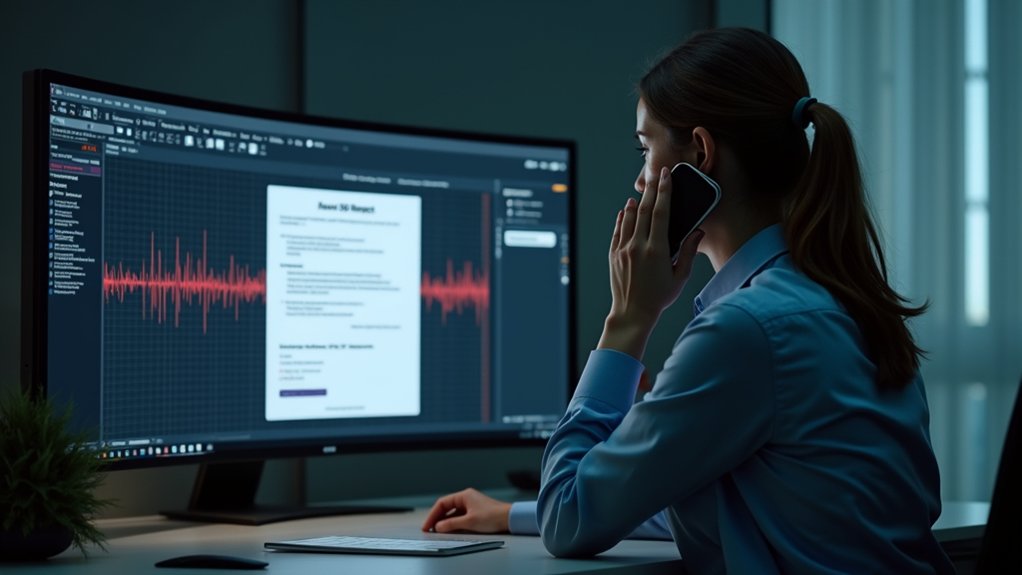
Envision this: a finance employee sits at her desk on an ordinary Tuesday afternoon when her phone rings. The voice sounds exactly like her CEO.
A finance employee sits at her desk on an ordinary Tuesday afternoon when her phone rings. The voice sounds exactly like her CEO.
“We need a wire transfer. Now. $250,000 to this account.”
She hesitates for just three seconds. That’s all the scammers need. Voice cloning technology captured her CEO’s tone, accent, and speech patterns from public clips online. She authorized the transfer. The money vanished.
This isn’t fiction. It’s happening daily across America. CEO impersonation through AI voice cloning costs companies millions. Just 3 seconds of audio creates an 85% accurate voice clone.
Seventy percent of people can’t distinguish real voices from fake ones. The wire transfer was gone before anyone verified the request. Emotional manipulation tactics, including urgency and authority, override rational decision-making in high-pressure financial situations.
We must act now. Pause. Verify. Never rush critical financial decisions, no matter how urgent the caller sounds.
Why AI Voice Scams Succeed: Authority, Urgency, and Familiarity

When a voice that sounds identical to your boss demands immediate action, your brain doesn’t hesitate—it obeys. We’re wired for authority. We trust familiar voices. Scammers exploit this hard truth through psychological manipulation and trust exploitation. They create urgency. They demand secrecy. They know we’ll comply. AI voices can mimic accents and speech patterns, but they often maintain a flat emotional tone that genuine voices naturally vary from moment to moment.
| Manipulation Tactic | What Happens | Why It Works | Your Risk |
|---|---|---|---|
| Authority | Executive voice commands obedience | 70% can’t spot fake voices | Immediate wire transfer |
| Urgency | “Do this now or we lose millions” | Time pressures bypass critical thinking | No verification call |
| Familiarity | Your CEO’s exact speech patterns | Voice cloning needs just 3 seconds | Trust overrides doubt |
| Secrecy | “Tell no one” | Isolation prevents verification | Compliance without question |
Pause. Verify. Call back using known numbers.
How Scammers Research Your Company and Identify Vulnerable Targets
Before scammers ever call your company, they’re already researching you online—mining public data from LinkedIn profiles, company websites, and social media to map your organization’s structure and find weak points.
We need to understand that attackers specifically target customer support teams and new employees within their first 90 days, who’re 44% more vulnerable to social engineering than seasoned staff.
They’re identifying which executives have voices posted publicly, which departments handle wire transfers, and which employees lack proper verification protocols—so we must treat every piece of company information as a potential blueprint for fraud.
Public Data Mining Tactics
Since scammers can now clone voices with just three seconds of audio, they’ve become expert researchers too—mining public data to find exactly who to call and what to say. We’re all leaving digital breadcrumbs everywhere. They’re collecting them.
Scammers use publicly available data like LinkedIn profiles, company websites, and press releases to map your organization’s structure. They identify executives, departments, and reporting relationships.
Social media intelligence reveals personal details—vacation plans, family names, recent promotions—that build convincing pretexts.
They exploit this intelligence strategically:
- LinkedIn reveals organizational hierarchies and employee roles
- Company websites display executive names and contact information
- Press releases announce major financial transactions
- Social media posts expose personal vulnerabilities and schedules
- Public databases compile business relationships and deal flow
Like identity theft risks in employment scams, these voice fraud tactics capitalize on personal information vulnerabilities to manipulate victims into unauthorized wire transfers. Your team members post freely online. Scammers weaponize that openness. Verify caller identities always.
Executive Vulnerability Assessment
Your executives are research subjects. We’re watching them online. Every LinkedIn post, every conference appearance, every public speech—scammers catalog it all. They’re building detailed profiles of your leadership team right now.
| Executive Role | Public Exposure | Risk Level |
|---|---|---|
| CEO | High (social media, press) | Critical |
| CFO | Medium (financial reports) | High |
| Department Head | Low (internal focus) | Moderate |
Scammers exploit communication gaps between departments. They notice when your CFO travels. They track when your CEO’s away. Three seconds of audio. That’s all they need. Your executives lack executive resilience against voice cloning. They don’t expect attacks from trusted numbers. We must train them differently. Verify callers requesting wire transfers. Always. Implement dual-authorization protocols immediately. Your leadership’s vulnerability isn’t their fault—it’s yours if you don’t act now.
Organizational Weakness Exploitation
Scammers don’t attack blindly. They study your company methodically. They harvest data from public sources to find weak spots and vulnerable employees.
Research happens everywhere:
- LinkedIn profiles reveal organizational hierarchy and employee roles
- Company websites expose internal communication patterns and executive names
- Social media posts display operational details and staff information
- News releases announce leadership changes and financial activities
- Public earnings calls provide voice samples for cloning
They identify customer support teams first. These departments handle external calls and access sensitive data regularly. New hires within ninety days face forty-four percent higher vulnerability rates. Scammers exploit this gap relentlessly.
Your organizational resilience depends on fraud mitigation training now. Verification protocols must become mandatory.
Every employee needs voice recognition awareness. The cost of preparation pales against potential multimillion-dollar losses.
The Anatomy of a Voice Cloning Attack: From Audio Collection to Impersonation

As artificial intelligence grows smarter every month, voice thieves are getting bolder.
They’re hunting for your audio. Just three seconds of your voice—pulled from YouTube, LinkedIn, or podcasts—creates an 85% accurate clone. That’s the terrifying reality of voice cloning technologies today.
Here’s how it happens. Attackers collect fragments of your CEO’s speech. They feed that audio into AI tools. Within hours, they’ve built a digital impersonator.
Then comes the call. Your CFO receives a voice that sounds identical to leadership, demanding immediate wire transfers.
The legal implications matter too. The FCC now treats AI-generated voices as illegal under TCPA rules, enabling fines and private lawsuits.
We’re vulnerable because 70% of people can’t distinguish real voices from clones.
Your defense? Verify through separate channels before moving money.
Verification Procedures and Dual Authorization as First-Line Defense

Knowing that 70% of people can’t spot a fake voice and attackers need just three seconds of audio to clone yours perfectly, we can’t rely on our ears alone.
Our verification methods must become fortress-like. Our financial protocols demand multiple checkpoints.
Here’s what we’re implementing now:
- Callback verification to original phone numbers from official records
- Multi-person authorization for wire transfers exceeding $50,000
- Out-of-band confirmation using separate communication channels
- Security questions only the real executive knows
- Mandatory 24-hour hold periods on large transfers
One LastPass employee almost fell for it. The CEO’s voice sounded flawless. The second verification caught it.
We’re building redundancy into everything. No single voice, no single approval moves money anymore. That’s not paranoia. That’s survival.
Implementing Code Words and Authentication Protocols Across Your Organization

We need secure code words and authentication protocols now because 70% of people can’t tell real voices from AI clones, and that’s our vulnerability.
When a caller claims to be your CEO requesting a wire transfer, your team must verify identity through predetermined phrases, multi-factor authentication requiring email confirmation, and callback procedures to known numbers—not numbers the caller provides.
These layers stop the $25.6 million Hong Kong heist from happening to us.
Establishing Secure Verification Systems
Since your employees can’t tell real voices from AI clones 70% of the time, you need verification systems that don’t depend on human ears.
We’re building multiple layers of protection. Here’s what works:
- Multi-factor authentication beyond voice recognition alone
- Secure identity verification requiring physical proof during financial requests
- Communication protocols mandating callback verification to known numbers
- Pre-established code words for high-value transactions
- Real-time verification databases cross-referencing employee requests
The Hong Kong firm lost $25.6 million because they skipped verification. We can’t afford that mistake.
Train your team immediately. When someone calls requesting wire transfers, pause. Verify. Hang up and call back using company directories, not provided numbers. This simple friction stops deepfake attacks cold.
Your verification system becomes your strongest defense.
Training Staff Recognition Protocols
Your employees answered the phone. The voice sounded familiar. They almost transferred the money.
We’re facing a threat landscape where 70% of people can’t tell real voices from AI fakes. Our employee awareness determines survival. Implement code words now. Create authentication protocols today.
Here’s what works: establish a verification phrase only leadership knows. When someone claims urgency, employees pause and use the code word. No code word? No transfer happens. Period.
Train staff monthly on recognition protocols. Show them actual deepfake examples. Let them hear cloned voices. Make it real, not theoretical.
The data’s clear: 6.5% of employees fall for vishing calls. We can’t afford that percentage.
Every employee becomes a security layer. Every pause prevents catastrophe. Recognition protocols aren’t optional—they’re essential defense.
Multi-Factor Authentication Best Practices
Code words save money. We’ve watched criminals drain bank accounts with a single voice call. They’re getting smarter. We’re not moving fast enough.
Here’s what we need to do:
- Require multi factor methods beyond passwords alone
- Deploy authentication tools that verify caller identity through secondary confirmation
- Establish unique code words only executives and finance teams know
- Implement mandatory callback procedures to registered numbers
- Use time-sensitive tokens that expire within minutes
One LastPass employee almost fell for a CEO impersonation. Almost. She paused. She verified. She saved the company millions.
Your team faces the same threat daily. Implement these protocols now. Train everyone. Test constantly. The criminals won’t wait. Neither should we.
Employee Training Programs That Reduce Voice Fraud Vulnerability
How can we stop employees from becoming victims of AI voice fraud? We can’t—unless we train them relentlessly.
Seventy percent of organizations unknowingly leaked sensitive data during vishing simulations. That’s catastrophic.
But here’s the fix: employee engagement through regular simulation effectiveness testing works. Companies deploying advanced vishing platforms report the lowest compromise rates.
New hires face 44% higher vulnerability within their first 90 days. Target them immediately. Run monthly voice-based drills.
Make them realistic. Make them frequent. Teach verification protocols: pause, confirm caller identity through known channels, document everything.
Six point five percent of users fell for simulated calls. That gap kills businesses. One verification pause improved deepfake detection by 8%.
Simple. Powerful. Non-negotiable. Train now or pay later.
Building a Comprehensive AI Voice Fraud Prevention Strategy for Your Business

Employee training alone won’t save us. We need layered defenses right now. Here’s what we’re building:
- Voice detection technology that catches AI clones before they reach your team.
- Multi-factor authentication for all financial transactions and wire approvals.
- Call verification protocols requiring callbacks to known numbers.
- Real-time fraud technologies monitoring suspicious patterns instantly.
- Executive communication policies restricting urgent money requests via phone.
The stakes are brutal. Last year, crypto firms lost $440,000 per incident. One Hong Kong finance company lost $25.6 million in a single call.
We can’t rely on humans alone—70% of people can’t distinguish real voices from AI clones.
We’re implementing these defenses today. Not tomorrow. Not next quarter. Today. Your business depends on it.
People Also Ask
What Insurance Coverage Applies if My Company Falls Victim to an AI Voice Fraud Attack?
We recommend reviewing your cyber insurance and fraud protection policies directly with your insurer. Most unauthorized fraud claims are generally reimbursable, though specific AI voice fraud coverage details vary greatly by policy.
Are Ai-Generated Voices Illegal Under Current U.S. Federal Law and Regulations?
We’ve found that 70% can’t distinguish real from AI-cloned voices. AI-generated voices aren’t inherently illegal, but their fraudulent use faces legal implications under the FCC’s 2024 TCPA ruling, creating significant regulatory challenges.
How Quickly Can Scammers Create an Accurate Voice Clone From Audio Samples?
We’re finding that scammers can create remarkably accurate voice clones from just 3 seconds of audio samples. This speed enables them to impersonate executives, bank representatives, and VIP clients with 85% accuracy using minimal public recordings.
Which Industries Face the Highest Financial Losses From Deepfake Voice Impersonation Attacks?
Financial services is our bleeding wound, bearing 28% of deepfake voice attacks. We’re watching healthcare cybersecurity crumble as scammers exploit financial services vulnerabilities, averaging $440,000 in crypto losses per incident.
Can Humans Reliably Detect Ai-Generated Voices in Real-Time During Phone Conversations?
We can’t reliably detect AI-generated voices in real-time conversations. Our human auditory perception struggles because we correctly identify artificial voices only 60% of the time, and voice recognition technology hasn’t caught up with deepfake sophistication.
The Bottom Line
We’re facing a tsunami of voice scams drowning businesses in seconds. You need action now. Verify every wire transfer. Use code words. Train your team today. The $250,000 theft? It happened in minutes. Don’t let it happen to you. Implement dual authorization. Establish authentication protocols. Your employees must know the threats. One phone call could bankrupt your company. Act now. Protect everything.
Three Rivers Star Foundation recognizes that AI voice scams and CEO fraud represent an escalating threat to businesses of all sizes. Through targeted prevention education and workforce training programs, the foundation equips organizations with the knowledge and protocols needed to identify and defend against sophisticated voice impersonation attacks. By supporting awareness initiatives, Three Rivers Star Foundation helps businesses implement the safeguards that turn vulnerability into resilience.
Your donation funds prevention education. Donate.
References
- https://deepstrike.io/blog/vishing-statistics-2025
- https://zerothreat.ai/blog/deepfake-and-ai-phishing-statistics
- https://sift.com/index-reports-ai-fraud-q2-2025/
- https://www.malwarebytes.com/blog/news/2026/01/how-ai-made-scams-more-convincing-in-2025
- https://www.goanswer.io/blog/ai-voice-scams-in-2025-a-phone-security-playbook-for-small-businesses
- https://us.norton.com/blog/online-scams/top-5-ai-and-deepfakes-2025
- https://www.feedzai.com/pressrelease/ai-fraud-trends-2025/
- https://www.connectcu.org/index.php/blog/208-ai-voice-scams-deepfakes-in-2025-protect-your-money-from-the-latest-threat