

Widow Loneliness: The First Year After Loss
 Three Rivers Star Foundation
Your home’s silence isn’t peaceful—it’s suffocating. Within months, loneliness spikes fivefold for widows, threefold for widowers. That isolation carries health risks matching fifteen cigarettes daily. Friends vanish around month four as support crumbles. Men struggle longer than women, especially through year two. By month ten, loneliness peaks hardest. You’re vulnerable to scams now. Join support groups immediately. Maintain connections deliberately. Action prevents isolation from becoming catastrophic. Understanding what’s happening during these critical months transforms how you survive them.
The Sudden Silence: Understanding Spousal Loss and Isolation
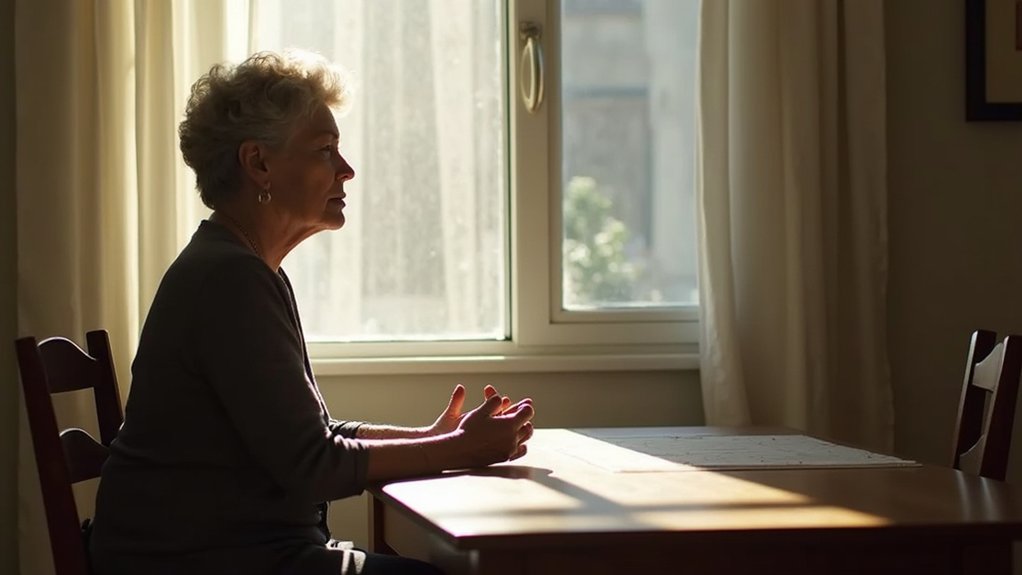
When your spouse dies, silence doesn’t feel peaceful—it feels like drowning in air. The house echoes. The bed stays cold. We’re not prepared for how fast isolation hits.
Within months, you’re five times more likely to feel lonely often. Men face it harder: a threefold spike in year one. Women experience twofold increases. The numbers matter because they confirm what you’re feeling isn’t weakness—it’s documented grief reactions.
Isolation coping requires action. First, recognize that initial support floods in, then dries up fast around month three. Research shows chronic loneliness can be as damaging to your health as smoking 15 cigarettes daily, making the stakes of this period even more urgent.
Don’t wait for help to reappear. Join a group. Call someone weekly. Write down one conversation goal daily.
This isn’t about forcing happiness. It’s survival. The first year demands intentional connection, not passive hoping.
Your isolation has a timeline. You need a counter-strategy.
Why Widow and Widower Loneliness Differs From Other Loss

We’re facing something different here—not just grief, but the erasure of who we were.
When your spouse dies, you don’t just lose a person; you lose the identity you built over decades as a partner, and that identity crisis hits harder than sadness alone.
Men experience a threefold spike in loneliness during year one while women’s support networks often dissolve entirely, leaving both genders stranded in ways that friendship losses or other bereavements simply can’t match—because no one else knew you in quite that way. This vulnerability, combined with the isolation many seniors face, can unfortunately expose widows and widowers to scams that exploit trust and fear.
Identity Loss Beyond Grief
Beyond the crushing weight of missing someone sits a deeper crisis: widows and widowers don’t just lose a person—they lose who they are.
For years, you’ve been “married.” Suddenly, you’re not. Identity reconstruction demands answering the terrifying question: Who am I now?
Research shows this personal transformation affects widows and widowers differently:
- Women experience temporary identity shifts that stabilize within year one.
- Men face prolonged identity confusion extending into year two.
- Young widows struggle hardest, feeling socially invisible and abandoned.
- The majority eventually become “Identity Achievers” with higher self-esteem.
You’re not just grieving a spouse. You’re rebuilding yourself from nothing.
Your former role evaporates. Your couple-identity vanishes. This isn’t pathological—it’s survival.
Recognize this dual loss early. Seek support specifically addressing identity reconstruction, not just grief counseling. Your rebirth depends on it.
Gendered Isolation Patterns Emerge
If you’re a man who just lost his wife, loneliness doesn’t just visit—it moves in and sets up permanent residence. We’re seeing stark gendered experiences unfold. Men face a brutal three-fold loneliness spike in year one. Women experience two-fold increases. Here’s what separates them:
| Experience | Women | Men |
|---|---|---|
| Year 1 Loneliness | Two-fold increase | Three-fold increase |
| Recovery Pattern | Decline after year 1 | Persists into year 2 |
| Isolation Dynamics | Temporary surge | Compounding isolation |
The isolation dynamics reveal critical differences. Men stay stuck longer. Widowers report worse social isolation than widows. We’re not talking abstract sadness—we’re talking survival mode. Caregiving compounds this. Men need immediate intervention: join groups now, reach out weekly, name one trusted person today.
Social Support Proves Insufficient
Loneliness persists anyway. You’re surrounded by casseroles and sympathy cards. Friends text. Family calls. Yet the hollow ache remains unchanged.
Here’s why support falls short:
- Emotional support peaks early, drops after 2.5 years
- Social relationships present year one don’t prevent isolation
- Widowers experience triple the loneliness increase men face elsewhere
- Social isolation continues despite functional help increasing
We see it constantly. A widow receives meals for six months. Then silence. The support vanishes just when emotional loneliness deepens most. Friends assume you’re fine now.
You’re not. Research shows that support flows through conversation, through genuine connection. Surface help doesn’t heal. You need sustained emotional engagement. The most meaningful healing comes not from external validation, but from authentic connections that acknowledge your ongoing grief.
Personalized plans work. Support groups matter. Talking helps. Don’t wait for others to return. Reach out. Stay visible.
Your loneliness deserves ongoing attention.
The Role Collapse: How Identity Fractures After Decades Together
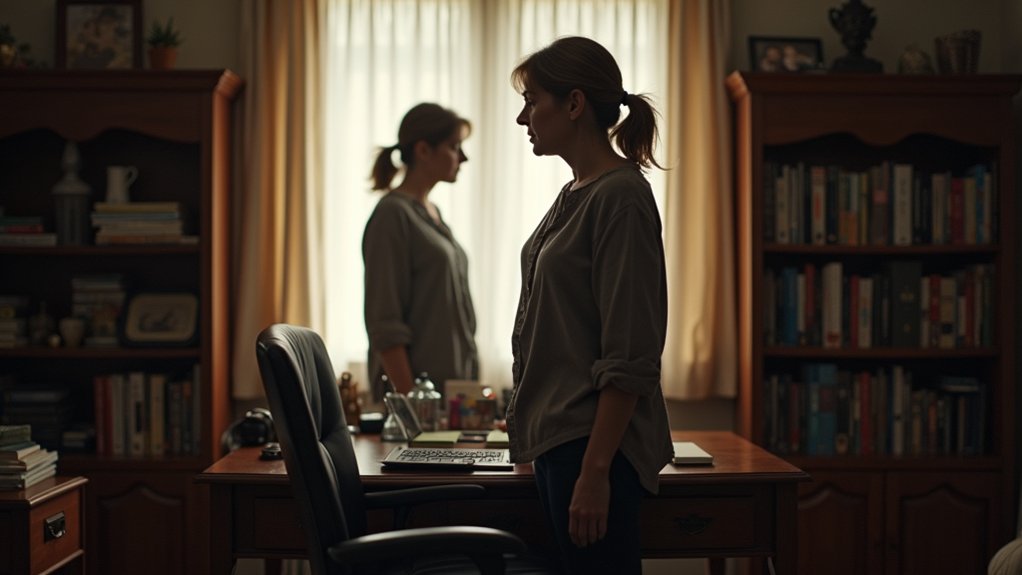
When a spouse dies after decades together, you lose more than a person—you lose who you’ve become. For 30 years, you were “the couple.” Now you’re just you. That identity fractures.
Research shows 25% of widows experience positive change, yet 30% report negative shifts during identity reconstruction. Your roles collapse simultaneously—partner, helpmate, shared-decision maker vanish overnight. You’re suddenly single at sixty. The emotional resilience required feels impossible.
Studies reveal emotional loneliness peaks three years post-loss as you grapple with “Who am I now?” This isn’t melodrama; it’s neurological rewiring. Your brain reorganizes its entire sense of self.
Start rebuilding identity immediately. Volunteer. Take that class. Join groups. Concrete actions rebuild emotional resilience faster than waiting for healing.
The First Year Timeline: When Loneliness Peaks and How It Evolves
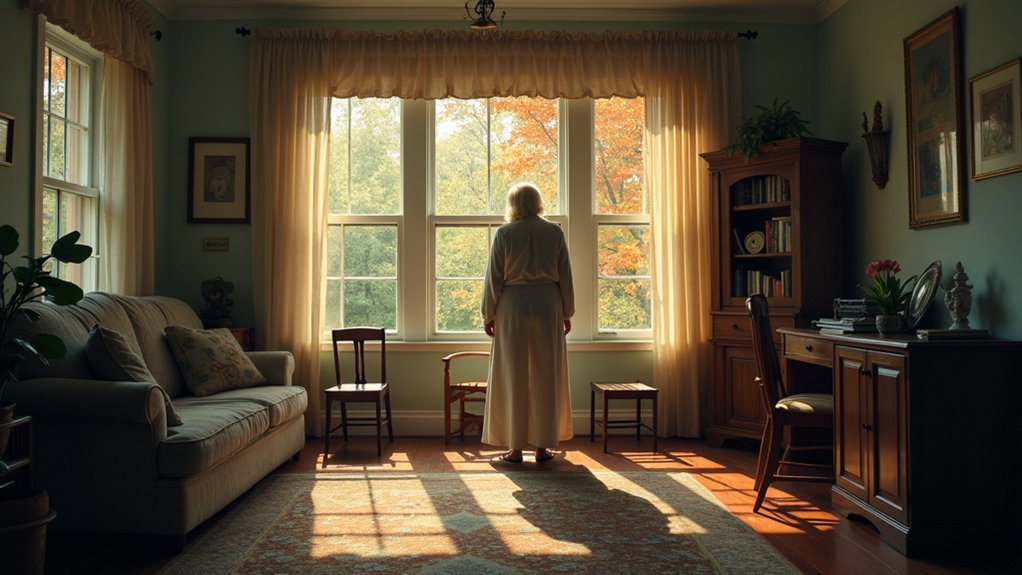
The months after your spouse’s funeral aren’t gentle—they’re a steep cliff. Loneliness doesn’t arrive gradually. It crashes.
Here’s what happens in year one:
- Months 1-3: Support floods in. Friends call. Meals appear. Then it stops.
- Months 4-6: The real isolation hits. You’re still grieving, but everyone’s moved on.
- Months 7-9: Identity reconstruction begins—painful, disorienting, necessary. You’re learning who you’re without them.
- Months 10-12: Loneliness peaks hardest here. Men experience three times the initial spike; women two times.
Your support reliability crumbles after those first weeks. The network that held you collapses exactly when you need it most. This isn’t weakness. This is how grief actually works.
Year two brings slight improvement, but loneliness remains elevated. You’re rebuilding yourself. Alone. Accept help before isolation deepens.
Social Networks in Crisis: Why Friends Disappear When You Need Them Most

While you’re drowning in grief during those first brutal months, your friends are quietly fading away. We see it happen constantly.
Initial support floods in—casseroles, calls, flowers. Then silence. The friendship dynamics shift. People don’t know what to say, so they say nothing. Social withdrawal happens on both sides. You’re exhausted from grief. They’re uncomfortable around pain.
By month three, visits drop dramatically. Research shows support peaks early, then stabilizes at lower levels despite your ongoing need. Young widows experience this worst—feeling invisible, abandoned precisely when connection matters most.
The solution? Reach out first. Suggest specific activities. Invite friends into your new reality rather than waiting for them to figure it out. Friendship requires intentional effort now.
Emotional Loneliness vs. Social Loneliness: Two Distinct Struggles
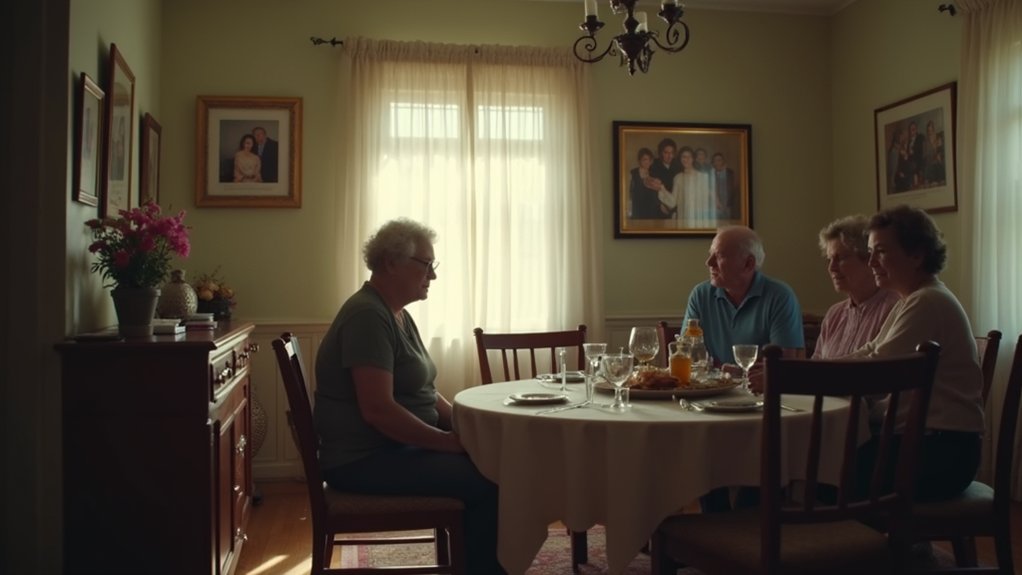
You’re calling friends, but no one answers. That’s emotional loneliness—the ache of missing your spouse that no amount of social connections can fix.
It’s different from social loneliness, which is about lacking friendships altogether.
Here’s what we’re facing:
- Emotional loneliness peaks three years after loss
- Social loneliness rises four to seven years later
- Men experience both more intensely than women
- These emotional barriers persist even with active social circles
You can have a full calendar and still feel devastatingly alone.
The absence isn’t about quantity of people—it’s about the specific person missing.
Social connections matter, absolutely. But they won’t erase the void your spouse left behind.
Understanding this distinction helps us stop blaming ourselves for loneliness that lingers despite having friends nearby.
Gender Differences: Why Men and Women Experience the First Year Differently
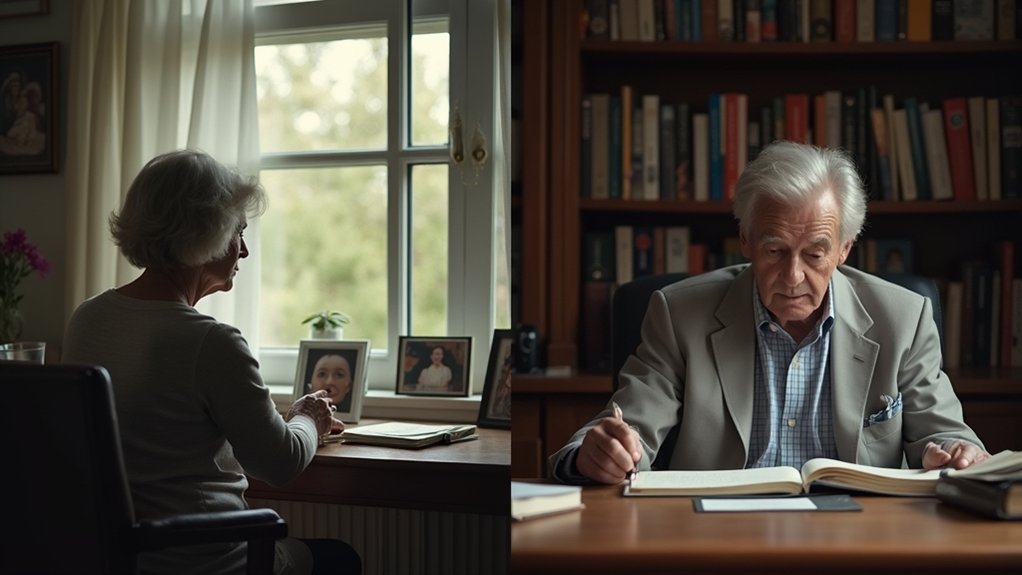
We need to face a hard truth: men crash harder in that first year while women often lean on their friends for survival.
A widower’s loneliness triples compared to a widow’s two-fold spike, and if he was a caregiver, that pain sticks around into year two when hers starts lifting.
We can’t ignore this gap—men’s networks dissolve faster, their emotional isolation deepens longest, and without intervention those patterns compound into years three, four, and beyond.
Men’s Steeper Initial Decline
The difference isn’t subtle. Men face a steeper emotional fallout in that first year. They’re hit harder, faster, and longer than women are.
Consider these stark realities:
- Men experience a three-fold increase in loneliness during year one
- Their isolation persists into year two, especially if they were caregivers
- Societal expectations discourage men from seeking support openly
- Women recover while men’s loneliness remains elevated after two years
Why?
We’ve been taught that men don’t need emotional connection the way women do. That’s wrong. Men actually struggle more with social isolation after loss.
They withdraw. They bottle it up. They don’t reach out. By month three, the damage compounds.
We’re telling men to be tough when they’re crumbling inside. That strategy kills.
Action required: encourage male widowers into support groups immediately, not eventually.
Women’s Support Network Advantage
While men spiral into isolation, women lean. It’s understood this matters. Women activate their support networks within weeks of loss, creating lifelines that men often don’t access. This women advantage isn’t luck—it’s proactive outreach and shared experiences that build emotional resilience.
| Support Type | Women’s Response | Men’s Response | Community Impact |
|---|---|---|---|
| Emotional | Immediate sharing | Delayed disclosure | Faster healing |
| Friendship dynamics | Deepen quickly | Weaken gradually | Sustained networks |
| Shared experiences | Sought actively | Avoided often | Stronger bonds |
| Healing journeys | Collaborative process | Isolated struggle | Network survival |
Women’s friendship dynamics activate community impact rapidly. They talk. They gather. They process together. Men wait. Silence deepens. Isolation hardens. The data screams urgently: women’s support networks reduce loneliness by nearly fifty percent in year two while men remain elevated. We must teach men that leaning isn’t weakness—it’s survival.
Long-Term Divergence Patterns
Because gender shapes how we grieve, men and women walk different paths through that first devastating year. Men face steeper loneliness. Women recover faster. Here’s what shifts over time:
- Men’s loneliness persists into year two while women’s peaks then declines
- Emotional loneliness hits hardest those first three years for both
- Social loneliness emerges later, especially for men in years four through seven
- Long term adjustment requires recognizing these gender-specific patterns early
Women build stronger friend networks. Men isolate. The data warns us clearly: widowers struggle longer. Their trajectories diverge sharply from widows’ around month six.
By eighteen months, fifty percent of women show improvement. Men? Still climbing upward into depression. This isn’t weakness. It’s neurological. Social. Real.
Understanding these shifting perceptions helps us support grieving spouses effectively, targeting interventions where they’ll matter most.
Recognizing Vulnerability: Financial Scams and Exploitation During Grief

Grief clouds judgment. Your mind’s fogged. Your defenses? Down. Scammers know this.
We’re targets now. Widows and widowers face triple vulnerability: loneliness, isolation, distraction. Financial exploitation follows grief like a shadow. Romance scams flourish here. Investment schemes flourish here. Fake charities flourish here.
The numbers are stark. Loneliest seniors lose thousands to fraud annually. We’re vulnerable demographics—emotionally raw, socially isolated, seeking connection. Grief-induced susceptibility isn’t weakness; it’s neurological fact. Our brains prioritize comfort over caution.
Watch for these red flags: unsolicited contact, pressure for quick decisions, requests for wire transfers, too-good-to-be-true promises.
Verify independently. Ask trusted friends before committing money. Report suspicious activity immediately.
We’re not naive. We’re grieving. That’s different. Protect yourself now. Your future self will thank you.
Building a Recovery Path: Realistic Expectations and Evidence-Based Resources

Recovery isn’t linear, and pretending otherwise sets us up for disappointment.
Your loneliness will peak around month six, then gradually soften—but expect setbacks. The data reveals something important: most widows need two years minimum to feel stable again. We can’t rush this.
Most widows need two years minimum to feel stable again. Loneliness peaks around month six, then gradually softens—but expect setbacks.
Evidence-based grief strategies work.
Consider these concrete steps:
- Join support groups within three months of loss
- Attend weekly sessions for at least six months
- Combine group support with individual counseling
- Establish one new social connection monthly
Social isolation deepens pain. Loneliness kills faster than cigarettes.
It’s clear this isn’t encouraging, but it’s honest. Your brain needs connection to heal properly. Find your people now—not when you’re drowning.
People Also Ask
How Long Until I Stop Feeling This Emptiness, and Is My Timeline Normal?
We’ll likely experience peak emptiness within the first year, then gradual improvement. Your timeline’s normal—emotional healing doesn’t follow a strict schedule, but most of us see meaningful shifts after twelve months.
Will My Children Be Affected by My Widowhood-Related Loneliness and Isolation?
Our children’s emotional health can be affected by our isolation, but we’re not powerless. We’ll strengthen their coping strategies by staying engaged, maintaining routines, seeking support, and modeling healthy grief processing together.
What Specific Support Resources Work Best for Long-Term Bereavement After Year One?
We’ve found that personalized approaches work best: therapy options tailored to you, peer connections through support groups, online communities for ongoing connection, volunteer opportunities providing purpose, self-care strategies you maintain, local resources, and financial advice addressing practical concerns.
How Can I Protect Myself From Financial Scams While Grieving and Vulnerable?
We’ll strengthen our financial awareness by reviewing accounts regularly, verifying requests independently, and involving trusted advisors. Building emotional resilience through support groups helps us recognize manipulation tactics and resist pressure during vulnerable moments.
Why Do My Friendships Feel Different Now, and Will They Recover?
Your friendships feel different because grief changes how we connect emotionally. We’re processing emotional support differently now. While some relationships stabilize, friendship dynamics shift as we navigate our transformed identity and vulnerability during this critical first year.
The Bottom Line
We’re here. You’re drowning in silence. It won’t last forever, though grief’s a storm that doesn’t follow schedules. Reach out within three months. Join a widow group. Talk to a counselor. Don’t isolate. You’ll rebuild. This first year? It’s the hardest. But you’re stronger than loneliness. Take one step. Then another. Healing isn’t linear. It’s real.
Three Rivers Star Foundation recognizes that widow loneliness in the first year after loss is a critical public health challenge affecting countless grieving individuals. Through prevention education and community outreach, the foundation equips families and caregivers with early intervention strategies and resources to combat isolation before it deepens. By funding support networks and counselor training, the foundation directly addresses the loneliness epidemic that threatens widows’ physical and mental health during their most vulnerable months.
Your donation funds prevention education. Donate.
References
- https://pmc.ncbi.nlm.nih.gov/articles/PMC9071412/
- https://pmc.ncbi.nlm.nih.gov/articles/PMC4160735/
- https://pubmed.ncbi.nlm.nih.gov/3384501/
- https://www.helpage.org/blog/international-widows-day-triple-vulnerability/
- https://academic.oup.com/innovateage/article/9/6/igaf035/8115796
- https://pmc.ncbi.nlm.nih.gov/articles/PMC3936003/
- https://www.allaboutinterventions.com/2025/03/22/beyond-loss-insights-from-a-lifetime-of-working-with-widows/
- https://www.globalfundforwidows.org/news/friends-of-europe-leading-european-think-tank-publishes-gfw-s-oped
- https://www.eurekalert.org/news-releases/1090870
- https://academic.oup.com/psychsocgerontology/article/77/5/956/6562969