

Chronic Loneliness in Elderly People: The Silent Health Crisis
 Three Rivers Star Foundation
We’re losing seniors to a killer nobody talks about: loneliness. One in three Americans over fifty report serious isolation. Here’s the shocking part—loneliness kills as effectively as smoking, raising mortality risk by thirty-five percent. Retirement triggers the crisis. Within one year post-retirement, loneliness scores spike sharply. It attacks the brain, causing cognitive decline and accelerating Alzheimer’s pathways. It crashes immune function. Geographic distance compounds the problem; adult children live four hundred fifty miles away on average. But we can fight back. Community programs, volunteer work, technology, and simple invitations create connection. Understanding what’s really happening demands we dig deeper into solutions.
The Growing Epidemic: Understanding Loneliness Statistics Among Older Adults

A silent crisis creeps through our communities—one phone call away, one empty dinner table, one forgotten birthday.
We’re watching loneliness ravage our elderly. One in three Americans over fifty report crushing isolation. That’s millions struggling daily. The numbers keep climbing. Forty percent of adults forty-five and older feel lonely now, up from thirty-five percent before.
These aren’t just sad statistics. They’re our neighbors. Our grandparents.
Loneliness kills—comparable to smoking. Social isolation raises mortality risk by thirty-five percent. Yet we ignore it. Cultural barriers fragment unique friendships our elders desperately need.
Loneliness kills as surely as smoking. Social isolation raises mortality risk by thirty-five percent. Yet we ignore it.
Language differences, economic gaps, and transportation obstacles trap seniors further. We must act now.
Screen for loneliness. Connect seniors to community programs. Build bridges across cultural divides.
Their survival depends on our action today.
Life Transitions That Trigger Isolation: Retirement, Loss, and Major Life Changes

We’ve watched retirement transform capable, connected people into isolated individuals within months of leaving their jobs.
When we stop working, we’re not just leaving a paycheck behind—we’re losing daily interactions, purpose, and the identity we’ve built for decades, which researchers show peaks loneliness one year post-retirement with UCLA scores jumping considerably.
We need to recognize that grief doesn’t just follow death; it follows the loss of routine, colleagues, and self-worth, and we must act now by building new social networks before retirement arrives, not after the damage sets in. Chronic loneliness is classified as a health crisis that can be as lethal as smoking 15 cigarettes daily, making proactive social connection before and after retirement essential for long-term health outcomes.
Retirement’s Emotional Toll
Retirement hits differently than we expect. One day you’re working. The next day you’re not. That shift triggers real retirement stress and emotional adjustment that catches millions off guard.
UCLA research shows loneliness scores spike sharply within one year of retiring—peaking at emotional loneliness that feels sudden and isolating. You lose your workplace community overnight. Your identity shifts. Your daily structure vanishes.
Studies reveal 40% of adults over 45 now experience loneliness, with retirement accelerating that climb considerably.
The solution? Plan ahead. Build social networks before retiring. Join clubs, volunteer groups, or senior centers immediately. Don’t wait until isolation sets in.
Early intervention matters tremendously—it’s the difference between thriving and struggling through your next chapter.
Grief and Social Loss
Beyond retirement’s initial shock comes something deeper and often more devastating: the cumulative weight of losing people who shaped your daily life.
We lose spouses. We lose friends. We lose purpose. Grief compounds isolation.
Consider what happens:
- A spouse dies, and suddenly you’re cooking for one
- Your best friend moves away or passes
- Work colleagues vanish from your daily routine
- Your role as caregiver ends, leaving emptiness
- Social networks shrink faster than you can rebuild them
The data’s stark: widows and widowers face heightened isolation. This vulnerability can be exploited by those with malicious intent, including romance scammers who specifically target grieving individuals seeking emotional connection.
Grief support becomes essential, not optional. We can’t rebuild social networks alone. Professional counseling, grief groups, and community connections aren’t luxuries—they’re lifelines.
Without intervention, loss spirals into chronic loneliness. Action now prevents irreversible damage.
Physical Health Consequences: Why Loneliness Is as Dangerous as Smoking

When an elderly person sits alone day after day, their body doesn’t just feel sad—it breaks down from the inside out. Loneliness kills. Not metaphorically. A 35% higher mortality risk from isolation. A 14% increased death rate from loneliness alone.
We’re talking about numbers matching smoking and high blood pressure’s impact. Their hearts weaken. Immune systems fail. Cognitive decline accelerates. The damage compounds yearly.
But here’s what works: intervention strategies matter. Building strong social networks saves lives. Senior centers. Volunteer programs. Even weekly phone calls. These aren’t luxuries. They’re medicine.
We can’t ignore this crisis anymore. Screening elderly patients for loneliness during routine checkups must become standard practice. Action now prevents tragedy later.
Cognitive Decline and Dementia Risk: The Brain-Loneliness Connection

As loneliness tightens its grip, the brain starts to shrink.
We’re watching something devastating unfold in our elderly loved ones. Their memories fade. Their thinking slows. Within eleven years, loneliness predicts cognitive impairment—dementia creeping closer daily.
Here’s what happens inside:
- Neural tissue atrophy accelerates when isolation deepens
- Amyloid burden builds up, triggering Alzheimer’s pathways
- Depression mediates the loneliness-cognition connection directly
- Immune function crashes, inflammation damages brain cells
- Each lonely day worsens next-day thinking, then increases loneliness further
The cycle spirals. We can’t ignore this.
Brain health deteriorates faster in isolated seniors than in socially connected peers. Loneliness interventions—community programs, regular contact, volunteer opportunities—aren’t luxuries. They’re medical necessities.
Screen for loneliness now. Connect isolated seniors today. Tomorrow, their cognition depends on it.
Mobility Limitations and Social Withdrawal: How Physical Constraints Deepen Isolation
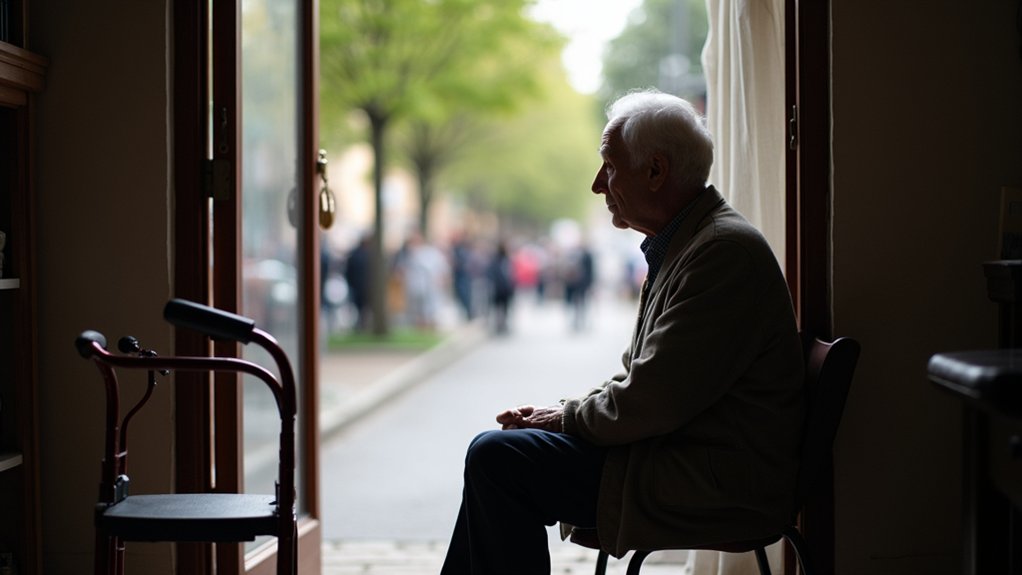
While we’ve uncovered how loneliness damages the brain, we’re missing a critical piece of the puzzle.
Mobility challenges create a vicious trap. When seniors can’t walk far or drive safely, their world shrinks dramatically. They skip doctor visits. They avoid social gatherings. Transportation access becomes everything.
When seniors lose mobility, their world shrinks. Doctor visits get skipped. Social connections fade. Transportation access becomes everything.
Consider Mrs. Chen, 78, with arthritis. She stopped attending her weekly book club because getting there required three buses. Within months, her isolation deepened. Studies show mobility limitations heighten isolation risk through chronic illness and lifestyle constraints. This vulnerability to isolation also increases susceptibility to scams that exploit trust, as isolated seniors have fewer social connections to validate suspicious requests.
We can’t ignore this. Action matters now. Communities must expand senior transportation services. Family members should arrange regular rides to social activities. Healthcare providers must screen for mobility barriers during routine exams.
Small interventions break isolation’s grip.
Why “Just Make Friends” Doesn’t Work: Unique Barriers Facing Elderly Populations
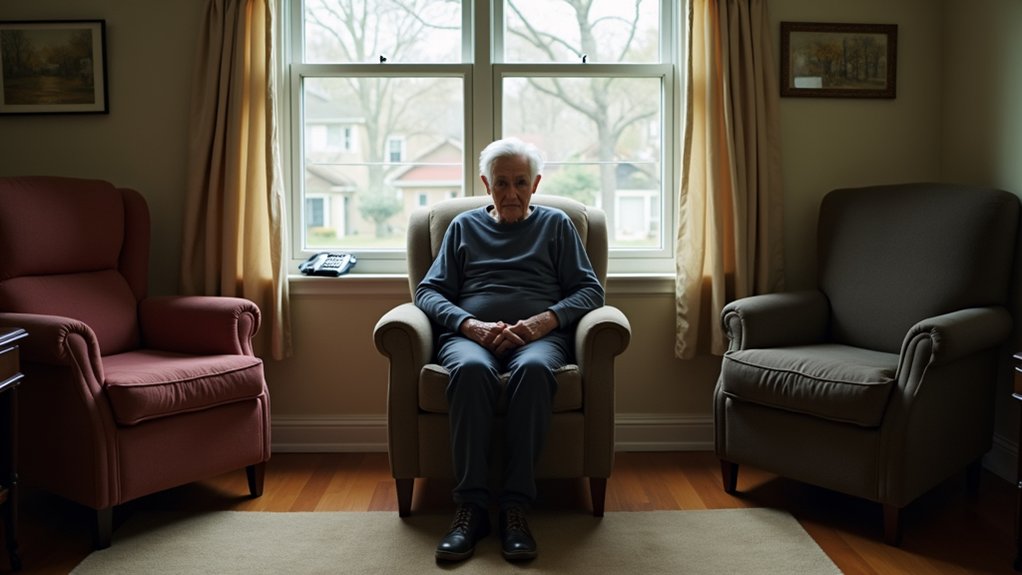
We can’t ignore that mobility issues and life changes create real walls—not just inconveniences—that make friendship feel impossible for older adults.
Transportation gaps mean seniors miss social events, doctor visits, and community gatherings, while losing spouses or retiring strips away the built-in connections that structured their entire lives.
We’ve got to address these barriers head-on with solutions like volunteer driver programs, neighborhood buddy systems, and retirement adjustment counseling, because telling someone isolated by arthritis and grief to “just make friends” misses the point entirely.
Mobility and Transportation Gaps
Picture an 78-year-old named Margaret who wants to join a book club three miles away. She can’t drive anymore. The bus doesn’t run near her house. She’s stuck.
Mobility challenges trap millions of seniors. Transportation barriers aren’t minor inconveniences—they’re isolation engines.
Here’s what we’re facing:
- No reliable public transit in rural areas where 14% of seniors live
- Driving cessation happens around age 70 for many, eliminating independence
- Ride-sharing costs $15-40 per trip, straining fixed incomes
- Walking limitations affect 35% of older adults with chronic conditions
- Family members live far away, unable to provide regular rides
Margaret’s situation repeats daily across America. Seniors miss social groups. They skip doctor visits. They deteriorate faster.
We must expand transportation programs now. Community shuttles. Volunteer driver networks. Policy changes.
Without movement, connection dies.
Life Stage Transitions and Loss
Transportation barriers trap seniors in their homes, but mobility is only part of the problem. Life changes hit hard. Retirement ends work routines. Spouses die. Children move away. Social connections—once automatic—vanish overnight.
We’re watching a crisis unfold. Loneliness scores spike sharply after retirement, peaking one year later. Emotional loneliness rises fastest. The damage compounds. Isolated seniors face 35% higher mortality risk. That’s serious. That’s preventable.
| Life Stage | Connection Loss | Emotional Impact | Action Needed |
|---|---|---|---|
| Retirement | Work relationships end | Sharp emotional loneliness | Join clubs immediately |
| Widowhood | Spouse dies | Profound isolation | Seek support groups |
| Aging | Mobility declines | Withdrawal deepens | Use transportation services |
| Caregiving | Role becomes sole focus | Complete social isolation | Build alternative networks |
We must act now. Screen for loneliness early. Build emotional resilience through intentional social networks. Communities need senior centers, volunteer programs, Area Agencies on Aging support. Prevention works. Waiting doesn’t.
The Role of Family Dynamics: Adult Children, Geographic Distance, and Changing Relationships

Although adult children want to support aging parents, geographic distance and life demands often create widening gaps that leave seniors increasingly isolated. We see this pattern everywhere. Distance kills connection.
Consider these significant realities:
- Adult children live an average of 450+ miles from aging parents today
- Weekly visits drop from 58% pre-retirement to under 20% within two years
- Phone calls replace in-person family support, weakening emotional bonds
- Geographic barriers compound existing loneliness by 40% for isolated seniors
- Limited family interaction accelerates cognitive decline and health risks
The data warns us clearly. When geographical barriers separate families, seniors lose vital emotional anchors.
We must act now. Schedule regular video calls. Plan quarterly visits. Arrange local community connections as backup family support. Geographic distance needn’t mean emotional abandonment.
Mental Health Impacts: Depression, Anxiety, and Emotional Well-Being in Isolated Seniors

We’re watching a troubling cycle unfold: isolated seniors slip into depression, which then deepens their isolation as anxiety keeps them from reaching out.
The data shows us that loneliness doesn’t just make older adults sad—it triggers a cascade where depression worsens on lonely days, which then spikes loneliness the next day, trapping them in an escalating mental health spiral.
We need to break this pattern now with screening during routine doctor visits, connecting isolated seniors to community programs, and training family members to recognize when withdrawal signals real danger.
Depression and Isolation Cycle
When isolation tightens its grip, depression follows like a shadow that grows darker each day. We watch this cycle trap our elderly neighbors in a vicious loop.
Here’s how it works:
- Loneliness triggers depression, which deepens isolation prevention efforts
- Isolated seniors withdraw further, worsening depression symptoms
- Depression makes leaving home feel impossible
- Each lonely day weakens emotional resilience
- The cycle accelerates cognitive decline
One isolated 72-year-old stopped visiting friends. Within months, depression consumed her. She couldn’t motivate herself to rejoin activities. The isolation deepened. Her depression intensified.
We know the stakes. Research shows cumulative mid-life loneliness adds excess mortality risk. Depression amplifies this danger.
Breaking this cycle requires immediate action: screen for depression triggers, establish isolation prevention programs, encourage community connection. We can’t wait.
Anxiety in Lonely Seniors
Depression’s shadow doesn’t work alone. Anxiety stalks lonely seniors relentlessly, multiplying their suffering.
We’ve seen it happen: isolation breeds worry, worry deepens isolation, and the cycle tightens. When older adults lack connection, anxiety triggers spike dramatically—fear of abandonment, health catastrophes, financial collapse. Their minds spiral. Emotional support dries up just when they need it most.
Research shows loneliness and anxiety feed each other like a destructive loop. One study found isolated seniors experienced severe anxiety episodes three times weekly. We can’t ignore this.
Screening during doctor visits matters. Community programs offering genuine connection—volunteer opportunities, senior centers, peer counseling—break the pattern.
Start small. One phone call. One visitor. These actions matter. Lonely seniors drowning in anxiety need us to act now.
Practical Solutions: Evidence-Based Strategies for Building Meaningful Connections
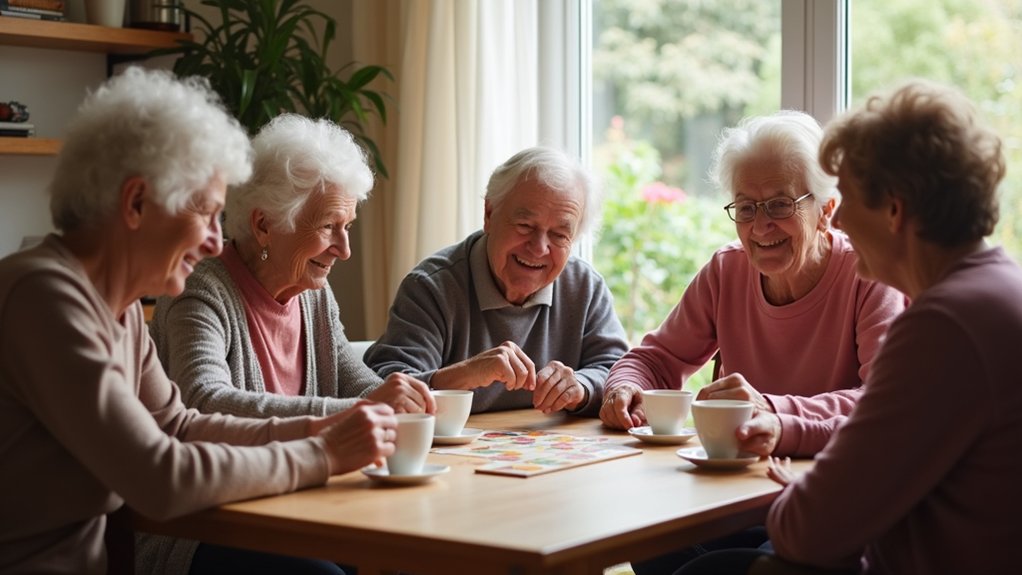
Because loneliness kills as surely as smoking, we can’t afford to wait for elderly people to reach crisis point before acting.
Loneliness kills as surely as smoking. We can’t wait for elderly crisis—prevention through connection matters now.
Here’s what actually works:
- Technology interventions: Video calls, tablet programs, online classes keep seniors connected daily
- Volunteer opportunities: Tutoring, mentoring, community service restore purpose and belonging
- Senior centers: Social clubs, exercise groups, meal programs build routine friendships
- Faith communities: Regular gatherings provide spiritual connection and social structure
- Intergenerational programs: Youth mentorship creates meaningful relationships across ages
The data’s clear. We screen for blood pressure.
We must screen for loneliness during routine exams. Isolation predicts 32% higher mortality. That’s devastating.
That’s preventable. Early retirement support. Social networks established before isolation deepens. Community resources matched to individual needs.
Action now saves lives later. We understand what works. Implementation matters more than discovery.
Community Resources and Programs: Pathways to Reconnection and Improved Quality of Life
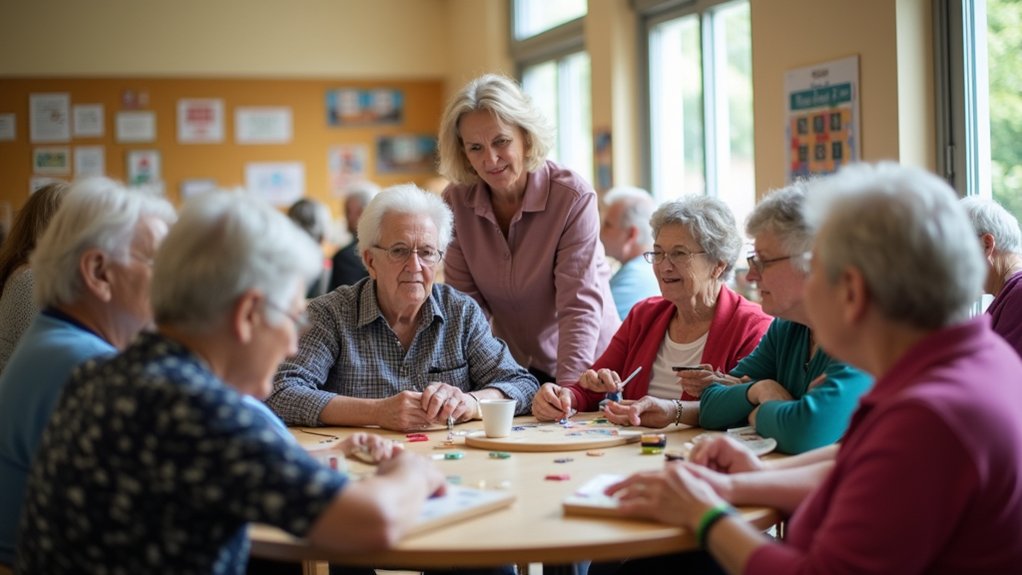
The programs that save isolated seniors’ lives already exist in nearly every community—we’re just not connecting enough people to them.
Senior centers offer social clubs where older adults gather weekly. Volunteering programs give purpose and connection simultaneously. Area Agencies on Aging coordinate everything from transportation to meal programs. Yet millions don’t know these resources exist.
Here’s what happens: an isolated senior stays home. Loneliness deepens. Cognitive decline accelerates. Mortality risk climbs 32 percent.
We can reverse this trajectory. Call your local Area Agency on Aging today. Join a community initiative. Invite a neighbor to a social club.
We’re not powerless here. These pathways to reconnection work. They’ve proven effective repeatedly. But only if we actually use them.
People Also Ask
Can Technology Like Video Calls or Social Media Effectively Reduce Loneliness in Elderly Populations?
We find that video call benefits can meaningfully reduce elderly loneliness when they facilitate genuine connection, though social media challenges—like superficial interaction and screen fatigue—often limit effectiveness. Combining technology with in-person community engagement works best.
What Specific Screening Questions Should Healthcare Providers Ask to Identify At-Risk Lonely Seniors?
We’d love telling you we’ve got a magic checklist—we don’t. We’re recommending screening methods asking about living situations, social frequency, and emotional connection. These loneliness indicators help us identify vulnerable seniors early.
How Can Seniors Afford or Access Community Programs if Transportation or Finances Are Barriers?
We can connect seniors to Area Agencies on Aging that offer subsidized transportation and sliding-scale program fees. They’ll access community resources and financial assistance, removing barriers to participation in senior centers and volunteering opportunities.
Does Relocating to Senior Living Communities Guarantee Reduced Loneliness for All Residents?
We’ve found that relocation isn’t a silver bullet—while senior communities reduce isolation, they don’t guarantee reduced loneliness for all residents. Success depends on genuine community integration and sustained social engagement efforts.
What Warning Signs Indicate When Elderly Loneliness Requires Professional Mental Health Intervention?
We recognize warning signs like persistent withdrawal, sleep disruption, appetite changes, and expressed hopelessness. When we observe these indicators, we’ll recommend professional intervention through screening and mental health support services.
The Bottom Line
We can’t ignore this anymore. Loneliness kills elderly people as much as smoking does. Here’s what we’re asking: Will we act now or watch our seniors fade away silently? Join a group. Call someone. Visit weekly. These aren’t luxuries—they’re survival tools. Communities must fund senior programs. Families must prioritize connection.
Three Rivers Star Foundation recognizes chronic loneliness as a critical public health threat and works directly to combat it through targeted prevention and education initiatives. The foundation supports programs that teach families and caregivers how to identify warning signs of isolation and equips communities with evidence-based strategies to strengthen social connections among seniors. By funding awareness campaigns and connection-building resources, Three Rivers Star Foundation helps break the cycle of elderly isolation before it becomes life-threatening.
We’ve got the solutions. We’re just missing the urgency. Start today. Your donation funds prevention education. Donate.
References
- https://www.michiganmedicine.org/health-lab/1-3-older-adults-still-experience-loneliness-and-isolation
- https://www.mcknightsseniorliving.com/news/loneliness-social-isolation-living-alone-are-significant-risk-factors-for-older-adult-mortality-study-finds/
- https://pmc.ncbi.nlm.nih.gov/articles/PMC9995915/
- https://pmc.ncbi.nlm.nih.gov/articles/PMC12203447/
- https://www.consumeraffairs.com/health/elderly-loneliness-statistics.html
- https://pmc.ncbi.nlm.nih.gov/articles/PMC9483694/
- https://pmc.ncbi.nlm.nih.gov/articles/PMC10357115/
- https://www.gbhi.org/news-publications/relationship-between-retirement-social-isolation-and-loneliness-longitudinal
- https://www.aarp.org/pri/topics/social-leisure/relationships/loneliness-social-connections-2025/
- https://www.who.int/news/item/30-06-2025-social-connection-linked-to-improved-heath-and-reduced-risk-of-early-death