
LinkedIn Job Scams: How Scammers Target Professionals
 Three Rivers Star Foundation
Scammers exploit LinkedIn’s 1 billion users through 142 million spam incidents yearly. They pose as recruiters, clone company pages, and request upfront payments or sensitive data. We’re vulnerable because professional settings lower our guard. Fake profiles use Gmail instead of company domains. Phishing links harvest credentials at 18.81% incident rates. Average losses reach $2,000. Verify recruiter badges directly. Never share banking information. Enable two-factor authentication. Report suspicious profiles immediately. Understanding these tactics reveals your defense strategy.
Why Scammers Target LinkedIn Professionals

LinkedIn professionals make perfect targets for scammers, and here’s why: you’re valuable. We’re talking about 1 billion users searching for opportunities. Scammers see goldmines.
Your scammer motivations are simple: money and data. They exploit LinkedIn vulnerabilities relentlessly. The platform’s professional focus attracts job seekers with wallets open and guards down.
Scammers target LinkedIn for two reasons: your money and your data. They exploit every vulnerability without mercy.
Fake recruiter profiles operate freely—one had over 500 connections before detection. We encounter phishing attempts, upfront payment requests, unrealistic salary offers. Identity theft incidents increase when scammers successfully collect personal information from unsuspecting professionals.
You click. You connect. You lose. In the first half of 2024, LinkedIn detected over 142 million spam incidents. That’s not random. That’s targeting.
Stop assuming recruiters you’ve never met are legitimate. Verify. Question. Protect your information like your livelihood depends on it—because it does.
Common Tactics: From Fake Recruiter Profiles to Cloned Company Pages
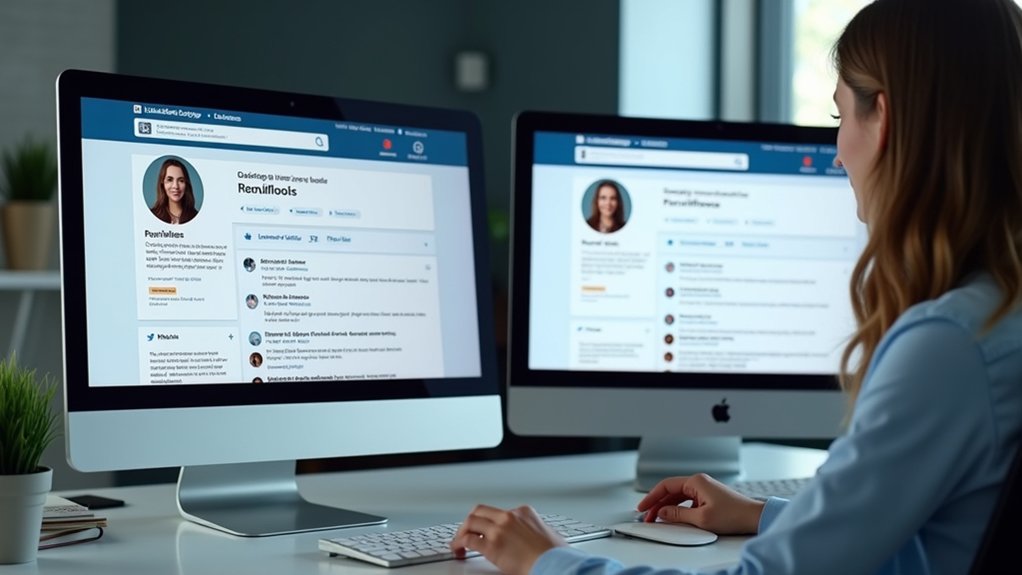
Fake profiles dominate LinkedIn job scams. In 2023 alone, LinkedIn detected over 86 million fake profiles. One fraudster accumulated 500 connections before detection.
Scammers create fake recruiter personas sending targeted scams directly to job seekers. They craft polished messages mimicking legitimate companies. No interview happens. They request upfront payments for “training materials” or “equipment.” They harvest your Social Security number. Your banking details. Your identity.
Cloned company pages replicate real organizations perfectly. The logos match. The descriptions seem official. But the email domains are slightly wrong. The grammar errors hide in plain sight.
We’re talking sophisticated deception operating at scale. These tactics leverage AI algorithms and deep learning to generate increasingly believable fake communications and synthetic identities that evade traditional detection systems. Verify every recruiter through official company websites before responding.
Red Flags in Job Postings and Application Requests
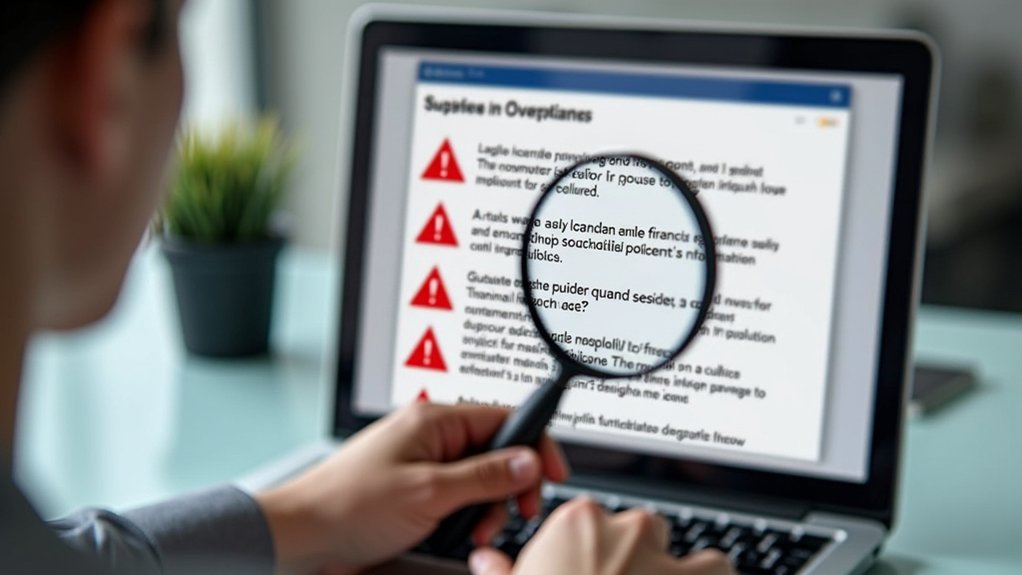
Once you’ve spotted the fake recruiter, the real danger intensifies in the job posting itself.
We’ve identified the scam warning signs you need to know. Upfront payment requests top the list at 25.08% of victim encounters.
No interview conducted? Red flags everywhere. Poorly written job descriptions signal trouble ahead. Unrealistic salary offers—like that $45-per-hour transcriptionist position requiring $250 upfront—scream deception.
Suspicious contact information appears constantly. Vague job duties. Missing company details.
We’re seeing misleading descriptions in 10.6% of scams. Watch for promises of easy money. Requests for confidential information before you’re hired. Phishing attempts hide in application links.
Before clicking anything, verify the company website independently. Call their main office directly. Trust your gut. These precautions protect you.
How Identity Harvesting Works During the Application Process

During the application process, scammers we encounter use phishing links that look official and credential harvesting sites to trick us into surrendering passwords and personal information.
They’ll request sensitive data like Social Security numbers, bank details, and government IDs—sometimes through fake verification screens that mimic LinkedIn’s actual identity confirmation process.
We must recognize that 18.81% of job scam victims reported phishing attempts and over 142 million spam or scam incidents hit LinkedIn in just the first half of 2024, so verify directly with companies before submitting anything.
Legitimate companies maintain structured and clear communication with verified corporate email domains and official contact information that candidates should independently verify through HR channels.
Phishing Links and Credential Harvesting
Scammers weaponize fake job applications to steal your identity before you even realize you’ve applied.
We’re watching phishing tactics evolve rapidly. They’ll send official-looking messages directing you to credential harvesting sites. Your information disappears into criminal networks instantly.
Here’s what happens:
- Fake recruiter emails land in your inbox with urgent language and legitimate-looking company logos
- You click the link. The site mimics real job portals perfectly, requesting your Social Security number and bank details
- Within hours, your stolen data circulates through the cybercriminal underground for $100 subscriptions
In 2024, LinkedIn detected over 142 million spam incidents. Phishing attacks jumped 58% between 2022 and 2023.
Don’t click unfamiliar links. Verify company websites independently. Your credential security depends on skepticism, not just caution.
Requesting Sensitive Personal Information
How do fake recruiters extract your most valuable information? They’re methodical. They build trust first, then strike.
During job application deception, scammers request your Social Security number, bank details, and home address under the guise of background checks or payroll setup. We’ve seen victims hand over everything thinking they’re completing legitimate employment forms.
About 40% of job scam victims had their personal data stolen. Your personal data vulnerability skyrockets when you’re excited about an opportunity. Scammers exploit that excitement. They create urgency—”We need this today.”
Don’t fall for it. Legitimate employers never request sensitive information through unsecured channels. Verify the company directly. Call their official phone number.
Pause. Breathe. Your information’s worth protecting more than any job posting.
Fake Verification and Document Submission
After that initial trust is built, scammers pivot to the verification trap. They’ll request fake documents—your Social Security number, passport scans, bank details. This is identity harvesting.
We’ve seen this pattern repeat across thousands of cases. Here’s what happens next:
- Scammers send official-looking verification challenges mimicking LinkedIn’s actual process
- They demand government IDs, selfies, and financial information under time pressure
- Fake documents get submitted to credential harvesting sites collecting your data
The data breaches tell the story. Over 700 million LinkedIn records leaked.
Attackers used these stolen identities for fraud, impersonation, and medical theft. One sample exposed 1 million users’ complete personal details.
Stop. Don’t submit anything until you’ve verified the company’s official website independently. Call their HR department directly.
Scammers count on speed and panic.
Verifying LinkedIn Profiles and Recruiter Legitimacy
We’ve got to verify who’s really on the other end of that recruiter message before we hand over our information.
Look for LinkedIn’s verification badge, check their work email domain against the company’s official website, and remember that one fake recruiter accumulated over 500 connections before getting caught.
If something feels off—no video interview, pressure for payment, vague job details—it probably is.
Work Email Verification Methods
One essential tool stands between you and job scammers: verifying that a recruiter’s email actually belongs to their company.
We can’t afford to skip this step. Email authentication and security protocols aren’t optional luxuries—they’re survival tactics.
Here’s how verification works:
- LinkedIn sends a verification code to the business email address provided
- You must confirm you actually possess that company account
- The system cross-checks the domain against legitimate business records
Scammers use Gmail accounts pretending to be from Fortune 500 companies. They’re banking on your desperation.
One fake recruiter accumulated over 500 connections before detection. That’s 500 people at risk.
Check the email domain carefully. Does it match the company’s official website? Trust nothing else. Your career depends on this one simple action.
Identifying Fake Recruiter Profiles
Verifying a work email gets you halfway there, but scammers know this. One fake recruiter accumulated over 500 connections before detection. Understanding recruiter behavior means spotting red flags others miss. Recognizing suspicious profiles requires immediate action.
| Red Flag | What It Means |
|---|---|
| Vague job descriptions | Scammers avoid specifics |
| Pressure for quick decisions | Urgency creates mistakes |
| Requests for banking details | Legitimate recruiters never ask |
| Generic connection messages | Bots target everyone broadly |
Check their company page. Real recruiters link to verified employers with active posts. Look for employment history gaps. Notice if their profile photo appears elsewhere online—reverse image search reveals catfishing. Request a phone call immediately. Scammers avoid voice conversations. Trust your instincts. That uncomfortable feeling? It’s warning you.
Authenticating Company Pages and Job Listings
Because fake recruiter profiles operate freely across LinkedIn—with one imposter accumulating over 500 connections before detection—you’ve got to verify every company page before applying.
Company authenticity demands these critical checks:
- Click the company name. Real pages display verified badges, complete descriptions, and employee counts matching LinkedIn’s records.
- Review job posting details for professional language and specifics about salary, location, and requirements.
- Cross-reference the hiring manager’s profile against the company website’s actual staff directory.
Job listing verification protects you. Scammers post identical positions across multiple fake accounts within hours.
In 2024, LinkedIn detected over 142 million spam incidents in just six months. Don’t ignore suspicious contact information or unrealistic salary offers—they’re warning signs.
Never provide banking details or Social Security numbers before formal employment verification through official company channels.
Protecting Yourself From Financial and Data Theft Risks
Once scammers get your personal information, the damage spreads fast. Identity theft happens immediately. Your Social Security number, bank details, and home address circulate in criminal networks within hours.
We’ve seen victims lose $2,000 on average, but the real threat extends far beyond money.
Here’s what we need: financial education and personal security practices.
Stop. Don’t share banking information during job chats. Verify every employer independently through official websites. Never click links from unsolicited messages. Instead, type company URLs directly into your browser.
We must act now. Change passwords monthly. Enable two-factor authentication on all accounts. Report suspicious profiles immediately.
The statistics are stark: 40% of victims experience data theft. We protect ourselves through vigilance, verification, and refusal to rush.
People Also Ask
What Should I Do if I’ve Already Fallen Victim to a Linkedin Job Scam?
We recommend you immediately report the scam to LinkedIn and relevant authorities. Document everything, monitor your accounts for unauthorized activity, and consider credit monitoring. Address your emotional recovery and financial impact by seeking support resources.
How Can I Report Fake Profiles and Scams to Linkedin Directly?
We report fake profiles by clicking the three dots on their profile, selecting “Report,” and choosing the violation type. LinkedIn’s detection of 86 million fake profiles in 2024 shows we’re fighting an uphill battle—use their reporting procedures and profile verification tools to help strengthen defenses.
Are Smaller Companies Less Likely to Have Scammers Impersonating Them?
Yes, we’ve found that smaller companies experience fewer scam attempts. Since they’ve got fewer LinkedIn company profiles, they’re naturally less visible to scammers seeking high-value impersonation targets, reducing their scam prevalence.
What Happens to My Data if Linkedin Experiences Another Major Breach?
If LinkedIn experiences another major breach, your data’s breach impact depends on what information you’ve shared. We can’t guarantee data security, but stolen information could fuel identity theft, phishing attacks, or credential sales in cybercriminal markets.
Can Scammers Access My Other Accounts if They Compromise My Linkedin Profile?
Yes, scammers can access your other accounts. Since 93% of social platform users’ information could be found through leaked records, we’ll help you strengthen LinkedIn security and account protection across all platforms using unique passwords.
The Bottom Line
We’re standing at the edge of a digital minefield. One wrong click steals your identity. One fake job offer drains your bank account. Verify every profile. Check company websites directly—not through links. Never send money upfront. Ask yourself: Would a real recruiter pressure me this fast? The answer’s no. Stay sharp. Trust your gut.
Three Rivers Star Foundation recognizes that job seekers are prime targets for LinkedIn scams and financial exploitation. Through targeted prevention education and awareness campaigns, the foundation equips professionals with the critical thinking skills and red-flag recognition needed to identify fraudulent recruiters before falling victim. By supporting digital literacy initiatives, the foundation helps protect vulnerable job seekers from identity theft and financial loss.
Your donation funds prevention education. Donate.
References
- https://heimdalsecurity.com/blog/job-scam-social-media-study/
- https://besedo.com/blog/linkedin-fake-accounts/
- https://www.trendmicro.com/vinfo/us/security/news/cybercrime-and-digital-threats/a-growing-goldmine-your-linkedin-data-abused-for-cybercrime
- https://www.mcmillionconsulting.com/blog/linkedin-verification
- https://slasify.com/en/blog/linkedin-job-scam-alerts
- https://nevillehobson.com/2024/06/10/just-how-risky-are-fake-linkedin-profiles-and-what-can-you-do-about-it/
- https://nordlayer.com/blog/linkedin-scams/
- https://www.bizjournals.com/bizjournals/news/2025/12/31/job-market-ghosting-scams-ai-resumes.html
- https://www.theaioptimist.com/p/linkedins-fake-followers-how-25-ai
- https://heimdalsecurity.com/blog/linkedin-data-of-700-million-people-leaked/