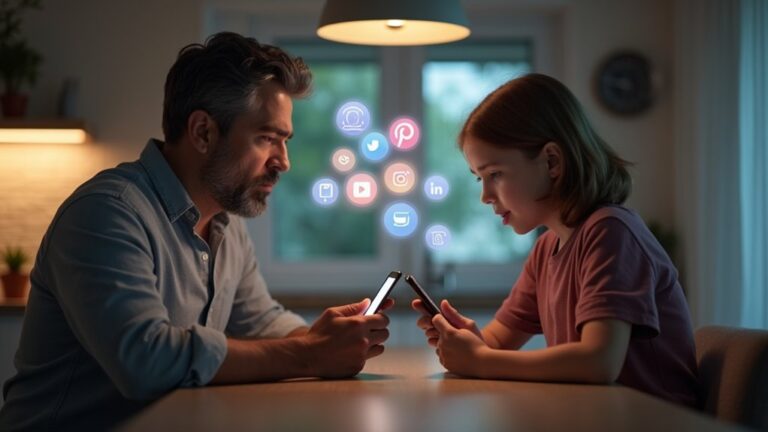

Your Phone Knows More About You Than Your Spouse Does
 Three Rivers Star Foundation
Your phone tracks forty-two intimate data points daily—your location at 3 a.m., your search history, your private messages. Your spouse doesn’t know any of it. We’re living divided lives. While you’re present physically, your phone stores emotional patterns algorithms can predict better than your partner ever could. This creates distance. Micro-rejections pile up. Arguments intensify. The solution? Phone-free dinners. Tech-free bedrooms. Real conversation. Small boundaries prevent long-term damage. The deeper patterns emerge when you explore what happens next.
What You Should Know
- Phones track 42 daily check-ins of intimate data, including location, search history, and private messages partners may never see.
- Algorithms predict emotional states through app usage and searches better than intimate conversations reveal to spouses.
- Partners often hide personal issues from each other, creating emotional distance while phones monitor vulnerabilities silently.
- Data asymmetry occurs when one spouse unknowingly lacks knowledge of the other’s emotional reliance patterns and struggles.
- Opening conversations about what phones know about each other can bridge emotional gaps and strengthen relationship intimacy.
When Your Phone Habit Becomes a Relationship Problem
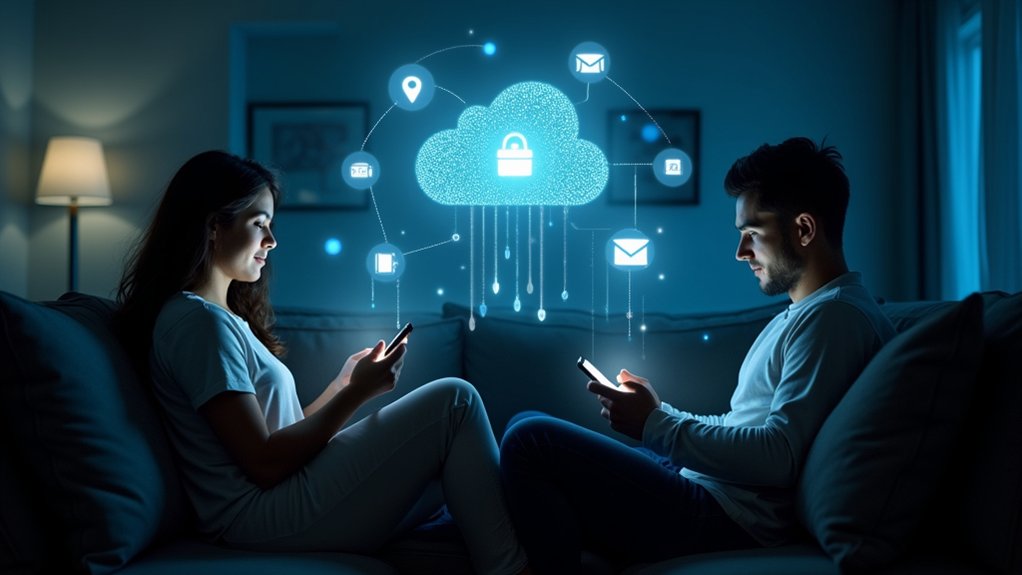
You’re at dinner with someone you love. Your phone buzzes. You glance down. Then again. Suddenly you’ve checked it forty-two times today—the average for smartphone users—and your partner feels invisible.
This is smartphone addiction reshaping relationship dynamics. When we prioritize notifications over conversation, we’re choosing our devices over the people across the table. Research shows couples experiencing high “technoference” report markedly lower satisfaction and more frequent arguments.
Your phone knows your search history, location, preferences, and secrets. Your spouse? They’re getting divided attention and micro-rejections each time you look down. When dopamine responses to notifications drive our behavior, we lose sight of authentic connection and turn moments into content opportunities.
Your phone holds your deepest secrets. Your partner deserves more than the distracted glances between notifications.
The fix starts small. No phones at dinner. Charge it outside your bedroom. Create phone-free hours together.
Small boundaries now prevent bigger relationship damage later. Your presence matters more than any notification.
What Your Phone Tracks That Your Partner Never Sees
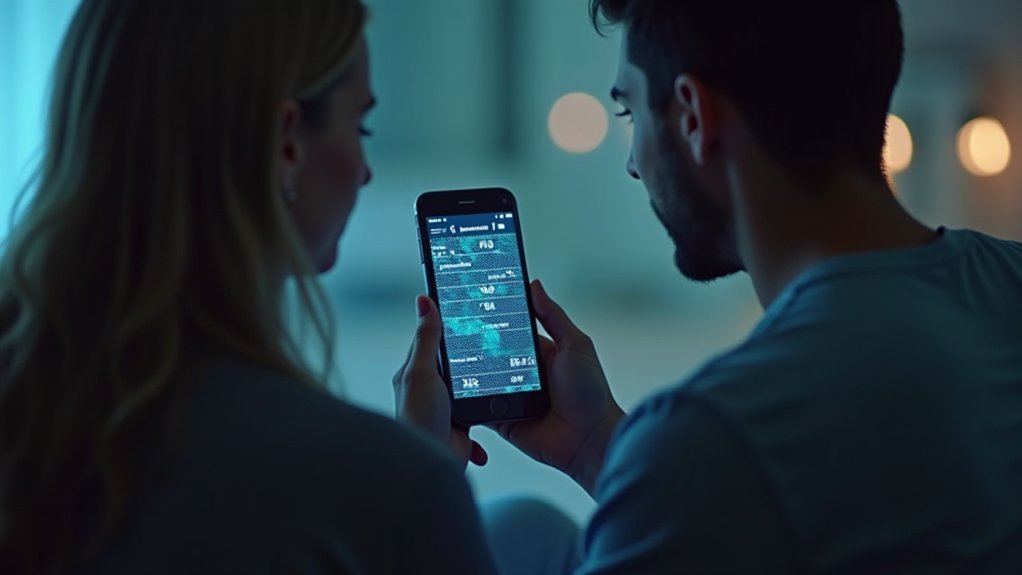
While your partner knows you like coffee and hate horror movies, your phone knows everything. It tracks your location every second. It records which websites you visit at 2 a.m.
It catalogs your search queries about anxiety, loneliness, and insecurity. Your digital footprints reveal hidden vulnerabilities you’ve never mentioned aloud. Those late-night browsing sessions? Logged.
Those private messages to friends about relationship doubts? Stored. Your phone monitors emotional reliance patterns—which apps you open when stressed, which contacts you avoid.
Behavioral patterns accumulate into a complete profile that algorithms understand better than your spouse ever will. Your data privacy erodes silently. This asymmetry matters.
What you’re tracking says what you’re really feeling. The dopamine system hijacking during social media interactions means your phone predicts your vulnerabilities more accurately than intimate conversations ever could. Consider this: audit your phone’s location history today. Delete apps harvesting unnecessary data.
Establish boundaries before intimacy dissolves into surveillance.
Why Constant Connectivity Replaces Emotional Intimacy

Every time your phone buzzes during dinner, something dies in the room.
We’re experiencing connection depletion. Our partners sit across from us while we scroll—present but absent. Digital dependency replaces real conversation. We choose tech overload over supportive communication.
The data’s stark: couples reporting high technoference show considerably lower relationship satisfaction scores. Phone withdrawal anxiety hits harder than missing our spouse’s story. We crave notifications more than eye contact.
Intimacy distraction compounds. Each glance down erodes trust incrementally. Relationship erosion happens one ignored moment at a time. We’re not addicted to our phones—we’re addicted to avoiding vulnerability. This disconnection is the core issue driving the chronic loneliness epidemic affecting millions of relationships today.
Here’s what works: phone-free dinners, bedroom bans, weekly device-free hours.
Reclaim presence. Your marriage won’t survive constant connectivity competing for your attention.
The Hidden Cost of Divided Attention During Couple Time
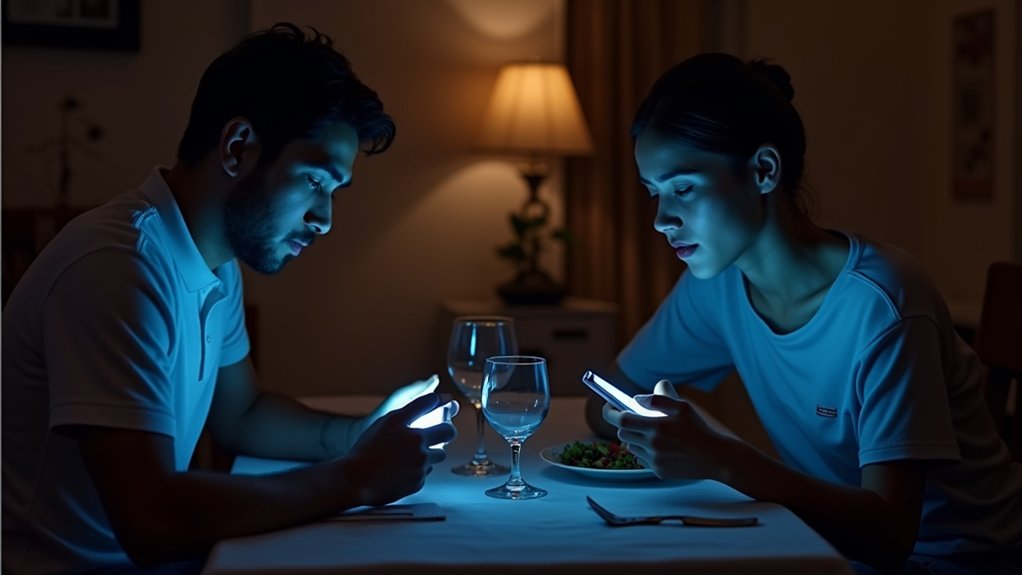
When your phone lights up mid-conversation, your partner’s words stop landing. That glance. That half-second. It registers as disinterest.
Our distraction dynamics reshape how couples connect—or don’t. Research shows that even a phone’s presence on the table measurably reduces perceived empathy and closeness. Your engagement levels drop. Their satisfaction plummets.
Even a phone’s presence reshapes connection. Engagement drops. Satisfaction plummets. Presence matters.
Partners reporting high technoference show markedly lower marital satisfaction scores. Micro-rejections accumulate. One interrupted dinner becomes a pattern. Studies link frequent phone interruptions during couple time to lower relationship satisfaction and higher depression in at least one partner.
The fix? Tech-free zones at meals. Phones out of sight during dates. Charge devices outside your bedroom. Small boundaries restore presence. Attention returns. Connection deepens.
How Phone Data Reveals Patterns You Hide From Your Spouse
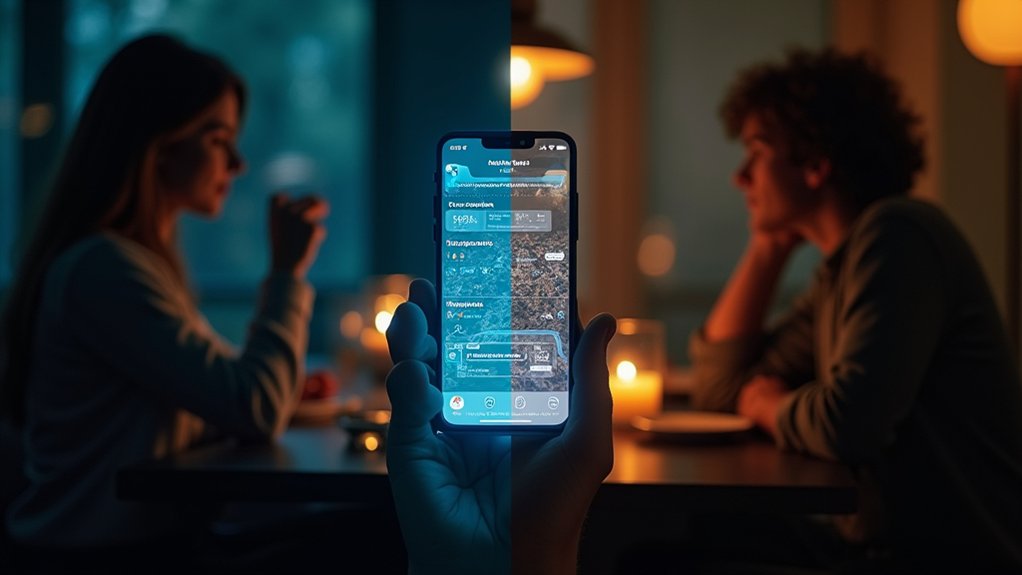
Your phone holds secrets you’ve never told your spouse. Every search. Every message. Every pause on that photo.
Your device tracks hidden behaviors—the late-night scrolling, the ex you checked on, the vulnerability you Googled instead of discussing. We’re talking digital secrets that your partner doesn’t know exist.
Your phone knows your emotional avoidance patterns. It timestamps when you withdraw. It logs your tech dependency cycles through app usage data, location history, and search queries that reveal what you’re really thinking about at 2 AM.
Meanwhile, your spouse sees only the surface. Privacy concerns grow when one partner’s data transparency remains zero.
Relationship dynamics suffer. Talk now. Share what your phone already knows about you.
Signs Your Smartphone Is Interfering With Physical Intimacy

You’re scrolling. They’re waiting. This is phone dependency replacing intimacy decline in real time.
We check our phones 42 times daily. During those moments, emotional connection fades. Your attention erosion happens in seconds. Partner feels rejected. Resentment builds.
Digital distractions kill desire. Notifications interrupt foreplay. The bedroom becomes a charging station. Research shows couples reporting high technoference experience notably lower relationship satisfaction and intimacy scores.
Relationship isolation starts small. A glance at the screen during conversation. A buzz during a kiss. Emotional reliance on your device competes with reliance on your partner for closeness and support. The dopamine loop from likes on social media can overshadow the genuine intimacy your relationship needs.
Stop. Charge phones outside the bedroom. Create tech-free intimacy time.
Your connection depends on it.
Tech-Free Zones and Boundaries That Actually Work

How do boundaries actually survive when your phone buzzes every six seconds? They don’t—unless you build them intentionally.
We’re losing focused conversations to constant notifications. The fix isn’t willpower. It’s structure.
| Tech-Free Zone | Why It Works |
|---|---|
| Dinner table | Forces eye contact and real talking |
| Bedroom | Restores sleep and physical intimacy |
| First hour after work | Rebuilds emotional connection immediately |
Create phone-free moments daily. Charge devices outside the bedroom. Turn off notifications during shared experiences. Set communication boundaries: no phones during relationship goals discussions.
Screen time limits aren’t punishment. They’re protection. When you eliminate digital detox’s need through prevention, couples report higher satisfaction and deeper tech free activities together. Research shows that chronic loneliness in relationships mirrors the isolation crisis affecting seniors, underscoring how essential face-to-face connection truly is.
Start tonight. One zone. One hour. Watch what actually happens when your spouse matters more than the algorithm.
Rebuilding Presence When Your Phone Knows You Better

While your phone stores 42 checks worth of intimate data daily—search history, location trails, private messages, late-night scrolls—your spouse often knows far less. That asymmetry breeds emotional neglect. Your partner sees you distracted. They don’t see your fears, your curiosity, your shame. The phone knows everything. Your spouse? They’re watching you look away.
Rebuilding digital presence starts here: reclaim your attention during couple time. No phones at dinner. None during conversations.
Studies show even a device on the table reduces perceived empathy by measurable amounts. Set specific hours—say 7 to 9 p.m.—where your digital presence goes dormant. Your spouse needs your actual presence instead.
Real presence rebuilds trust. It closes that gap between what your phone knows and what your partner does.
People Also Ask
Can Smartphone Addiction Be Clinically Diagnosed, and What Criteria Do Therapists Use?
Smartphone addiction can be clinically diagnosed using behavioral addiction criteria that you should understand: compulsive use despite negative consequences, tolerance (requiring increased usage over time), withdrawal anxiety when access is restricted, functional impairment in daily life, and relationship conflict resulting from excessive use.
Therapists utilize several approaches when treating smartphone addiction. Treatment typically involves identifying your personal triggers for compulsive use, establishing concrete usage limits, and rebuilding your capacity for presence through structured boundaries. Cognitive-behavioral interventions help you recognize patterns and develop healthier coping mechanisms.
It’s important to note that while smartphone addiction isn’t yet classified in the DSM-5 as a standalone disorder, mental health professionals increasingly recognize it as a legitimate behavioral concern warranting clinical attention. Diagnosis relies on the functional impairment and distress you experience rather than screen time alone. A qualified therapist can assess whether your smartphone use meets criteria for behavioral addiction and recommend appropriate intervention strategies tailored to your specific situation.
How Much Phone Use Is Considered “Normal” Before It Damages a Relationship?
Relationship dynamics suffer when phone use interrupts couple time or conversations. Research demonstrates that even brief device presence reduces perceived empathy between partners. If you’re checking your phone frequently during time together, you’re likely damaging your connection.
To protect your relationship, consider establishing phone-free periods during meals, conversations, and intimate moments. You should also be aware that scammers and criminals often exploit relationship vulnerabilities by encouraging excessive device use or by contacting one partner to manipulate the relationship. If you notice unusual phone behavior from a partner or receive suspicious communications claiming to involve them, verify the information through direct contact.
You can strengthen your relationship by being intentional about device use and maintaining open communication about technology’s role in your life together.
Should Couples Share Phone Passwords to Build Trust or Maintain Privacy?
Password sharing shouldn’t be mandated as a trust-building measure; it often creates the opposite effect. Real trust in relationships requires honest communication about boundaries rather than surveillance practices. Instead, you might consider developing transparent usage agreements—these establish accountability and mutual understanding while preserving each person’s right to privacy. Such agreements can address your concerns about security without requiring you to surrender digital privacy. This approach protects you against scammers and criminals who exploit shared credentials while maintaining the healthy boundaries that strong relationships need.
What’s the Difference Between Healthy Phone Boundaries and Controlling Partner Behavior?
Healthy Phone Boundaries vs. Controlling Partner Behavior
Healthy boundaries protect your individual autonomy—you and your partner agree on phone-free times together. Controlling behavior isolates you through surveillance, tracking, or demanding passwords. Partners respecting each other’s privacy maintain presence without monitoring.
Healthy boundaries include:
- Agreed-upon phone-free times during meals or bedtime
- Respecting each other’s privacy and contacts
- Open communication about phone use concerns
- Individual access to your own accounts and passwords
Controlling behavior includes:
- Constant tracking through location apps
- Demanding passwords to personal accounts
- Monitoring who you contact and when
- Restricting your phone use or access
Scammers and criminals use controlling tactics to isolate victims from support networks, making fraud and abuse easier to perpetrate. If you recognize controlling behavior in your relationship, reach out to local domestic violence resources or contact the National Domestic Violence Hotline at 1-800-799-7233.
Can Phone Addiction Treatment Approaches From Substance Abuse Translate to Smartphones?
Substance abuse treatment approaches can translate meaningfully to smartphone addiction. Behavioral therapy, trigger identification, and stimulus control—core strategies for overcoming substance dependence—form the foundation of effective digital recovery programs.
You can benefit from digital detox frameworks that mirror traditional addiction treatment. These include habit restructuring, where you replace compulsive checking with intentional activities; scheduled usage limits that create boundaries around screen time; and accountability systems that help you recognize and interrupt automatic reaching for your phone.
As you work toward healthier smartphone habits, understand that scammers and criminals often exploit compulsive phone use patterns. They design notifications and features specifically to trigger frequent checking, creating the conditions where you’re more vulnerable to phishing, social engineering, and malicious links. By applying these evidence-based treatment strategies, you regain control over your device usage while simultaneously reducing your exposure to digital threats.
The Bottom Line
Our phones know us. They track our 2,847 daily steps, our 3 a.m. searches, our secret conversations. We’re choosing screens over eye contact. Over touch. Over presence. We’re losing our partners one notification at a time.
Three Rivers Star Foundation recognizes how technology dependency fractures intimate relationships and erodes presence in our most important connections. Through prevention education, the foundation teaches families to build healthier boundaries with devices and reconnect with the people who matter most. By raising awareness about technology’s impact on relationships, the foundation equips couples and individuals with tools to reclaim meaningful interaction.
Reclaim your relationship today. Delete the apps draining you. Create phone-free hours starting tonight. Your spouse deserves the real you—not the version your device knows best. Your donation funds prevention education. Donate.
References
- https://www.addictioncenter.com/behavioral-addictions/phone-addiction/
- https://laopcenter.com/mental-health/cell-phone-addiction/
- https://pmc.ncbi.nlm.nih.gov/articles/PMC5112893/
- https://www.mentalhealth.com/library/phone-addiction
- https://www.frontiersin.org/journals/psychiatry/articles/10.3389/fpsyt.2016.00175/full
- https://www.samhsa.gov/find-help/helplines/national-helpline
- https://www.conehealth.com/services/primary-care/family-medicine/5-warning-signs-you-may-be-addicted-to-your-smartphone/