
Phone Scams Targeting Seniors: 7 Types You Need to Recognize
 Three Rivers Star Foundation
Scammers steal billions from seniors annually using seven devastating phone tricks. They impersonate Microsoft, Apple, the IRS, Medicare, and Social Security—creating panic through fake alerts and urgent threats. Grandparent emergencies demand immediate wire transfers. Bank fraud warnings pressure you to reveal passwords. Charity scams exploit your compassion post-disaster. We’ve all heard stories: accounts suspended, arrest warrants issued, money vanished. Here’s what works: hang up immediately, call official numbers directly, never share personal details over the phone. Verification saves your finances. Below, we’ll expose each scam’s specific tactics so you can protect yourself.
Fake Tech Support Scams: The Microsoft and Apple Impersonation Trap
When your phone rings and a voice claims your computer’s been hacked, your heart races. We need scam detection strategies now. Scammers impersonate Microsoft or Apple with urgent pop-up alerts. They pressure you to call immediately.
Don’t. Hang up.
These fake tech support scams cost seniors thousands yearly. Older adult awareness saves money and protects identity. The caller sounds official. Professional. Trustworthy. That’s the trap. Studies show that scams exploit trust rather than targeting only naive individuals, meaning anyone can fall victim to these deceptive tactics.
Fake tech support scams drain seniors of thousands yearly. Awareness protects identity and finances when you recognize the trap.
They’ll ask for remote access to your computer. They’ll request payment. They’ll steal everything.
Here’s what we do:
- Never call numbers from pop-ups.
- Never grant remote access.
- Never pay unknown callers.
Instead, hang up and call your tech company directly using official website numbers. Block the caller. Report it.
You’re protected when you pause and verify.
IRS Tax Threat Calls: When Scammers Pose as Government Tax Collectors
How does a voice on the phone claiming you owe taxes suddenly feel so real, so urgent, so terrifying?
Scammers impersonate IRS agents with practiced authority. They demand immediate payment. They threaten arrest. They weaponize fear itself.
Here’s what happens: You receive a call. The caller claims you’ve underpaid taxes. Payment’s due today. Wire money now. Don’t hang up—they’ll call back repeatedly if you do.
IRS impersonation scams cost seniors billions annually.
Tax refund scams work differently but equally devastate victims. The IRS never initiates contact via phone about unpaid taxes. Never. The real IRS sends written notices first.
We need you alert. Hang up immediately. Call the IRS directly using the number on official documents. Don’t provide personal information to unsolicited callers.
Report the scam to the FTC. Your skepticism saves your retirement.
Social Security Suspension Scams: The False Account Deactivation Threat

Scammers now target your Social Security benefits directly. They call claiming your account faces suspension. Your number’s been compromised, they insist. Act now or lose everything. Here’s how they operate:
| Red Flag | What They Say | Reality |
|---|---|---|
| Urgency | “Suspend in 24 hours” | Social Security won’t call threatening immediate action |
| Authority | “Federal agent calling” | Real agencies don’t demand quick payments |
| Fear | “Criminal activity detected” | They’re creating panic, not protecting you |
They’re banking on your fear. Account deactivation threats feel real. Your social security represents decades of work. Don’t fall for it. Hang up immediately. Call Social Security directly using the number on your official card. Never provide personal information to unsolicited callers. Report suspicious calls to the FTC. You’ve earned your benefits. Protect them fiercely.
Grandparent Emergency Scams: Exploiting Family Bonds for Quick Cash
Scammers impersonate your grandchild in distress, claiming they’re stuck abroad or in jail and need cash immediately.
We’ve seen seniors wire thousands within minutes because emotional urgency short-circuits the careful thinking that’d normally catch the deception.
You can protect yourself by hanging up, calling your grandchild directly at a number you know, and remembering that real emergencies rarely demand wire transfers to strangers.
Emotional Urgency Tactics
Why do grandparents become the easiest targets when criminals need fast cash? Emotional manipulation works. Scammers call claiming your grandchild’s in jail. They need bail money. Now. The urgency tactics hit hard and fast. “Don’t tell your parents.” “Wire it today.” Your heart races. You act.
| Tactic | What They Say | Your Reaction |
|---|---|---|
| Panic | “He’s been arrested” | Fear overrides thinking |
| Isolation | “Tell no one” | You stay silent |
| Speed | “Wire money now” | No time to verify |
| Authority | “I’m a police officer” | You believe them |
We know grandparents lost $445 million to large scams in 2024. Don’t become another number. Hang up. Call your grandchild directly. Verify the emergency yourself. Real emergencies survive a five-minute delay.
Impersonating Trusted Family
The phone rings. Your grandchild’s voice cracks. “Grandma, I need money. Now.”
He’s in jail. He’s in an accident. He’s in trouble.
You don’t ask questions—you act. This is the grandparent scam, and it targets vulnerable seniors with devastating precision.
Scammers create panic through fake emergencies, demanding wire transfers or gift cards within hours. No time to verify. No time to think.
Studies show two out of five seniors fall victim to some scam. Many lose thousands.
For scam awareness, implement this: hang up immediately.
Call your grandchild directly using a known number.
Never wire money based on emotional pressure alone.
Ask questions. Verify independently. Your skepticism saves your retirement.
Bypassing Rational Decision-Making
When panic floods your mind, rational thought disappears. Scammers know this. They exploit our psychological vulnerabilities by creating false emergencies that override our cognitive biases toward skepticism.
Here’s how they manipulate us:
- They claim your grandchild’s been arrested and needs bail immediately.
- They demand secrecy to “protect” your family member’s reputation.
- They pressure you to act within minutes, not hours.
- They use emotional language that triggers fear over logic.
Your brain shuts down. You can’t think straight. The scammer counts on this. One grandmother wired $8,000 in thirty minutes. Another emptied her 401(k). They didn’t hesitate because love hijacked their reasoning.
Stop. Hang up. Call your grandchild directly using a number you already have. Verify the emergency yourself. Rational thought returns when panic leaves.
Medicare Fraud Calls: Healthcare Identity Theft and Billing Schemes

Medicare fraudsters call pretending to be from the government, claiming you’ve got billing problems or suspicious activity on your account.
We’ve got to know how they operate—they’ll ask for your Medicare number, Social Security number, or bank details to “verify” information or “fix” errors.
Here’s what saves you: hang up immediately, call Medicare directly at 1-800-MEDICARE using the official number, and never give personal information to unsolicited callers, period.
How Medicare Fraudsters Operate
Scammers posing as Medicare representatives call seniors claiming their benefits will be canceled unless they verify personal information immediately. They’re hunting for Social Security numbers, bank details, and insurance information to commit healthcare scams and medical billing fraud.
Here’s how these fraudsters operate:
- They call claiming urgent account problems requiring immediate verification.
- They pressure you to provide Social Security numbers and Medicare ID information.
- They request payment via gift cards, wire transfers, or direct bank access.
- They use stolen data for unauthorized medical billing and identity theft.
The urgency feels real. Your panic feels justified.
But here’s the truth: Medicare never calls first. Real representatives don’t demand immediate payment. We must verify independently by calling Medicare’s official number.
Don’t fall for the pressure. Hang up. Verify. Protect yourself.
Protecting Your Healthcare Identity
How does your healthcare data disappear so quickly?
Scammers call pretending to be Medicare representatives, claiming you’ve had suspicious billing activity on your account. They’re after your Social Security number, Medicare ID, and bank details.
We need to act fast. One in ten seniors falls victim to identity theft annually, with medical identity theft costing victims thousands in fraudulent claims.
Don’t give information over the phone. Ever. Hang up. Call Medicare directly at 1-800-MEDICARE using a number you trust.
Protecting your information means checking statements monthly for unfamiliar charges. Watch for unexpected medical bills from providers you’ve never visited. That’s your red flag.
Your healthcare identity isn’t just data—it’s your financial security. Guard it fiercely.
Bank Fraud Alerts: Fake Security Warnings From Your Financial Institution
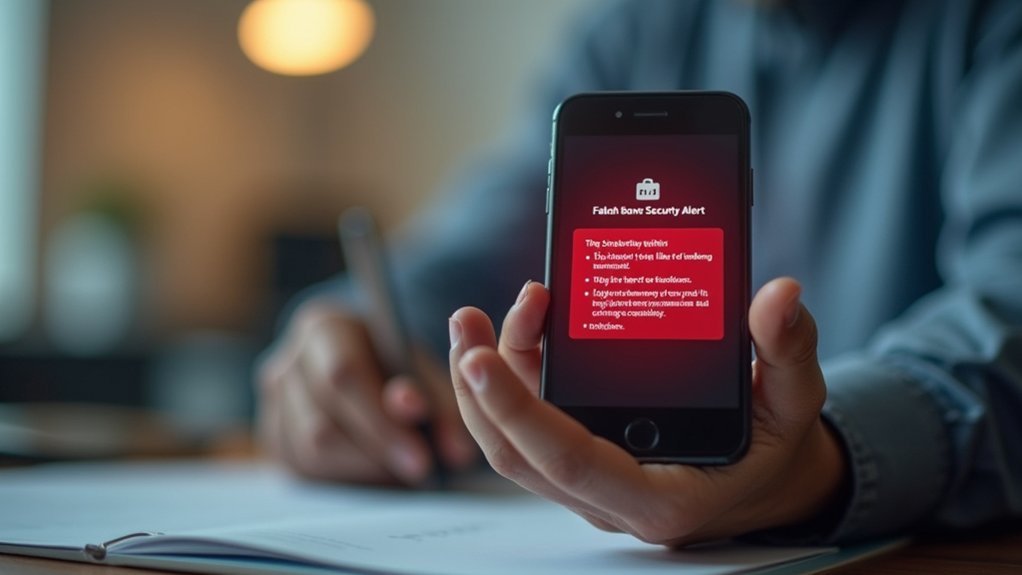
While you’re scrolling through your phone, a message pops up claiming your bank’s security system detected fraud on your account.
Don’t panic. This is likely fake. Scammers use bank warning tactics to steal your money and personal information. They’re counting on your fear.
Here’s what we need to know:
- Real banks never ask for passwords or full account numbers via text or pop-up.
- Legitimate identity verification methods involve calling you first, not the reverse.
- Fake alerts often contain spelling errors and urgent language.
- Scammers redirect you to fake websites that look almost identical to real ones.
If you receive a suspicious message, hang up immediately.
Call your actual bank using the number on your card.
Don’t click links.
Don’t share details.
Verify first. Always.
Fake Charity Solicitations: Criminals Posing as Legitimate Organizations
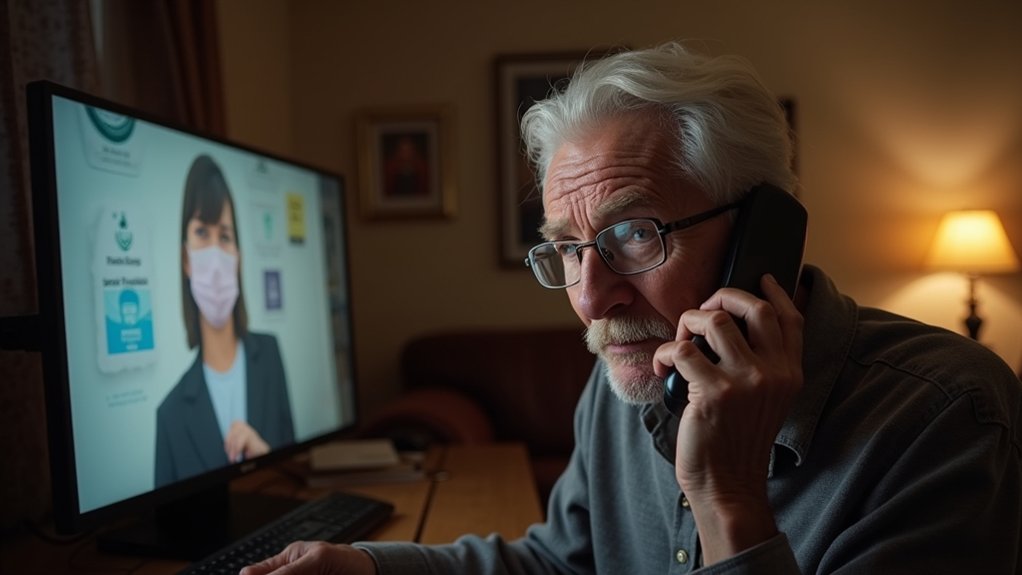
After natural disasters strike, criminals impersonate real charities to exploit your compassion and steal your money. We’re talking about scammers who call you pretending to collect donations for legitimate charities. They create urgency. They pressure you fast. You feel obligated to help victims. That’s exactly what they want.
| Red Flag | Legitimate Charity |
|---|---|
| Demands wire transfer immediately | Accepts checks or online payments |
| Refuses to provide documentation | Offers verifiable tax ID numbers |
| Pressures you on the phone call | Sends written confirmation materials |
| Won’t answer basic organization questions | Provides detailed program information |
| Requests gift cards or cash delivery | Never requests unusual payment methods |
Donation requests from unknown callers should trigger suspicion instantly. Hang up. Call the actual charity directly using a number you verify independently. Never give banking information over the phone. Your skepticism saves your money and protects your identity.
People Also Ask
Why Do Seniors Lose Significantly More Money per Incident Than Younger Adults?
Seniors lose considerably more money per incident because we’re more financially vulnerable and susceptible to emotional manipulation. We’re less digitally literate, trust more readily, and scammers exploit our vigilance about protecting our retirement savings.
How Can Victims Recover Losses From Retirement Accounts Emptied by Scammers?
We’re finding that pending legislation’s the key: it’d remove the 10% early withdrawal penalty for fraud-related retirement account losses, helping you recover emptied accounts faster through loss recovery provisions.
What Should I Do if I’ve Already Fallen Victim to a Phone Scam?
We recommend you report the scam immediately to the FTC and FBI’s Internet Crime Complaint Center. Contact your bank, seek emotional support from trusted friends or counselors, and never send additional money to recover losses.
Why Are Seniors Targeted Repeatedly After Falling Victim to One Telemarketing Scam?
We target you repeatedly because scammers recognize you’ve demonstrated vulnerability, creating exploitation cycles. Your information gets sold to other criminals, trapping you in a victim mentality that makes you susceptible to additional fraud schemes.
How Can I Verify if a Caller Is Actually From a Legitimate Government Agency?
We shouldn’t take callers at face value. Hang up and call the government agency directly using a trusted, official number you’ve verified independently. This caller verification method protects you from impersonation scams.
The Bottom Line
We’ve shown you seven scams. Seven ways criminals steal from people like your grandparents. Don’t ignore warning signs. Hang up on suspicious callers immediately. Verify claims by calling official numbers yourself. Share this list with older family members today. They’re counting on us. We’re their first line of defense against fraud.
Three Rivers Star Foundation recognizes that seniors are disproportionately targeted by phone scams and works to protect vulnerable older adults through comprehensive fraud prevention education. Our programs equip seniors and their families with the knowledge to identify these seven common scams and respond effectively. By funding community workshops and educational resources, we’re building awareness that saves lives and protects hard-earned savings.
Stay alert. Stay safe. Report suspicious calls to the FTC at reportfraud.ftc.gov. Your donation funds prevention education. Donate.
References
- https://www.psca.org/news/psca-news/2025/8/scams-against-seniors-increasing-dramatically-ftc-warns/
- https://www.seniorliving.org/identity-theft-protection/statistics/
- https://www.ftc.gov/news-events/data-visualizations/data-spotlight/2025/08/false-alarm-real-scam-how-scammers-are-stealing-older-adults-life-savings
- https://www.ftc.gov/news-events/news/press-releases/2025/12/ftc-issues-annual-report-congress-agencys-actions-protect-older-adults
- https://www.regions.com/insights/wealth/article/scams-targeting-seniors
- https://crr.bc.edu/preventing-cyber-scams-that-target-seniors/
- https://yardleywealth.net/a-2025-guide-to-protecting-seniors-from-fraud/
- https://www.fdic.gov/consumer-resource-center/2025-07/scams-targeting-older-adults