

Why Elderly People Don’t Report Scams: Breaking the Silence
 Three Rivers Star Foundation
Nearly 98% of scam victims stay silent. Why? Shame grips them. Fear follows. They worry families will judge them or strip away independence. Seniors especially dread losing control over finances and decisions. This silence protects criminals—real losses hit $10.1 billion to $81.5 billion yearly, yet only $2.4 billion gets reported. When victims speak up, they reclaim power. Families who respond without blame create safety. Reporting stops scammers from targeting more people. Your loved one’s disclosure could change everything—discover how families break this cycle.
The Silent Struggle: One Woman’s Six-Month Secret

Six months. That’s how long she kept it secret. A romance scammer had stolen $47,000 from her savings account, and she told nobody. Not her daughter. Not her best friend. Just silent suffering and hidden trauma, day after day.
She felt ashamed. Incompetent. Afraid we’d judge her harshly. The shame consumed her more than the money lost.
Studies show 97.7% of fraud victims never report what happened to them. That’s 97.7% carrying this burden alone. Scammers often build trust through emotional manipulation techniques designed to bypass critical thinking, making victims feel uniquely understood rather than deliberately deceived.
Here’s what we need to know: shame thrives in silence. When she finally disclosed the fraud to her daughter, relief flooded through her. She wasn’t alone anymore. Support changed everything.
If you suspect elder fraud, talk. Ask gently. Listen without judgment. Call the National Elder Fraud Hotline: 833-372-8311. Breaking silence saves lives.
Shame and Embarrassment: The Emotional Barriers to Reporting

Silence becomes a prison. We feel ashamed. We feel stupid. That’s the emotional barrier stopping us from speaking up.
Silence becomes a prison of shame and self-doubt, creating an emotional barrier that stops us from speaking up.
Seniors fear judgment from family and friends after losing money to scams. They worry people will think they’re incompetent or weak. Research shows 97.7% of victims never report abuse because shame keeps them quiet.
We need an empathy approach, not blame. When someone finally tells you about a scam, listen without judgment. Don’t say “how could you fall for that?” Instead ask gently about warning signs. Use a calm tone. Focus on their well-being, not the lost money.
The emotional weight is real. Victims feel powerless and hopeless. Multiple conversations help. Suggest professional counseling. Contact the National Elder Fraud Hotline: 833-372-8311.
Scammers exploit trust, authority, and fear through professionally presented tactics, making victims feel isolated and reluctant to disclose their experience.
Breaking silence saves lives.
Fear of Losing Independence and Control

When we’ve been scammed, we’re terrified that telling our kids means handing over the keys to our own lives.
We’ve worked decades for independence, and admitting we fell for a con feels like admitting we can’t handle our finances anymore—which often means losing control of our bank accounts, our choices, and our dignity all at once.
That fear of becoming dependent, of having decisions made for us instead of by us, keeps roughly 98 out of 100 fraud victims silent, trapped between protecting our autonomy and protecting our savings. This silence is especially damaging because emotional manipulation tactics used by scammers often target our desire to maintain control, making us hesitant to seek help even after realizing we’ve been victimized.
Admitting Weakness to Loved Ones
Beyond embarrassment lies a deeper fear: admitting you’ve been scammed means admitting you’re not in complete control anymore, and that terrifies many of us.
We’ve spent decades making our own decisions. Managing finances. Running households. Now what? We’re supposed to tell our kids we fell for it?
Sharing vulnerabilities feels like surrendering independence entirely. We worry they’ll take over. Restrict our choices. Lock us out of our own lives.
The emotional support we desperately need comes with an invisible price tag: our autonomy.
That’s the trap. We stay silent. Shame deepens. Scammers continue unchecked while we suffer alone at 2 a.m., replaying every message.
But here’s what matters: asking for help isn’t weakness. It’s wisdom. Our loved ones want partnership, not control.
Real strength means speaking up now.
Loss of Financial Autonomy
That fear of losing control? It’s paralyzing. When scammers drain accounts, older adults face a terrifying reality: dependence on others for basic decisions. We see it happen repeatedly.
Someone loses $50,000 to fraud and suddenly can’t manage their own finances anymore. Family members take over. Autonomy vanishes. The victim becomes a passenger in their own life, stripped of financial accountability and decision-making power.
Studies show this loss of independence creates deeper trauma than the money itself. Autonomy restoration requires deliberate action.
Report the fraud immediately to banks and law enforcement. Document everything meticulously. Work with professionals to recover what’s possible.
Rebuild financial literacy gradually. Regain control step by step. Your independence matters. Fight for it back.
Family Judgment and Complicated Relationships

A son notices his mother wiring money to a “romantic partner” she met online, but he doesn’t ask questions because confronting her feels like calling her stupid.
Family loyalty clashes with protecting her. We hesitate. We stay silent. Blurred financial norms—loans, care exchanges—make it hard to know where boundaries should be. We fear rocking the boat. We dread her anger or shutting us out completely.
Cognitive changes mean she won’t recognize abuse from someone trusted. She won’t believe us anyway. So we say nothing. The scammer keeps calling. The transfers keep happening. Our reluctance to challenge family dynamics costs her thousands.
We must break this pattern. Speaking up isn’t betrayal. It’s love.
Self-Blame and the Burden of Silence
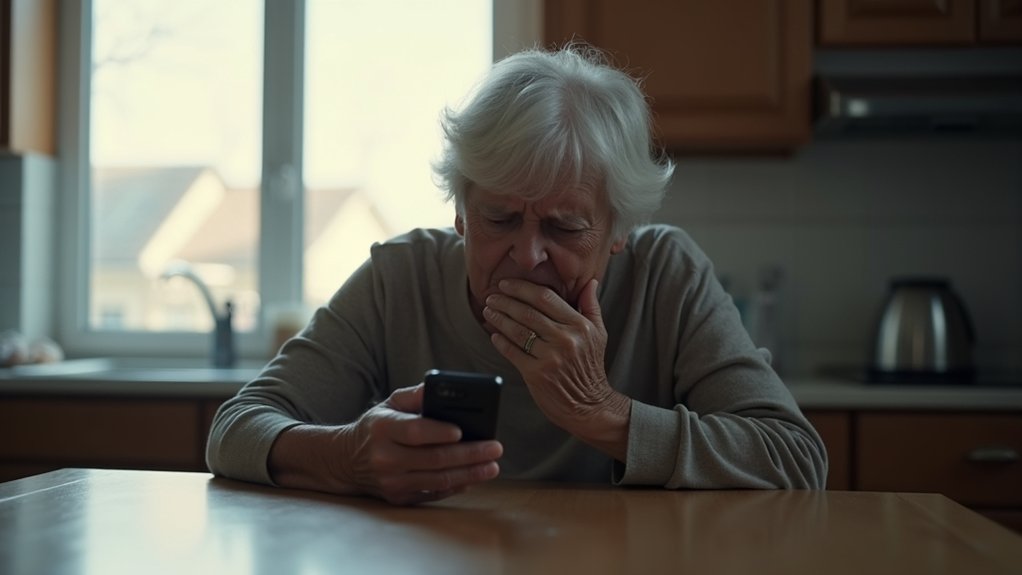
When someone realizes they’ve been scammed, shame hits hard—so hard that 97.7% of victims never tell a soul.
We carry this silence alone, convincing ourselves we’re incompetent or foolish, when really we’re just human and targets of sophisticated criminals. That isolation deepens the wound: we withdraw from friends and family, miss chances at help, and let the scammer’s power grow stronger in the darkness of our secrecy.
Shame’s Grip on Disclosure
Because scammers are expert manipulators, they leave victims drowning in shame before they ever reach out for help. We see it happen repeatedly. The shame dynamics are relentless. Victims feel incompetent. They feel stupid. That emotional toll destroys their willingness to disclose.
| Shame Barrier | What Happens | Time to Disclosure |
|---|---|---|
| Fear of judgment | Silence deepens | Weeks to months |
| Family disappointment | Isolation increases | Months to years |
| Loss of independence | Emotional paralysis | Extended delay |
| Self-blame cycle | Depression sets in | Often unreported |
| Embarrassment | Scammer remains free | Investigation halted |
We must understand: 97.7% never report. That staggering number reflects pure shame. Victims worry we’ll think they’re incompetent or vulnerable. They dread losing control. They anticipate family conflict. This silence enables criminals. It hides the real scope of fraud losses reaching $81.5 billion annually. Breaking this grip requires compassion, not judgment.
Incompetence and Self-Judgment
Imagine someone’s been calling you for weeks, building trust, asking personal questions, learning your routines.
Then they ask for money. You send it.
Reality crashes down. You realize what happened.
Now comes the hardest part—the shame.
We tell ourselves we should’ve known better:
- “I’m supposed to be smart enough to spot a lie”
- “What kind of person falls for this?”
- “My family will think I’m incompetent”
- “Maybe my mind’s slipping and I didn’t notice the warning signs”
Cognitive decline and increased vulnerability make us susceptible.
That doesn’t make us stupid. But we believe it does.
So we stay silent. We isolate. We suffer alone rather than face judgment—real or imagined.
Breaking this cycle requires reframing: scammers are criminals, not reflections of our worth.
Report it. Get help.
You’re not incompetent. You’re human.
Isolation Through Embarrassment
The shame spirals inward. We don’t tell anyone. Not our kids. Not our friends. Not even our doctors.
Why? Because we feel stupid. Broken. Like we should’ve known better.
That emotional isolation kills us slowly. We sit alone with the secret, replaying every mistake.
Studies show seniors experience intense fear and embarrassment after being scammed. We withdraw from people we love most.
Overcoming embarrassment means understanding something vital: scammers are professionals. They manipulate 97.7% of victims into silence.
That’s not weakness. That’s psychology.
We need to speak up anyway. Tell one trusted person today. Call the National Elder Fraud Hotline at 833-372-8311.
Reporting breaks the cycle. Your voice matters more than your shame.
How Underreporting Enables Scammers and Endangers Others

When an elderly person stays silent about a scam, they’re not protecting just themselves—they’re protecting the criminal.
Underreporting creates massive blind spots in scam prevention and reporting challenges that harm everyone.
Consider what happens when we don’t report:
- Scammers target more seniors because they know most won’t speak up.
- Police can’t track patterns or arrest repeat criminals.
- Real losses hit $10.1B–$81.5B annually while only $2.4B gets reported.
- The next victim gets scammed by someone already known to authorities.
Silence isn’t safety. It’s surrender.
Silence isn’t safety. It’s surrender. Report scams now and protect your community from predators.
When you report—whether to the National Elder Fraud Hotline at 833-372-8311 or the FBI IC3—you’re stopping the predator from finding their next target.
Your disclosure protects your community.
Report it. Now.
Creating a Safe Space: How Families Can Help Loved Ones Disclose

Reporting stops the scammer. It’s understood that 97.7% of victims stay silent. That silence kills recovery chances.
Building trust starts with choosing the right moment and setting. Pick morning hours, private spaces, calm tones. Ask about warning signs gently.
Listen without judgment. Don’t shame. Don’t accuse. Open dialogue means multiple conversations if needed. Involve trusted relatives gradually. Show partnership, not control. Blame the criminal, never the victim.
The FBI tracked 88,262 victims over sixty in 2022 alone. Real losses hit $10.1 billion to $81.5 billion annually.
When safety is created, seniors talk. When they talk, scammers get caught. When scammers get caught, others stay protected. We’re stronger together.
Make that call today.
People Also Ask
What Specific Recovery Steps Should I Take Immediately After Discovering a Scam?
We’ll contact your bank immediately to report the fraud and freeze accounts. Then we’re filing reports with the FBI IC3 and FTC, calling the National Elder Fraud Hotline at 833-372-8311, and documenting everything carefully.
How Long Do Fraud Investigations Typically Take Once Reported to Authorities?
We can’t give you exact timelines for fraud investigation duration since cases vary widely. When you’re fraud reporting to authorities, investigations might take months or years depending on complexity, jurisdiction, and evidence available.
Are There Tax Deductions Available for Financial Losses From Scams?
We’d recommend consulting a tax professional, as tax deductions for financial losses from scams aren’t straightforward. You may qualify for casualty loss deductions under specific IRS rules, though recent tax law changes’ve limited these greatly.
Can Scammers Be Prosecuted if the Victim Is Outside the United States?
Prosecution’s possibilities persist across borders through international jurisdiction frameworks. We’re pursuing perpetrators persistently, though scammer accountability depends on cooperation between countries, extradition treaties, and where crimes occurred.
What Cognitive Changes Make Older Adults More Susceptible to Financial Manipulation?
It is understood that memory decline makes it harder for you to recall warning signs, while decision fatigue leaves you vulnerable to manipulative persuasion tactics that scammers exploit through emotional appeals and time pressure.
The Bottom Line
We’ve got to break this silence now. Elderly people lose $28 billion yearly to scams they don’t report. Why? Shame stops them cold. We can change this. Create safe conversations. Remove judgment. Ask direct questions. Listen without blame. Report together if needed.
Three Rivers Star Foundation works directly to combat scam victimization through targeted prevention education and community awareness campaigns. By equipping seniors and their families with knowledge about common scam tactics and reporting resources, the foundation empowers people to recognize threats before they strike. This education-first approach reduces both the shame barrier and the likelihood of unreported fraud.
Your grandmother’s silence endangers her and others. Act today. Speak up. Help them speak up. The cost of quiet is too high.
Your donation funds prevention education. Donate.
References
- https://www.consumeraffairs.com/finance/elderly-financial-scam-statistics.html
- https://www.rbcwealthmanagement.com/en-us/insights/how-to-help-a-senior-family-member-whos-been-a-target-of-financial-fraud
- https://www.foxbusiness.com/money/older-americans-lost-up-81-5b-past-year-financial-fraud-ftc-report-says
- https://www.aarp.org/money/scams-fraud/report-elder-financial-abuse/
- https://www.ftc.gov/news-events/data-visualizations/data-spotlight/2025/08/false-alarm-real-scam-how-scammers-are-stealing-older-adults-life-savings
- https://uwc.211ct.org/frauds-and-scams-targeted-to-seniors/
- https://www.ftc.gov/news-events/news/press-releases/2025/12/ftc-issues-annual-report-congress-agencys-actions-protect-older-adults
- https://www.ic3.gov/crimeinfo/elderfraud
- https://news.ufl.edu/2024/06/older-adults-vulnerable-to-scams/
- https://ovc.ojp.gov/program/elder-fraud-abuse/national-elder-fraud-hotline